TL;DR
Account-based outreach is outbound run on a short, researched list of target accounts with multi-threaded, signal-led messages. Tier your list (20 / 50 / 150). Multi-thread at least 3 personas per tier-1. Open every first touch with a specific signal — a new hire, a funding round, a tool change, a buyer post. Run a 14-day, 7–10 touch cadence across email, LinkedIn, and phone. Measure meetings per account per quarter, not opens. Reps running this model book 3–5× more enterprise meetings than reps spraying templates.
Snippet answer
Account-based outreach is a B2B sales motion where a rep works a short, prioritized list of target accounts with deeply researched, multi-threaded outreach. Each account is tiered (1:1, 1:few, 1:many), researched individually, mapped to 3–5 buying-committee personas, and worked through a 14-day signal-led cadence across email, LinkedIn, and phone. The goal is meetings per account, not volume.
What account-based outreach actually is
Account-based outreach is the rep-side version of ABM. Marketing runs the ads and content; the rep runs a small list of target accounts with deep research, named personas, and outreach that could only have been written about that specific company. It is outbound in shape, but the unit of work is the account, not the persona.
The motion matters because enterprise buying is a committee sport. One champion rarely signs the contract. Economic buyers, users, technical evaluators, legal, and procurement all have veto power. Any outreach that reaches only one person at a 200-person company is a lottery ticket with bad odds.
Account-based outreach also is not. It is not mass email segmentation dressed as strategy. It is not a marketing program that throws MQLs at a rep. It is not a single sequence sent to fifty contacts at once. Every piece of work starts with the account and ends with a meeting — or a deliberate decision to drop the account.
Why spray-and-pray dies above $50k ACV
At $10k ACV, spraying templates works. At $50k it stops working. At $150k it actively hurts — enterprise buyers spot template language in two lines and the domain earns a reputation.
The math is boring but unavoidable. A template at a low single-digit reply rate needs roughly a thousand sends to book a handful of conversations. Those 15 conversations convert at 5–10% to opportunity. That produces one or two opps per month per rep, and the opps are small because the reps best-positioned to reply at volume are small buyers. At enterprise ACVs, a rep needs pipeline coverage of 3–4×, which means they cannot afford to spend a quarter waiting for 15 low-intent replies.
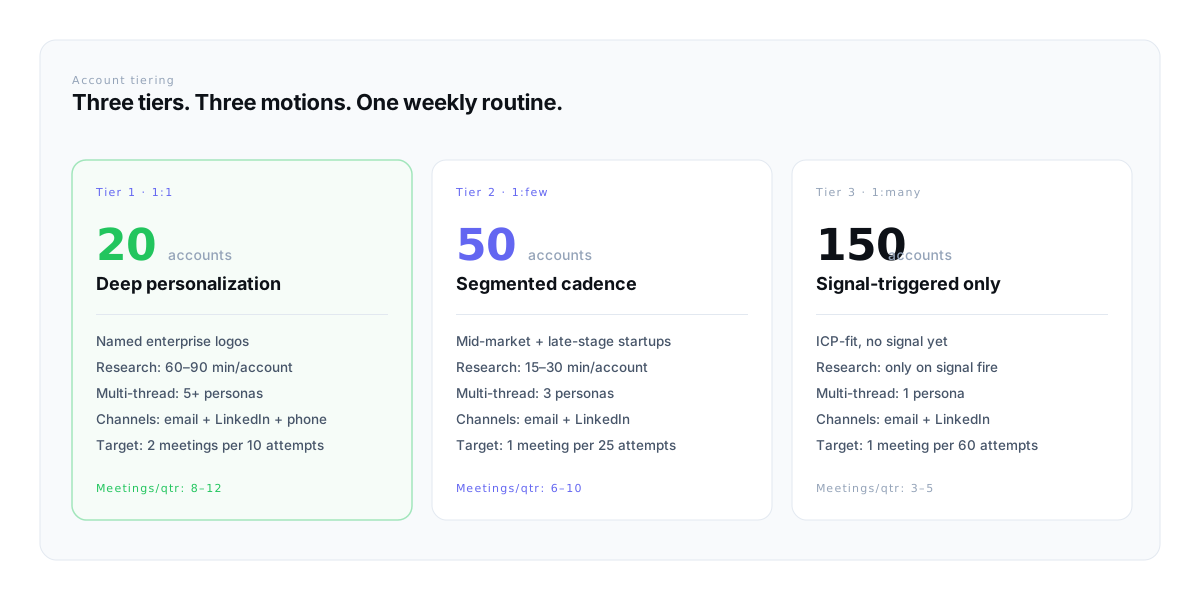
ABM inverts the math. Twenty deeply researched tier-1 accounts, 8–12 meetings per quarter each, 2–3 of those convert to opportunity, and the opportunities are worth 5–10× a template opp. Fewer inputs, bigger outputs, better deliverability because the sends are low-volume and specific.
The 7-step account-based outreach playbook
The seven steps below are sequential. Most reps fail ABM by skipping steps 1–3 and jumping to step 5. Research time is the one thing the program cannot survive without.

- 1
Define the ICP
Write it down in four lines: firmographic (size, stage, geography), tech stack (what they already run that proves the pain), signal pattern (what triggers an ABM motion), and buying pain (the specific workflow breaking down). If the ICP fits on a sticky note, it is real. If it fills a slide deck, it is a wishlist.
- 2
Tier the list
Split 220 accounts into three tiers. Tier 1: 20 accounts getting 1:1 treatment — named logos, 60–90 minutes of research each. Tier 2: 50 accounts on a 1:few motion with segmented cadences. Tier 3: 150 accounts that only get worked when a signal fires. This is the rep-side of the ABM motion — it survives contact with Monday morning.
- 3
Research each tier-1 account
Pull the recent-hires list, funding news, public posts, tech stack via BuiltWith, and the org-chart gaps via LinkedIn. Write three sentences per account: what changed, why that creates a reason to buy, who on their team owns the workflow. Those three sentences become the first line of every message.
- 4
Multi-thread 3–5 personas
Map the buying committee before you write a single email. At minimum: champion (pain owner), user (runs it daily), economic buyer (owns the budget). Above $100k ACV, add technical evaluator and procurement. One message thread per account fails 7 out of 10 times when the champion changes jobs or goes silent.
- 5
Build a signal-led cadence
Seven to ten touches across email, LinkedIn, and phone over 10–14 days. Every first touch references a specific signal. Every third touch brings a new angle, not a reminder. Never send a template without a signal in the first sentence — the template reads as spam at enterprise.
- 6
Execute weekly
One hour per tier-1 account per week. Review every message before it sends — not after. Tuesday and Wednesday 8–11am local are the highest-reply windows. Friday afternoons are dead. Block time, defend it from your manager, run the sequence.
- 7
Measure, then cut
Meetings per account, reply rate by persona, pipeline per tier, days to first touch. Cut any tier-1 account that gets no reply in 14 days from two different personas. Move it to tier 3, wait for a signal.
Multi-threading: mapping the buying committee
Multi-threading is the single biggest predictor of whether a tier-1 account converts. One-thread accounts die quietly — the champion goes silent, leaves the company, or gets pulled onto another project, and the deal evaporates. Three-thread accounts survive.
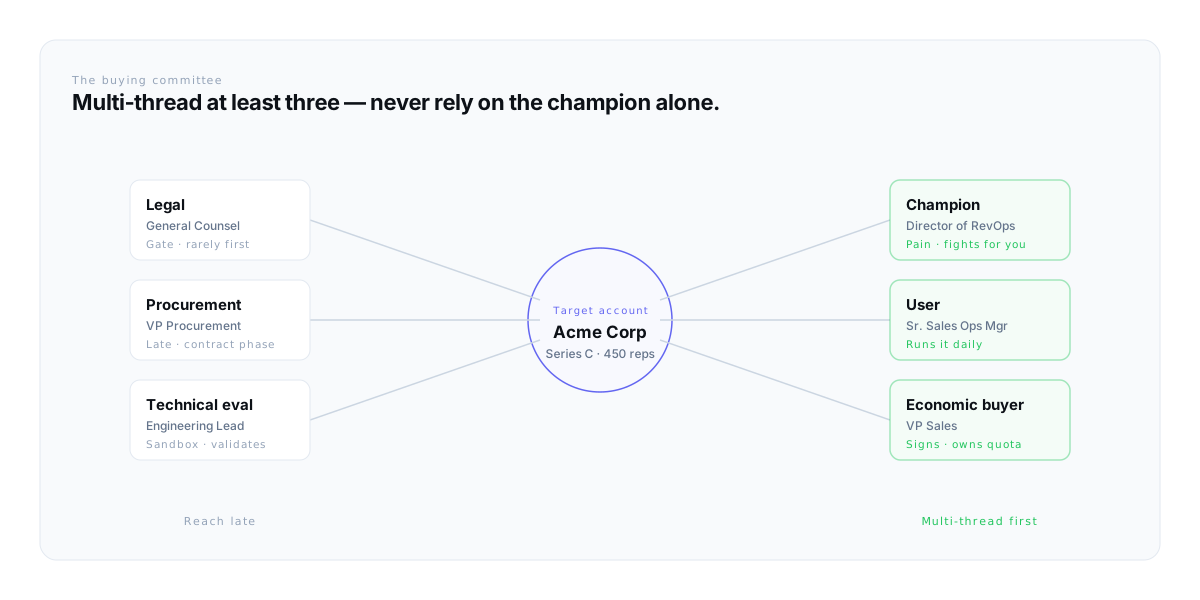
At minimum, work three personas:
- Champion. The person who feels the pain every day. Usually a Director or Senior Manager in the function your product touches. They do the homework, defend the budget internally, and push the economic buyer. If you never reach a champion, there is no deal.
- User. The person who runs the product once it is bought. A frontline manager or senior individual contributor. They validate that the tool actually solves the workflow. If the user pushes back during evaluation, the champion quietly drops the deal.
- Economic buyer. The person who signs. VP or C-level in enterprise, often the Head of the function. They rarely respond to cold outreach directly, but the champion needs them warm before the deal goes to contract.
Above $100k ACV, add technical evaluator (sandbox access, integration validation) and procurement (only once pricing is on the table). Never lead with legal or procurement — both are gate functions, not buying functions.
The signal-led cadence that books meetings
A cadence is a sequence of touches across channels over a fixed window. For ABM, 10–14 days with 7–10 touches is the sweet spot. Shorter reads as pushy. Longer loses momentum. Every first touch references a specific signal. Every third touch introduces a new angle, never repeats the last one.
| Day | Channel | What to send |
|---|---|---|
| Day 1 | Signal-led opener to champion. 90 words. One ask: 15 minutes next week. | |
| Day 2 | Connect request to user with the same signal. No pitch. | |
| Day 4 | Reply-all to yourself with a second hook: internal benchmark or specific outcome for a peer account. | |
| Day 6 | Phone | Voicemail to champion. 20 seconds. Name the signal, name the meeting. |
| Day 8 | LinkedIn DM | Follow-up DM to user with one-line value: "saw the job req, thought this would save 6 hours a week." |
| Day 11 | Break-up message to champion. One paragraph. Leaves the door open without pressure. | |
| Day 14 | Lateral thread — email the economic buyer directly with the business outcome, not the product. |
Two rules that make the cadence survive: reviewed before send, never after. And one piece of new information per touch — if touch three is a reminder, it does not go.
Measuring ABM: the metrics that matter
ABM metrics look different from outbound. Opens and reply rates hide the truth — a tier-1 account with one reply from the wrong persona is worse than an account with zero replies that just got a new VP of the buying function.
8–12meetings/qtr
Tier-1 target
Per tier-1 account, all personas combined.
3–5×
Reply-rate lift
Signal-led first touch vs. generic template.
14days
Cadence length
7–10 touches across email, LinkedIn, phone.
3personas
Minimum to multi-thread
Champion, user, economic buyer.
The single most important number is meetings per tier-1 account per quarter. Below three, the account is not working and should move to tier 3 until the next signal fires. Above eight, the account is hot and deserves a second rep in the motion.
Five common mistakes in ABM programs
- 1
Treating ABM as a marketing program.
Marketing-led ABM is content + ads. Rep-led ABM is research + outreach. The motions look different, use different metrics, and sit in different parts of the org chart. When marketing "owns" ABM and hands off MQLs, the rep runs outbound anyway — just badly.
- 2
Choosing too many tier-1 accounts.
Twenty is the maximum. At thirty, research time evaporates and every account gets the same slightly-personalized email. Pick twenty real logos, run them well, rotate the list quarterly.
- 3
Thread-rot on the champion.
One message to one contact is not ABM — it is cold outreach with extra steps. Multi-thread at least three personas before you declare an account "worked." Coaches change jobs; the account does not.
- 4
Signal-free openers.
If the first sentence of your message could have been sent last month, it will be deleted this month. Every first touch names a specific event — a hire, a round, a post, a tool change — or it does not go.
- 5
Measuring the wrong thing.
Opens and reply rates on tier-1 accounts are noise. The real number is meetings per account per quarter. A tier-1 account that produces one meeting in six months is worth more than a tier-3 account that replies five times and never takes a call.
How Gangly runs this workflow for you
Most of the work in ABM is research, multi-threading, and signal detection. Gangly runs those three for you so the rep spends their hour on writing and relationships, not on tab-swapping between eight tools.
- Signal Detection — watches every tier-1 and tier-3 account for hiring, funding, tech-stack, and champion-change events. Fires the account back to the top of the queue when something changes.
- Outreach Writer — drafts signal-led first touches with the research already pulled. The rep reviews and approves before anything sends.
- Workflow Sequencer — runs the 14-day cadence across email, LinkedIn, and phone, with manual checkpoints on every tier-1 touch.
- CRM Hygiene Engine — keeps the buying-committee map in the CRM up to date as personas are added, leave, or change roles.
The rep stays in control. Nothing sends without approval. Nothing writes to the CRM without a review.