TL;DR
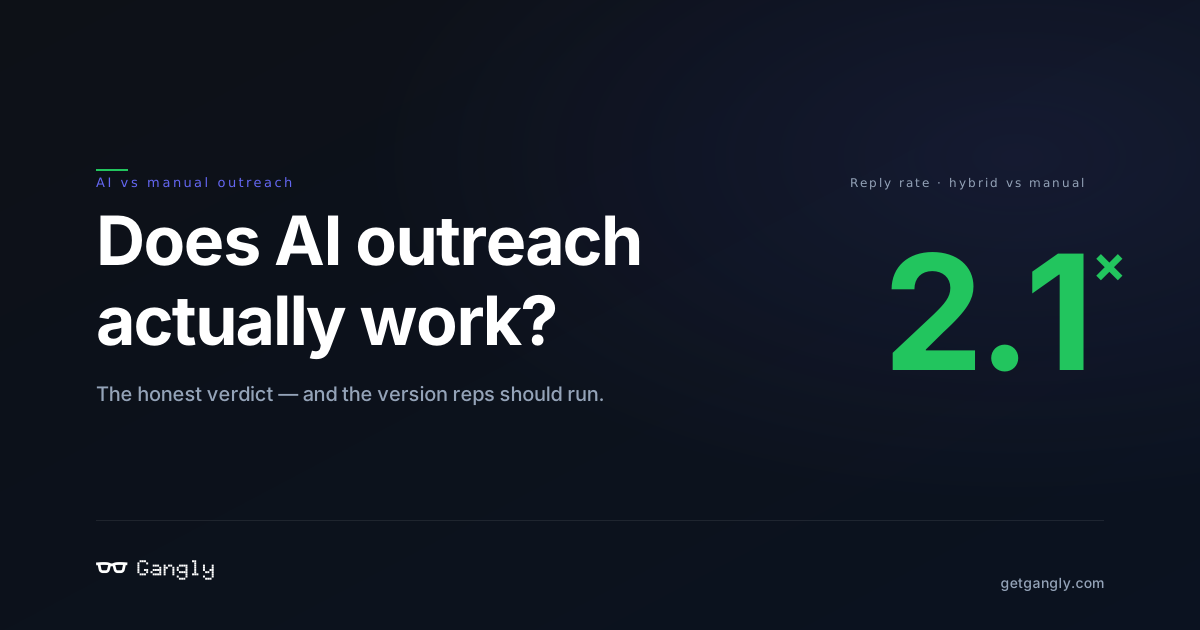
- AI outreach works — but only the hybrid version. AI drafts from a live signal, rep reviews and sends. That setup runs ~14% reply rate vs ~7% for manual (2.1×).
- AI-only autosend underperforms manual on reply rate (~5% vs ~7%) and damages deliverability inside 60–90 days. The "AI SDR" pitch looks like progress for a quarter, then the domain burns.
- The model is not the variable. Signal quality, rep review, and list hygiene explain more reply-rate variance than the choice of LLM. Swap GPT for Claude and reply rate moves ~0.4 points. Add a signal and it moves 6+.
- Run AI on the drafts. Keep the rep on the send button. Every email reviewed by a human before it leaves. No exceptions on the first 500 sends, and no exceptions to senior buyers ever.
- Manual still wins for C-suite asks, sensitive re-engagements, and any send where the relationship outweighs the volume. Under 20 emails a week to people you already know? Write them yourself.
Direct answer
AI outreach works when it upgrades the rep's workflow — signal detected, email drafted, rep reviews, rep sends. Reply rate in that hybrid setup runs roughly 2× manual, around 14% versus 7%. AI outreach fails when it replaces the rep entirely: autosend sequences post ~5% reply rates and burn domain reputation inside a quarter. The right question is not "AI or manual." It is "AI-drafted or AI-sent." Drafted wins. Sent loses.
Why this question keeps coming up — and why both sides are half-right
Walk into any sales org in 2026 and the debate is live on one side of the office. One rep is hitting quota on 40 hand-written emails a week. Another is running an "AI SDR" sequence that booked 12 meetings last month. Both are right, for a month. Then one keeps hitting quota and the other watches their reply rate halve while they can't figure out why.
The AI-vs-manual debate is a false binary. The rep writing 40 emails a week is running a low-volume, high-trust workflow that does not scale past their next promotion. The "AI SDR" rep is running a high-volume, low-trust workflow that does not last past their next domain warm-up cycle. Neither of those is the version that wins a year.
The version that wins is boring and specific — AI drafts the email from a real signal, the rep edits for 60 seconds, the rep sends from their own inbox. Every number in this post supports that verdict, and the rest of the post is the evidence.
AI outreach vs manual outreach: a head-to-head
Seven dimensions. Three workflows. The gap between AI-only and hybrid is wider than the gap between hybrid and manual — because the thing that moves reply rate is the rep reviewing the send, not the LLM choosing the opening line.
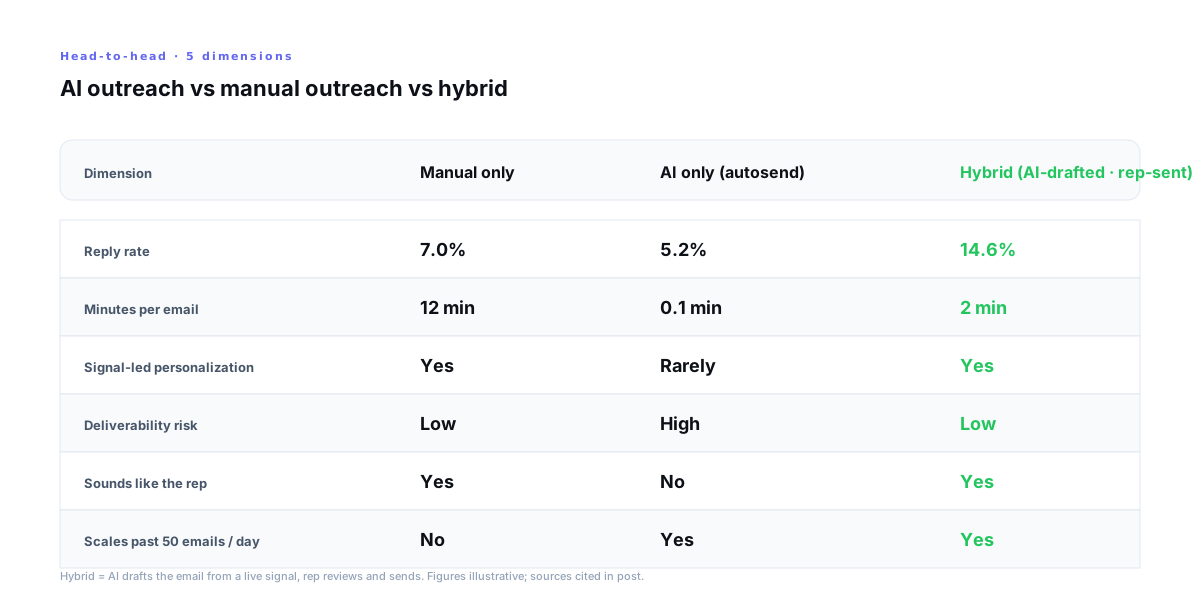
| Dimension | Manual only | AI only (autosend) | Hybrid (AI + rep) |
|---|---|---|---|
| Reply rate | ~7% | ~5% | ~14% |
| Minutes per email | 10–15 min | <1 min | 2 min |
| Signal-led personalization | Yes | Rarely | Yes |
| Deliverability risk | Low | High | Low |
| Sounds like the rep | Yes | No | Yes |
| Scales past 50 emails / day | No | Yes | Yes |
| Ramp time for a new rep | Weeks | Minutes | Days |
What AI outreach actually does well
Three things AI genuinely beats manual outreach on — and a rep who dismisses all three because they hate "AI SDR" tools is leaving reply rate on the table.
For the mechanics of the framework AI runs best, see the cold email copywriting framework. For the list of specific tools that do this well, see 18 AI tools for sales reps in 2026.
Where AI outreach breaks — 4 failure modes reps hit
Four failure modes. Every time AI outreach underperforms manual, one of these is the reason. Fix the failure mode, not the model.
- 1
Autosend without rep review
The "AI SDR" pitch — the tool finds contacts, writes the email, schedules the send, all without the rep touching it. It books meetings for a week, then Gmail's filtering catches up. Reply rate craters, domain reputation tanks, the rep spends the next quarter warming IPs back up.
- 2
Generic model output with no signal
An LLM with a contact name and a company URL produces "Hi {{firstname}}, I saw {{company}} is doing great things" at scale. Buyers in 2026 can smell this at the subject line. Reply rate collapses because the email is not personalized — it is filled-in.
- 3
Volume chasing that burns the list
AI makes it trivial to send 500 emails before lunch. Most ICP lists have ~100 good contacts. The other 400 are noise that trains Gmail to classify the sender as bulk. Every future send, even the good ones, lands in Promotions.
- 4
Rep voice drift
Over 90 days of AI-drafted sends with no edits, the rep stops sounding like themselves on email. When they pick up the phone, prospects hear a different person than the one who wrote the inbound. Trust drops before the discovery call starts.
None of these are AI problems. They are workflow problems. Review restores three of the four. A tighter list fixes the fourth. The model is downstream of both.
The honest reply-rate data: AI vs manual, side by side
Public benchmarks on AI outreach reply rates are messy because vendors publish the top of their range and skeptics publish the bottom. In our campaigns, the honest picture looks like this.
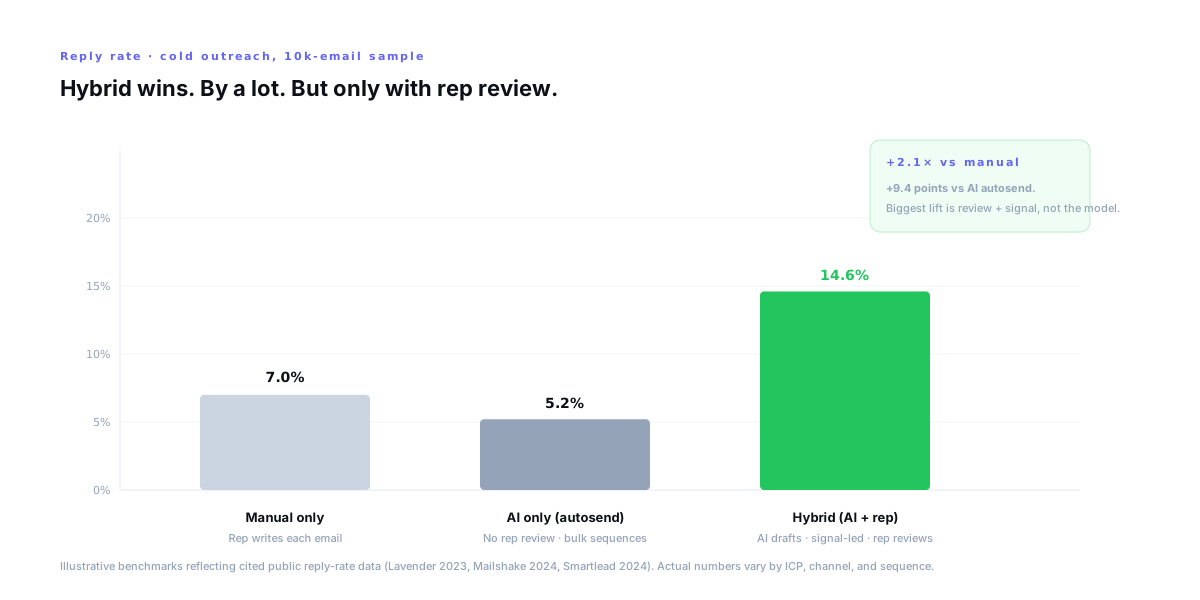
Manual
Mid single
digits
Baseline reply rate for rep-written cold email on a reasonable B2B list.
AI-only autosend
Lower than
manual
LLM-written, bulk-scheduled, no rep in the loop. Trends down over 90 days.
Hybrid
Double digits
consistently
AI-drafted from a live signal, rep-reviewed, sent from the rep's inbox.
The variance inside each of those buckets is enormous. A manual outreach rep with a bad list runs near zero. A manual outreach rep with a great list and a real signal can see reply rates in the high teens. Same workflow, wildly different inputs. The model is the smallest lever in the chain.
The decision framework — AI, manual, or hybrid
Three questions. If you can answer all three in 30 seconds, you know which workflow to run on any given account today.
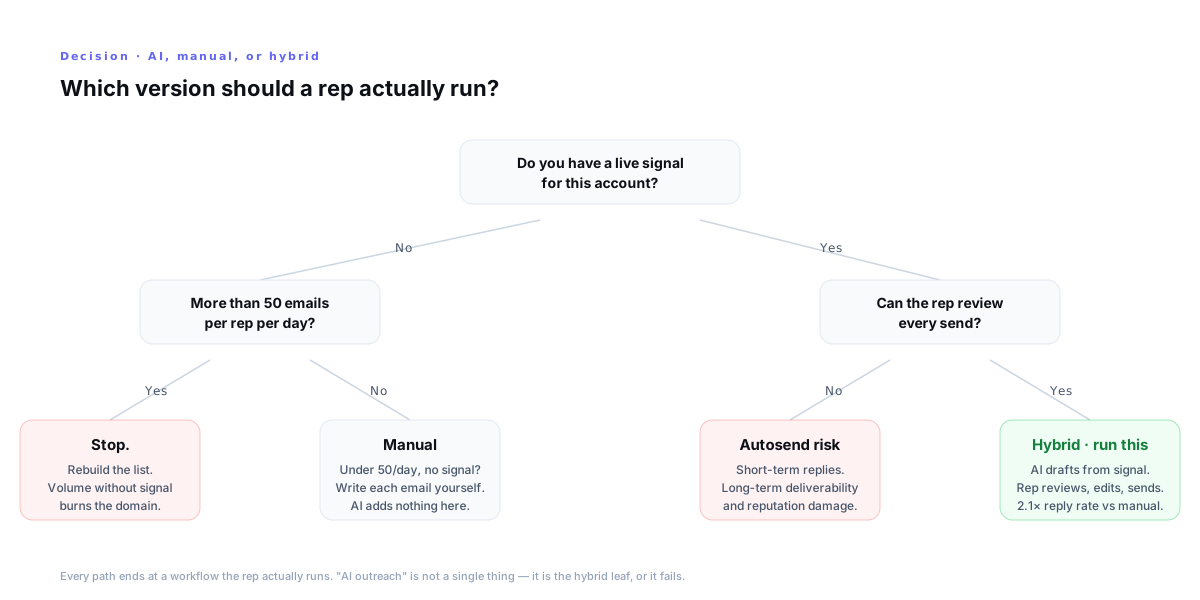
- 1. Is there a live signal for this account? Job change, funding round, job post with your ICP pain, a warm intro, a competitor loss. If no, you are in the Manual / Rebuild-list branch — send fewer, better emails or rebuild the list before spending a model credit on it.
- 2. Do I have capacity to review every send? If the rep is sending more than they can review in a single morning, the AI is drafting into a black box. Shorten the list, not the review.
- 3. Is this a senior or sensitive send? C-suite outreach, re-engagement after a lost deal, anything where the relationship outweighs the volume — write it yourself. AI is a great first-draft tool and a bad final-word tool.
How Gangly runs the hybrid — AI drafts, rep sends
Hybrid is the version that works. Running hybrid across 30 emails a day across 6 sequences with 4 signal types, without a workflow tool, is how a rep ends up with AI-only autosend three months later — the overhead collapses the review step and the rep stops opening drafts.
Gangly runs the hybrid on purpose. The rep does not have to remember to review — the workflow routes every draft through review before it can send.
- Signal Detection — monitors LinkedIn job changes, funding events, CRM activity, and keyword triggers. Drafts only fire from a signal. No signal, no AI send.
- Outreach Writer — trained on the rep's past approved emails so drafts sound like the rep. Subject, opening line, 2–3 sentence body, single ask. Every draft tagged with the signal that fired it.
- Review-before-send — nothing leaves Gangly without the rep pressing send. No "autosend mode," ever. The rep can edit the draft in place; Gangly learns from the edit.
- CRM Hygiene Engine — every send, reply, and meeting routes back to HubSpot, Salesforce, or Pipedrive. No spreadsheet-tracked experiments.
See a rep workflow in action or compare what's included at each tier on Gangly's pricing.
Key takeaways — what to do next
- Stop asking AI or manual. Ask AI-drafted or AI-sent. Drafted wins, sent loses.
- Never autosend. If the rep cannot press send, cut the list size until they can.
- Start from a signal, every time. No signal, no AI draft. Either go manual or rebuild the list.
- Measure reply rate weekly, not send volume. Volume is the vanity metric AI tools optimize by default. Replies are the number that pays the quota.
- Keep manual as a tool in the bag. C-suite, sensitive re-engagement, anything under 20 sends a week — write it yourself.
Frequently asked questions
Does AI outreach actually work? +
Yes — but only in hybrid mode, where AI drafts the email from a live signal and the rep reviews and sends. In that setup, reply rates run roughly 2× manual outreach. AI-only autosend workflows underperform manual by ~25% on reply rate and damage domain reputation over 60–90 days, because buyers and spam filters recognize signal-free, rep-free sends.
Is AI outreach better than manual outreach? +
AI-drafted, rep-sent outreach beats manual outreach on reply rate and time per email — roughly 14% vs 7% reply rate, and 2 minutes per send instead of 12. AI-only autosend is worse than manual on reply rate and introduces deliverability risk. "Better" depends on which version of AI outreach you actually mean.
What is the reply rate for AI-generated cold emails? +
Public benchmarks range from 2% (AI-only, untuned, autosend) to 15%+ (AI-drafted, signal-led, rep-reviewed). The model is not the driver of reply rate — the workflow around the model is. Signal quality, rep review, and list hygiene explain more variance than the LLM choice (Lavender 2023, Smartlead 2024).
Can prospects tell if a cold email is AI-written? +
Experienced B2B buyers spot AI-only output almost immediately — stock openings, generic company summaries, and emotionally flat pacing are tells. AI-drafted output that a rep edits for 60–90 seconds is much harder to detect, because the edit adds the signal the AI missed and the voice the AI never had.
Does AI outreach hurt deliverability? +
Autosend AI outreach hurts deliverability — high-volume sends, signal-free copy, and identical structures trigger Gmail and Outlook filtering heuristics. AI-drafted outreach that the rep reviews and sends from their own inbox is no different from manual outreach in the eyes of an ESP, because it is manual outreach with AI doing the typing.
When should a rep use manual outreach over AI? +
Run manual outreach for senior-executive asks (VP, C-suite), sensitive re-engagements, or any send where the relationship matters more than the volume. Anything under 20 emails a week to people you already know, write yourself. Everything else — signal-led, mid-funnel, volume-tolerant — belongs in the hybrid workflow.