TL;DR
The best AI tools for sales teams in 2026 are not a top-30 list — they are a stack. Seven layers: Prospecting (Apollo), Signals (Common Room), Outreach (Lavender), Call coaching (Gong), Notes & CRM sync (Fathom), Pipeline intel (Clari), and Orchestration (Gangly). A 5-rep team runs on four of them. A 50-rep team runs on all seven. Every candidate tool has to pass a 10-point rubric before it lands in the stack — rep-controlled sends, native CRM, 14-day pilot ROI, SOC 2, under $200/seat. Skip AI-SDR platforms, LLM wrappers sold as sales tools, AI-CRM replacements, and lead-predict models. They burn time without earning quota.
Direct answer
The best AI tools for sales teams in 2026 span seven stack layers — prospecting, signals, outreach, call coaching, notes and CRM sync, pipeline intelligence, and orchestration. The top pick per layer is Apollo (prospecting), Common Room (signals), Lavender (outreach), Gong (call coaching), Fathom (notes), Clari (pipeline), and Gangly (orchestration). A team needs four of the seven layers to start and adds the rest as it scales past 20 reps. Skip AI-SDR platforms, generic LLM wrappers, and AI-CRM replacements.
Why most sales teams end up with 14 AI tools and no workflow
The average B2B sales team runs with 10\u201314 tools in its stack. Most of them were bought by a different VP in a different quarter. None of them talk to each other. The rep switches between Apollo, Gmail, LinkedIn, Lavender, Zoom, Gong, HubSpot, Slack, Notion, and a Chrome tab with "prompt for cold email" pinned — before they have sent their first message of the day.
Installing a new AI tool every time a new workflow hurts is how you get here. A better frame: start with the stack, not the tool. There are seven layers. A team does not need all of them on day one. It needs the four that match the workflow pain right now, and a clear path to add the rest as the team grows.
The rest of this piece walks through each layer, the top pick per layer, the complete stack template by team size, and the 10 questions every new tool has to pass before it earns a seat in the week.
The 7-layer AI sales stack
Every AI sales stack, regardless of team size, is some combination of these seven layers. They hand off to each other in order. Skip one and the workflow breaks.
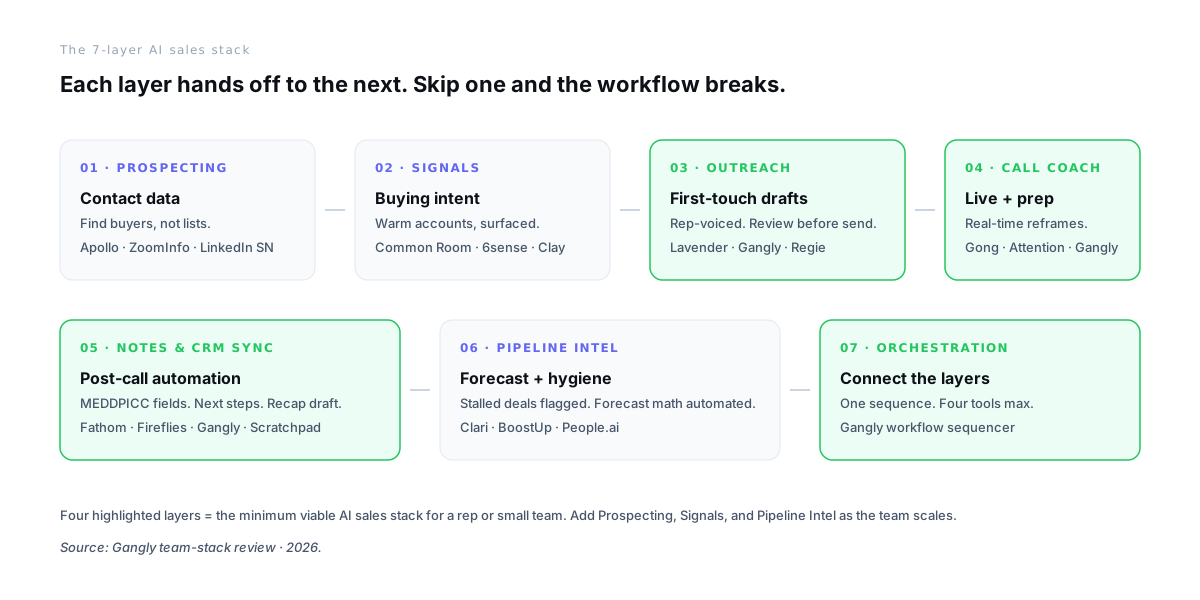
- 01
Prospecting
List buildingFind the buyer, not the domain. Contact data, verified email, direct dial. The layer that fuels everything downstream — but on its own it does nothing.
- 02
Signals
Buying intentWhich of the contacts from layer 01 are warm right now. Hiring, funding, tool change, product visit, champion posting. The difference between cold lists and live accounts.
- 03
Outreach
First-touch draftsTurn a specific signal into a specific message, written in the rep’s voice, reviewed before send. The handoff from intent to conversation.
- 04
Call coaching
Prep + liveOne-page brief before the meeting. Real-time reframe during the call. The rep walks in prepared and leaves with momentum, not regret.
- 05
Notes & CRM sync
Post-callMEDDPICC fields, next steps, recap draft. Rep approves. CRM updates without the Saturday-morning catch-up session that burns out every team.
- 06
Pipeline intel
Forecast + hygieneStalled deals flagged. Forecast math automated. Manager walks into the Monday pipeline review knowing which deals to defend and which to pull.
- 07
Orchestration
Connect the layersThe glue. Signal from 02 triggers draft in 03, which fuels prep in 04, which feeds notes in 05, which updates CRM for 06. Missing this layer is why teams end up with 14 tools and no workflow.
Layer 07 is the one teams forget exists. Without orchestration, layers 2\u20135 run as separate apps and the rep\u2019s day becomes tab-switching. With it, the four middle layers are one sequence.
The best AI tool in each layer (ranked)
One top pick per layer, the price point to expect, the two or three runners-up worth keeping on the evaluation list, and an honest take on when the top pick earns its seat.
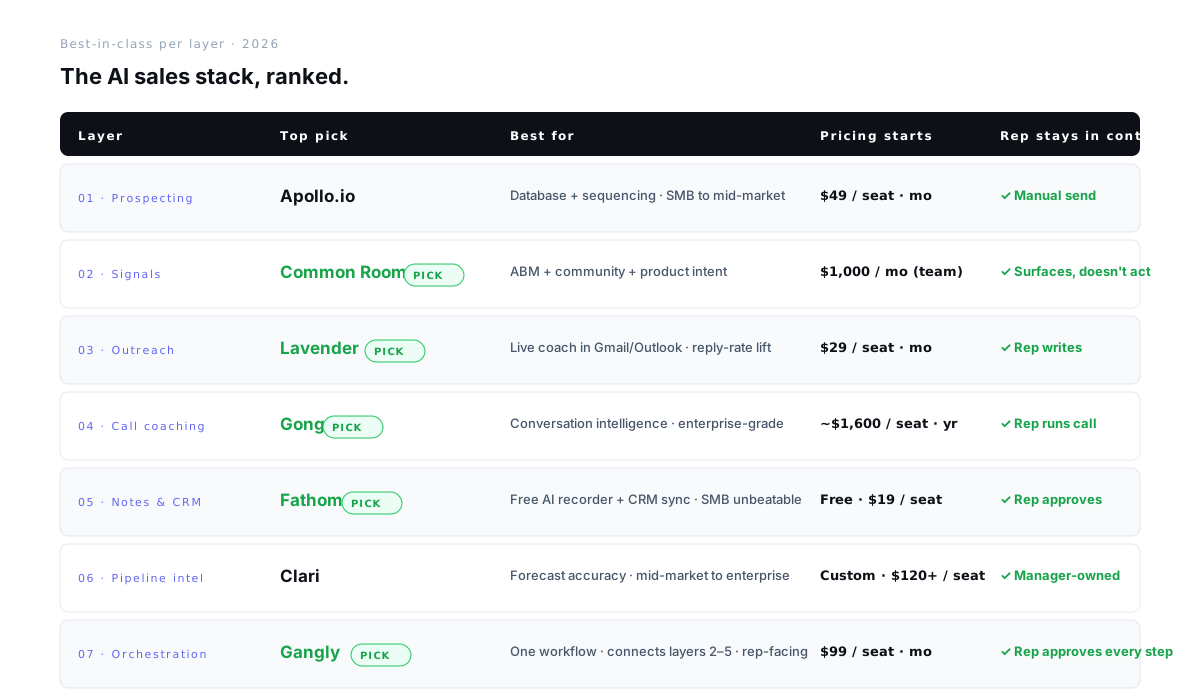
01 · Prospecting
Apollo.io
Best for
SMB → mid-market · database + sequencing in one tool
Pricing from
$49 / seat · mo
Runners-up
ZoomInfo (enterprise), LinkedIn Sales Navigator (quality over volume), Clay (power-user enrichment)
Apollo is the default because of price, coverage, and the fact that every AE has already used it. Upgrade to ZoomInfo only if the data quality gap is costing real meetings.
02 · Signals
Common Room
Top pickBest for
Teams running ABM or community-led sales
Pricing from
~$1,000 / mo (team plan)
Runners-up
6sense (enterprise ABM), Clay (custom signal orchestration), Warmly (website visitor intent)
Common Room pulls signals from LinkedIn, Slack communities, product usage, and CRM history in one feed. It earns its seat when the team is already targeting specific accounts — not when the motion is pure cold outbound.
03 · Outreach
Lavender
Top pickBest for
Individual AE/BDR reply-rate lift
Pricing from
$29 / seat · mo
Runners-up
Regie.ai (sequence drafts), Twain (free tier), Gangly Outreach Writer (signal-led)
Lavender is a live coach inside Gmail and Outlook. Reps who use it for 14 days typically lift reply rate 15–25%. It does not send for you. That is the feature, not the bug.
04 · Call coaching
Gong
Top pickBest for
Teams making 10+ demos per rep per week
Pricing from
~$1,600 / seat · yr
Runners-up
Chorus (now part of ZoomInfo), Attention (real-time, cheaper), Gangly Live Call Coach (workflow-integrated)
Gong is the category leader with the largest conversation dataset. Worth it at scale. Under 10 calls a week per rep, Attention or Gangly will cover most of the value at a fraction of the price.
05 · Notes & CRM sync
Fathom
Top pickBest for
SMB teams and founders on zero-to-light CRM usage
Pricing from
Free · paid from $19 / seat · mo
Runners-up
Fireflies (keyword search across calls), Otter (general-purpose), Gangly Post-Call Notes (MEDDPICC-ready)
Fathom is the hardest pick on the list to beat because the free tier genuinely works. For MEDDPICC field discipline and multi-step recap automation, graduate to a sales-specific tool once volume passes 5 calls per rep per day.
06 · Pipeline intel
Clari
Best for
Mid-market to enterprise · forecast accuracy above all
Pricing from
Custom · typically $120+ / seat
Runners-up
BoostUp (cheaper, lighter), People.ai (enterprise activity capture), Scratchpad (CRM autofill for reps)
Clari is the standard at 30+ reps. Below that, a combination of Scratchpad (rep-level hygiene) and HubSpot/Salesforce native reporting covers most needs without the enterprise invoice.
07 · Orchestration
Gangly
Top pickBest for
Teams who want one workflow instead of four tabs
Pricing from
$99 / seat · mo (Starter)
Runners-up
None at full coverage — point-tool stacks (Lavender + Fathom + Scratchpad) approximate it but do not connect
The orchestration layer is new. Point tools each solve their own layer. Gangly connects layers 2–5 so signal, outreach, call, and notes run as one sequence instead of four apps.
Complete stack templates by team size
The right stack at 5 reps is not the right stack at 50. These three templates have been tested on real teams. Use them as the starting point, not the ceiling.
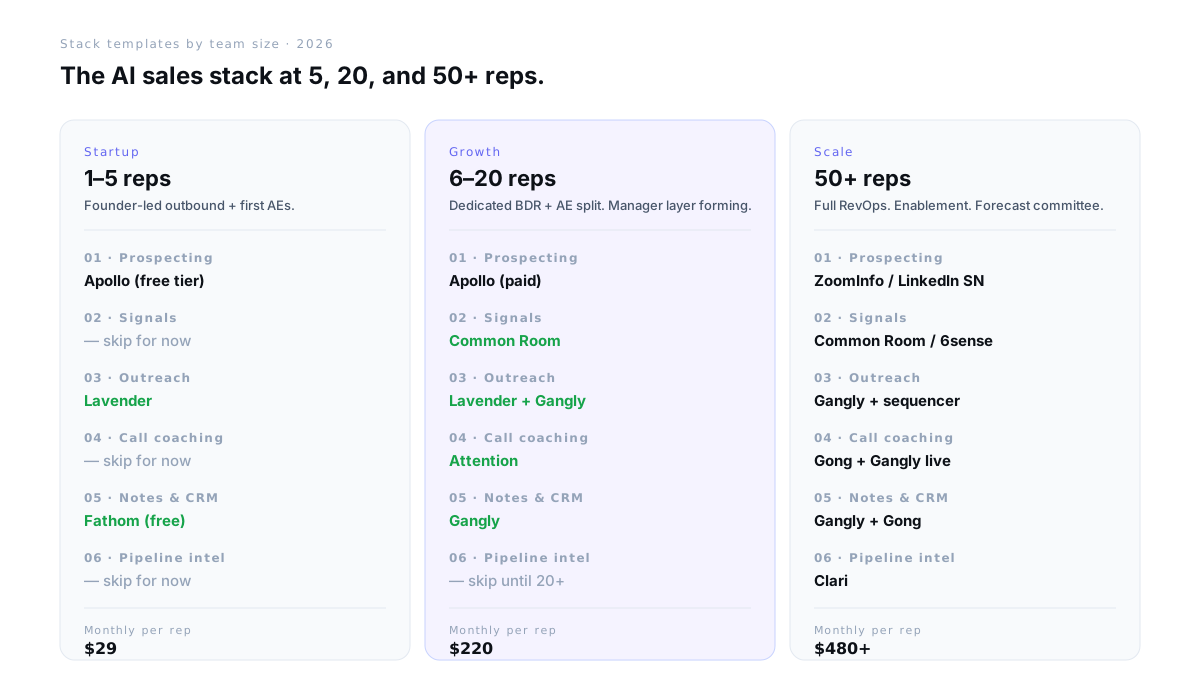
Startup · 1\u20135 reps
Four layers, $29/rep.
Free Apollo + Lavender + free Fathom + Gangly starter covers 80% of the workflow without a RevOps hire.
Skip: Signals, Call coaching, Pipeline intel — all three require dedicated admin.
Growth · 6\u201320 reps
Six layers, ~$220/rep.
Add Common Room (signals), Attention (call coaching), and graduate Fathom to Gangly for MEDDPICC discipline.
Skip: Clari until a forecast call happens weekly and a VP owns it.
Scale · 50+ reps
All seven layers, $480+/rep.
ZoomInfo, Common Room or 6sense, Gangly-led outreach and orchestration, Gong for coaching, Clari for forecast.
Watch for: tool sprawl past 10 vendors \u2014 consolidate before adding new ones.
The 10-point team-level evaluation rubric
A new AI sales tool launches every week. Not all of them earn a seat. Run every candidate through this 10-point team-level rubric. If it fails three or more, cut it before the demo.
Does it map to a layer we already need?
If no rep currently does this work manually, adding the tool creates work, not saves it.
Does the rep stay in control of every send?
Auto-sent outreach burns deliverability. Rep-reviewed outreach protects the domain and the brand.
Native integration with our CRM?
HubSpot, Salesforce, Pipedrive. If the vendor requires a Zapier workaround, scale will break it.
Can we see measurable lift inside 14 days?
Reply rate, meetings booked, hours saved. Tools that need 60–90 days never get adopted.
Per-seat pricing under $200/mo?
Above that, procurement slows the rollout and the rep is not the buyer. Budget kills adoption.
SOC 2 Type II?
Any tool touching CRM data will hit security review. No SOC 2 = 12-week procurement cycle.
Does it respect LinkedIn ToS?
LinkedIn bans API-based automation. Tools that auto-send via scraped sessions create account-level risk for every rep.
Per-rep, not admin-led rollout?
If the vendor’s demo starts with "your RevOps team configures…", it is not going to land with reps.
Does it play with the orchestration layer?
New tools should feed Gangly (or whichever orchestrator you chose), not fork the workflow into a separate app.
Can the champion rep explain it in one sentence?
If the internal champion cannot pitch it to the rest of the team in one sentence, the tool is too complex to scale.
The highest-signal question is #4. A 14-day pilot with 2\u20133 reps beats a 60-minute vendor deck. If the tool cannot move one metric in 14 days, it will not move it at scale either.
Four categories of AI sales tools to cut from every vendor list
Four categories that look useful on a vendor slide, take real time and money, and reliably fail to move the needle on quota. Cut these from the evaluation list before scheduling the demo.
- 1
"AI SDR" platforms that fully automate outreach
The "AI rep that books meetings for you" pitch sounds appealing and almost always burns the domain. Auto-sent, signal-free emails trip Gmail’s filter heuristics faster than any ESP can warm you back up. The rep always reviews. That is a feature.
- 2
Generic LLM wrappers sold as "sales content" tools
Tools whose core value is a ChatGPT prompt with a logo. A rep can produce the same output in a free ChatGPT window with better context. If a tool’s moat is the model, the tool has no moat.
- 3
AI-powered CRM replacements
The CRM is not the problem. The workflow around it is. Ripping out Salesforce or HubSpot to install a "rep-first CRM" is a 6-month project that fixes none of the weekly pain. Keep the CRM. Fix the workflow.
- 4
Lead-scoring models that claim to predict which deal will close
Models that advertise 70%+ win-rate prediction are almost always recency-weighted. They score deals that already look like closed-won. Use scoring to prioritize outreach, never to forecast revenue.
How Gangly orchestrates the stack
Layers 2 through 5 \u2014 signals, outreach, call coaching, notes and CRM sync \u2014 are where reps spend 70% of their week. Point tools solve each layer in isolation and leave the rep switching between four apps. Gangly sits at layer 07 and connects the four middle layers into one sequence.
- Signal Detection \u2014 covers the Common Room motion natively for teams whose ABM lists live inside Gangly.
- Outreach Writer \u2014 signal-led first drafts with the review-before-send discipline Lavender teaches.
- Call Prep and Live Call Coach \u2014 pair with Gong for teams already running it, or stand alone under 10 calls per week per rep.
- Post-Call Notes and the CRM Hygiene Engine \u2014 the Fathom + Scratchpad workflow, with the rep approving every field before it writes to Salesforce or HubSpot.
- Pricing \u2014 $99/seat Starter, $199/seat Growth, $299/seat Scale. 14-day free trial, no credit card.
The rep stays in control across every layer. Nothing sends without approval. Nothing writes to CRM without a review.
The Gangly weekly rep brief
Tool reviews. Stack teardowns. Every Friday.
Honest takes on the new AI sales tools every week \u2014 what to use, what to skip. Four minutes to read.
Frequently asked questions
What are the best AI tools for sales teams in 2026? +
The best AI tools for sales teams in 2026 span seven stack layers: Apollo.io for prospecting, Common Room for signals, Lavender for outreach, Gong for call coaching, Fathom for post-call notes, Clari for pipeline intelligence, and Gangly for orchestration. A team does not need all seven — pick the four layers that match the current workflow pain, then add the rest as the team scales past 20 reps.
How many AI tools does a sales team actually need? +
Four stack layers is the minimum viable AI sales stack: Outreach (Lavender or Gangly), Call coaching (Gong or Attention), Notes + CRM sync (Fathom or Gangly), and Orchestration (Gangly or a manually-stitched point-tool combination). A 5-rep team can run on these four. A 20-rep team adds Prospecting and Signals. A 50+ rep team adds Pipeline intel.
What is the best AI sales tool for a small team with no RevOps? +
Fathom (free) for post-call notes, Lavender ($29/seat) for outreach, and Gangly for orchestration. The combined monthly cost is under $150 per rep and the entire stack can be set up in under 30 minutes per rep. Everything that requires an admin rollout (6sense, Clari, People.ai) should wait until there is a dedicated RevOps person to own it.
Are AI sales tools replacing sales reps? +
No. AI sales tools replace the admin work reps never wanted — list building, draft writing, post-call notes, CRM fields, forecast math. The work that closes deals (discovery, objection handling, multi-threading, negotiation, champion-building) stays human because buyers buy from humans. Teams that automate sending without rep review reliably burn their domain inside 90 days.
Is ChatGPT a good AI tool for sales? +
ChatGPT is a good scratchpad. It is not a sales tool. It has no CRM context, no signal awareness, no send-review discipline, and no integration into the rep’s day. Use it for one-off rewrites and research. For anything that touches a pipeline, a contact, or a CRM field, use a tool that was built for the workflow.
Should we pilot AI sales tools before a full rollout? +
Always. A 14-day pilot with 2–3 reps reveals more than a 6-month procurement cycle. Track one metric per tool: reply rate for Outreach, meetings booked for Signals, hours saved for Notes, forecast accuracy for Pipeline intel. If the pilot cannot move the metric in 14 days, it will not move it at scale either.
What AI sales tool is Gangly closest to? +
Gangly sits one layer above the individual point tools. It is the orchestration layer — signal detection from layer 02, outreach drafts from layer 03, call prep and live coaching from layer 04, and post-call notes from layer 05, all in one connected sequence. Point tools cover one layer each. Gangly connects layers 2 through 5 so the rep runs one workflow instead of switching between four apps.