
- Sales call structure is a 4-stage flow — Open, Discover, Position, Close — you run on every call. It's a timer, not a script. When one stage slips, move on; a closed stage beats a perfect one that eats the next stage's clock.
- Inside a 30-minute discovery call: 3 minutes Open, 17 minutes Discover, 6 minutes Position, 4 minutes Close. On a demo, Position stretches to 15–20 minutes; everything else compresses.
- Top-closing AEs sit at 43% talk / 57% listen on discovery (Gong, 2025). Average reps sit at 60/40. Reps above 65% talk close at 14% versus 41% for reps in the 38–46% band.
- Discovery is where deals are won. Ask 11–14 open questions, quantify pain in dollars or hours, and map the buying committee before the demo — not after.
- Close with a specific next step: name, date, time, invite sent on the call. "I'll follow up with a recap" is not a close. It's a deferral.
- Live structure beats post-call coaching. Gangly's Call Prep Engine loads the agenda, Live Call Coach keeps the stage timer and talk ratio honest, and Post-Call Notes writes the CRM summary before the rep closes the call window.
What sales call structure actually means
Most "sales call structure" content is a one-page PDF. Five stage names, no timer, no talk ratio, no in-call rules. It looks useful in a pre-call review. It does nothing at minute 14 of a call that already slid sideways.
The structure top AEs actually run is different. It's a timer with a job per stage. The job has a clear done signal — agenda confirmed, impact quantified in dollars or hours, proof shown, next step on the calendar. When the job is done, you move to the next stage, even if you have minutes left. When the clock runs out on a stage, you move anyway. That's it. The scripts and objection responses live inside the stages — they don't replace them.
A rep without structure runs call content in whatever order the prospect volunteers it. A rep with structure runs the prospect's content through the same filter every time. That's why the rep with structure reliably surfaces pain before pricing, and the rep without it reliably defends price before establishing value.
The 4-stage sales call framework top AEs actually run
Four stages. One timer. One job per stage. The framework below is for a 30-minute discovery call — the most common call shape in B2B. Demos, closing calls, and follow-ups keep the same four stages but redistribute the minutes.
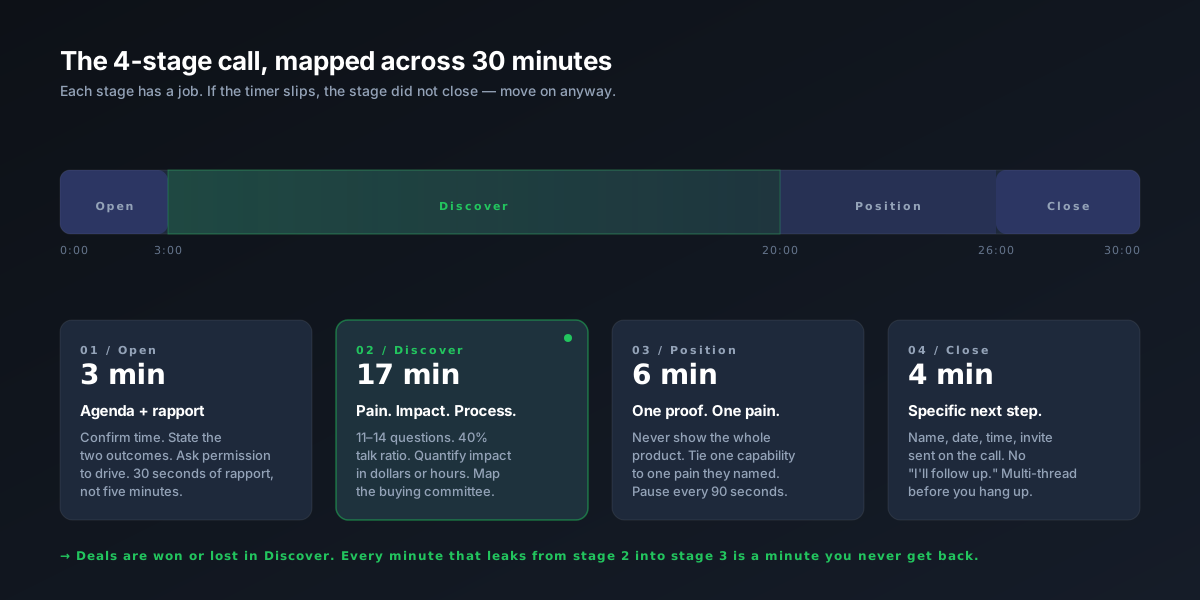
Stage 1 — Open (first 3 minutes)
Three things, in order. Confirm the time you have. State the two outcomes you want from the call. Ask permission to drive. "I've got us for 30 — want to spend the first 10 on where you are today, the next 10 on what we built for this, and the last 10 on whether there's a next step. Sound right?" That sentence is the single highest-ROI line an AE can memorize. It resets the call from a sales demo to a joint working session.
Skip small talk longer than 30 seconds. Rapport is a feature of the call, not a stage. Senior buyers specifically dislike the opening-weather-question cadence — it reads as stalling. A senior AE does rapport in five words while the prospect is still clicking into the meeting.
Stage 2 — Discover (minutes 3–20)
This is 57% of the call. It's where deals are won. Gong's 2025 data on recorded B2B calls shows top-performing reps ask 39% more questions than their peers and run discovery 76% longer in elapsed time. The question count that correlates with the highest win rate sits in the 11–14 range. Fewer and the rep hasn't dug deep enough; more and the call starts reading as an interrogation.
Structure the questions in three layers. Situation first — current tools, current workflow, current team. Problem second — what's breaking, what takes too long, what's getting escalated. Impact third — what does that cost in dollars, hours, quota, or turnover. The impact layer is the one most reps skip. "It takes too long" is not pain. "It takes our four AEs six hours each a week, which is 24 hours of selling we don't get" is pain. Only the second sentence justifies the deal.
Two rules inside Discover. First, ask one question at a time. Stacking two questions gives the prospect a choice, and they'll always answer the easier one. Second, keep your talk ratio between 38% and 46%. Above that, you're leading; below it, the prospect thinks you didn't listen. Live Call Coach shows the ratio in real time precisely because most reps can't feel it drifting.
Stage 3 — Position (minutes 20–26)
Six minutes. One capability. One pain. That's the instruction.
The default rep instinct is to demo the whole product. Every feature built by the engineering team feels load-bearing. None of it is — not in a 6-minute window after a 17-minute discovery. Pick the single capability that resolves the most expensive pain the buyer named and show that. Everything else is a note for the next call.
If the call is a dedicated demo (not a discovery call with a demo tail), Position expands to 15–20 minutes and the pause-for-question rhythm becomes the structure. Every 3–4 minutes, stop and ask one of two questions: "Does this map to what you described earlier?" or "What would break about this in your environment?" The rhythm prevents the 12-minute monologue that demo calls drift into by default.
One more pattern from top reps. Frame the Position stage as a shared edit, not a pitch. "Here's what we'd do for the four-AE team you described — tell me where this falls short." That sentence moves you from seller-vs-buyer to peer review, and it surfaces the objection that would otherwise land in a "we'll think about it" email two days later.
Stage 4 — Close (minutes 26–30)
Four minutes. One job. Book the specific next step on the call — name, date, time, invite sent before you hang up. Not "I'll follow up with a recap." Not "let me know if you want to see more." A calendared next step.
The script is boring on purpose. "Based on what we covered, the logical next step is a 45-minute tech deep-dive with your data lead and a quick ROI review with your CFO. I've got Thursday at 10 or Friday at 2 — either work?" That's a close. It presents two specific times, names the people who need to be in the next call (multi-threading), and ends with a yes/no question. Reps who send the calendar invite while still on the call book the next step at nearly double the rate of reps who say they'll send it later (Pavilion 2025 cohort data).
If the next step can't be booked on the call — genuine calendar conflict, champion needs to check with CFO — lock the commitment to lock the commitment. "I'll send two options by 5pm today; can you confirm one by tomorrow end of day?" is still a close. "I'll reach out next week" is not.
Call structure by call type — discovery, demo, follow-up, closing
Same four stages. Different minute splits. Same rule: close each stage when its job is done.
| Call type | Total time | Stage split (Open · Discover · Position · Close) | Target talk ratio |
|---|---|---|---|
| Discovery call | 25–30 min | 3 · 17 · 6 · 4 | 38–46% rep |
| Demo call | 30–45 min | 3 · 8 · 20 · 4 | 55–65% rep |
| Follow-up / recap | 15–20 min | 2 · 6 · 4 · 3 | 45–50% rep |
| Closing call / commercial | 20–30 min | 3 · 5 · 12 · 5 | 50–55% rep |
| Multi-threading intro (second stakeholder) | 20–25 min | 3 · 14 · 4 · 3 | 35–42% rep |
Two callouts. Demo calls are the one shape where you're meant to talk more than the buyer — but only after you've re-opened discovery for 8 minutes to confirm the pain picture from the earlier call. Reps who skip the demo-call Discover stage because "we already covered it" are the reps who get the "let me think about it" email.
Multi-threading calls flip the script. You're meeting a second stakeholder — the CFO, the VP who'll actually sign — who wasn't on the first call. Run Discover heavier than usual because this person hasn't walked you through their pain yet. Your champion briefed them; that's not the same as them telling you. Assume zero context.
The talk-to-listen ratio that actually closes deals
Of every number in sales-call research, this is the one most worth memorizing. Gong's 2025 analysis of recorded B2B calls shows the average rep-to-buyer talk ratio across all calls is 60/40 — the rep talking too much. The ratio for reps who closed the deal was meaningfully lower. The ratio for reps who lost the deal was meaningfully higher.
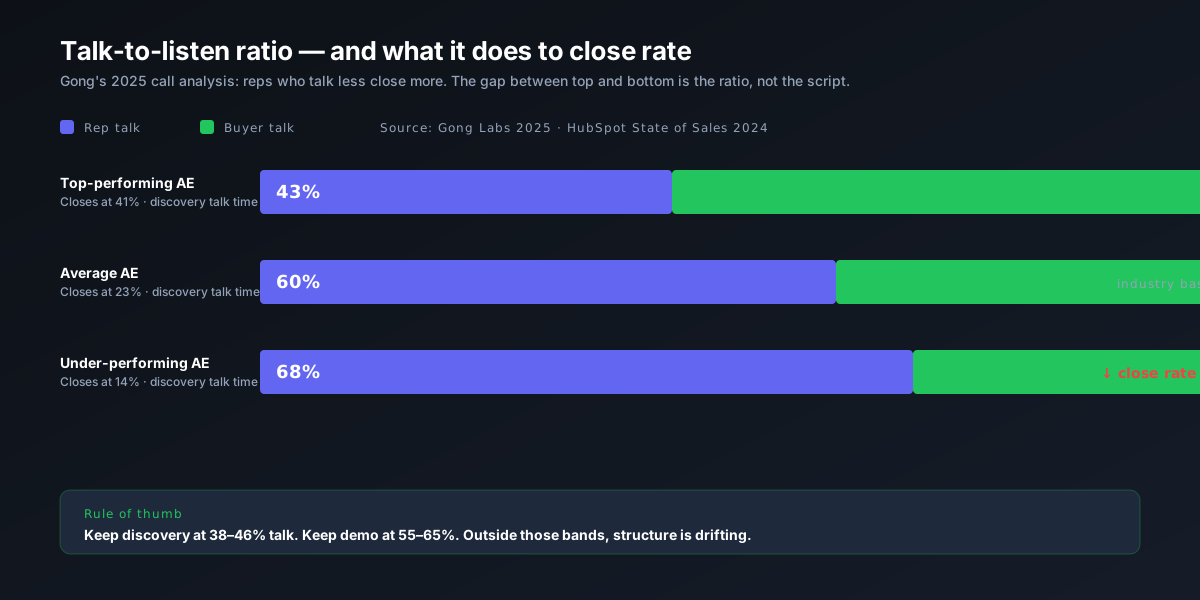
Top AEs sit at 43/57 on discovery. That 17-point gap above the industry average is not because they ask shorter questions. It's because they don't interrupt, they don't fill silence, and they don't answer their own questions before the prospect has a chance to. Reps above 65% talk close at 14%. Reps in the 38–46% band close at 41% — nearly 3× the rate, on the same inbound leads.
The ratio changes by call stage. Cold calls should run 50–60% rep; you have to get yourself into the conversation before they stop listening. Discovery should run 38–46%; you're learning. Demos should run 55–65%; you're presenting. Closing calls should run 50–55%; you're summarizing but still listening for final objections. If your discovery call feels "tight" and your talk ratio is at 58%, the call wasn't tight — it was one-sided.
5 mistakes that flatten every sales call
- Skipping the agenda. Without one, the prospect runs the call. Which means the call spends 20 minutes on whatever they wanted to talk about and 3 minutes on whatever you needed. You lose the deal two calls later because you never surfaced half the pain picture.
- Rapport-stalling past 30 seconds. The weather question is a tax on senior buyers. They priced this call in their calendar at 30 minutes. Every minute of small talk is a minute off Discover.
- Letting Discover bleed into Position. The rep is 19 minutes in, Position hasn't started, and the clock is at 24. Now the demo is 2 minutes long. The call ends with the prospect saying "send me the deck" because there was no real Position stage.
- Demoing the whole product. Six minutes, one capability, one pain — not six minutes, seven capabilities. Every feature you show that doesn't tie to a pain the buyer named is a minute the buyer tuned out.
- Ending with "I'll follow up." The next step is on the calendar before you hang up, or it's not happening. Reps who send calendar invites on the call close their next-step rate at nearly double the rate of reps who say they'll send it later.
How Gangly runs structure into every call automatically
Structure is a discipline. Discipline decays under time pressure — which is exactly when a live call applies time pressure. The fix is not "try harder." The fix is a workflow that enforces the structure without asking the rep to think about it.
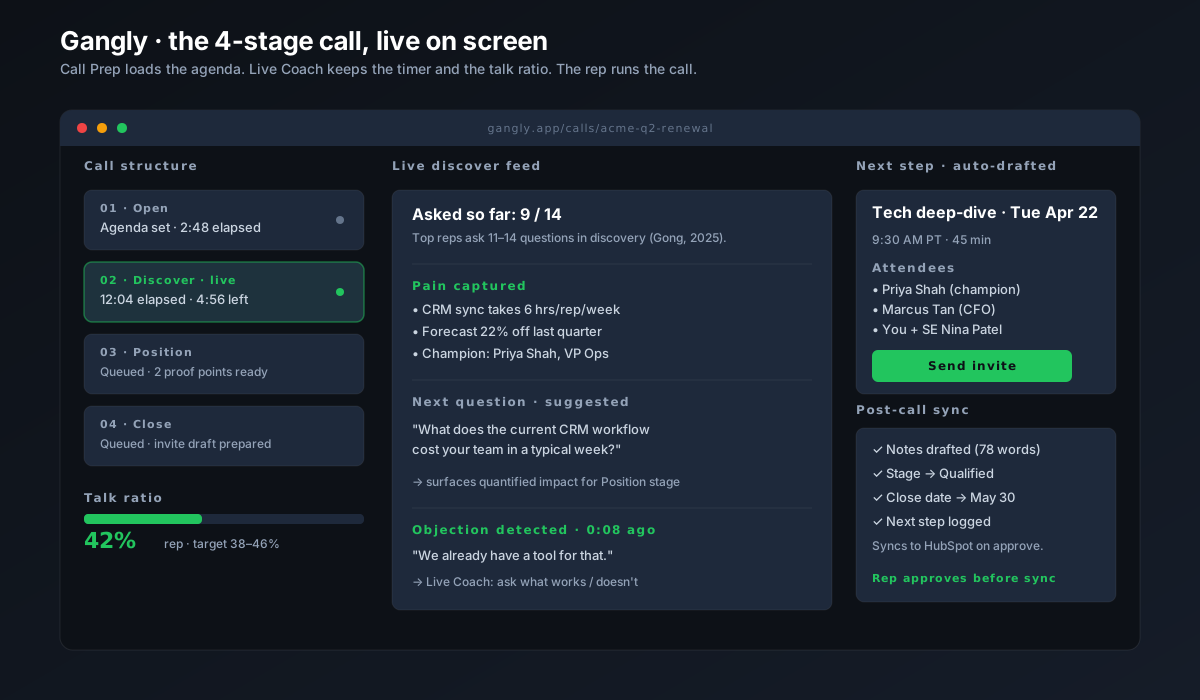
Call Prep Engine builds the stage-by-stage agenda in under 5 minutes — the two call outcomes, the 11–14 questions to ask in Discover, the likely objections, and the one capability most likely to close the call. The brief is ready before the meeting invite opens, so the rep walks in with the structure pre-loaded.
Live Call Coach runs during the call on Zoom or Google Meet. It shows which stage you're in, how many minutes are left, and where the talk ratio is sitting. When Discover stalls, it surfaces the next question. When an objection lands, it tags the root cause and suggests the diagnostic (see the full breakdown in the sales objection handling framework). The rep runs the conversation; the coach runs the timer.
Post-Call Notes closes the loop. Before the rep closes the call window, the notes are drafted, the stage progression is proposed, and the next-step invite is pre-filled. Rep approves, and the whole record syncs to HubSpot or Salesforce in one click. The post-call admin that usually ate 15 minutes now eats 90 seconds.
The Workflow Sequencer keeps the three stages connected, so the rep doesn't bounce between a prep doc, a coaching tab, and a CRM tab during and after the call. The structure runs across one surface. Which is the only way it actually gets used on Friday afternoon at 4pm.
Run every call on the same 4-stage structure
Call Prep loads the agenda, Live Coach keeps the timer, Post-Call Notes writes the CRM summary. Start a 14-day free trial — no credit card.
Key takeaways
- Sales call structure is a 4-stage timer: Open (3 min), Discover (17 min), Position (6 min), Close (4 min). The structure stays the same across call types; the minute split changes.
- Discover is where deals are won. Ask 11–14 open questions, keep talk ratio at 38–46%, and quantify pain in dollars or hours before moving to Position.
- Position means one capability tied to one pain. Showing the whole product is how a 6-minute stage becomes a 12-minute one and blows the Close.
- Every call ends with a calendared next step. Invite sent on the call, not "I'll follow up" after. The win-rate gap is roughly 2× (Pavilion 2025).
- Top-closing AEs sit at 43% talk on discovery. Reps above 65% close at 14%; reps in the 38–46% band close at 41%.
- Call Prep loads the agenda, Live Coach runs the timer and ratio, Post-Call Notes writes the recap — so the structure holds without the rep having to think about it.
Frequently asked questions
Sales call structure is the repeatable 4-stage flow a rep runs on every call: Open (set the agenda in 3 minutes), Discover (surface pain, impact, and process in 15–18 minutes), Position (tie one proof point to one pain in 5–7 minutes), and Close (lock a specific next step in 3–5 minutes). The structure is a timer, not a script. It keeps discovery from bleeding into demo and it keeps every call ending with a booked next step.
The four stages top AEs run on every call are Open, Discover, Position, and Close. Open sets the agenda and earns the right to drive. Discover surfaces pain and quantifies impact with 11–14 open questions. Position ties one capability to one pain the buyer named. Close locks the specific next step — name, date, time, and invite sent on the call. Older 5-stage versions add Rapport and Presentation as separate stages; most modern AEs collapse them into Open and Position.
A discovery call runs 25–30 minutes. A demo call runs 30–45 minutes. Follow-up and closing calls run 15–20 minutes. The stage split inside a 30-minute discovery: 3 minutes Open, 17 minutes Discover, 6 minutes Position, 4 minutes Close. If the timer slips in one stage, move on anyway — a closed stage beats a perfect one that eats the next stage's clock.
Gong's 2025 call analysis shows top-closing reps sit at 43% talk, 57% listen on discovery calls. The industry average is 60/40 the wrong way. For demos the ratio flips to 55–65% rep, since you're presenting. For cold calls it's 50–60%. Reps who talk more than 65% on discovery close at 14% compared with 41% for reps in the 38–46% band. The ratio is the single highest-leverage fix in most AEs' calls.
Top AEs run the same 4-stage structure on every call, enforce a stage timer, ask 11–14 open questions in Discover, keep talk ratio between 38–46%, quantify impact in dollars or hours before moving to Position, and never end a call without a specific next step on the calendar. They also write the post-call note and sync CRM inside 5 minutes of hangup — pattern capture is what lets the structure compound across a pipeline instead of being re-learned each call.
Discovery calls run 25–30 minutes with a 40% talk ratio and heavy question density (11–14 open questions). Demo calls run 30–45 minutes with a 60% talk ratio — you're presenting, not interviewing — and a forced pause-for-question every 3–4 minutes to prevent monologuing. Both use the same 4-stage shell, but Position stretches to 15–20 minutes on a demo because that's the whole point of the call. See the deep dive in how to win more sales calls.
Yes. Gangly's Call Prep Engine loads the agenda, recommended talk track, and likely objections before the call opens. Live Call Coach listens on Zoom or Google Meet, tracks the stage timer, monitors talk-to-listen ratio, and surfaces the next question when Discover stalls. Post-Call Notes writes the CRM summary and next-step invite inside a minute of the call ending. The rep runs the conversation; the coach runs the timer, the questions, and the notes — so the structure holds without the rep thinking about it.