
 By Siddharth Gangal
Why 70% of sales call recordings never get analyzed
The average B2B rep takes 8 to 12 discovery, demo, and follow-up calls a day. Most teams record them. A smaller share transcribes them. A much smaller share ever reads the transcripts. Industry estimates put the share of recorded B2B calls that ever get structured analysis at under 30% — which means roughly 70% of calls sit in cold storage, generating a bill and nothing else.
The reason is boring. Calls are long, transcripts are longer, and "go watch the demo from Tuesday" is not a thing a rep does at 5pm with a pipeline to close. Call intelligence tools have spent a decade trying to solve this with dashboards. Dashboards ask the rep to come to the data. The data has to come to the rep — in a field update, a draft email, a live coaching nudge.
That is the move AI changed. Language models read transcripts in seconds, not hours, and pull out the handful of signals that actually move a deal. Not 40 signals. Eight. The ones tied to a CRM field, a follow-up, or a rep behaviour the next call can correct. When analysis stops being a passive archive and starts being an active input into the sales workflow, the recording becomes worth keeping.
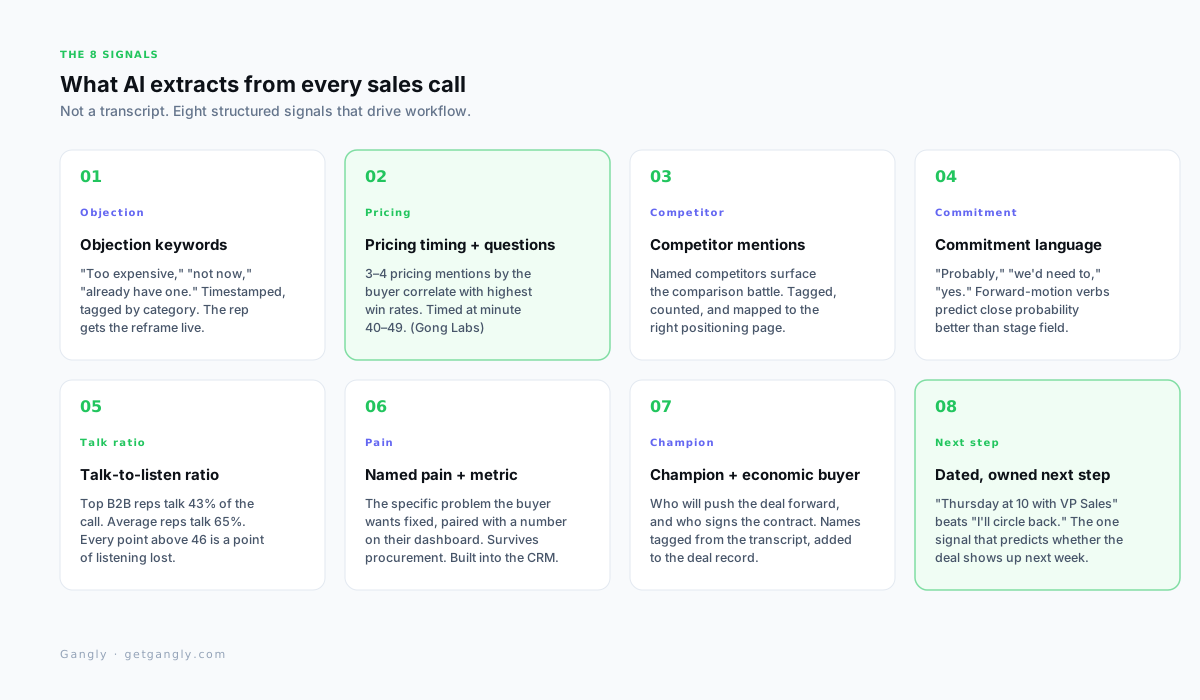
The 8 signals worth extracting from every sales call
Forty-signal call intelligence tools exist. They are popular in RFPs and useless in the rep\'s workflow. The signals that matter — the ones that change what the rep does next — sit at a low, stable ceiling. Eight of them. Miss any, and the post-call note is incomplete. Add more, and the rep stops reading the dashboard.
- 01
ObjectionObjection keywords
"Too expensive," "not now," "already have one." Each one tagged, timestamped, and mapped to the right reframe. The objection is never the problem — the anchor underneath it is. AI surfaces both.
- 02
PricingPricing timing + questions
Gong Labs found 3–4 pricing mentions by the buyer correlate with the highest win rates, and top reps talk price in the 40–49 minute window. AI flags when the rep is pricing too early.
- 03
CompetitorCompetitor mentions
Named competitors tell you the comparison battle the buyer is already running in their head. AI counts mentions, maps them to positioning, and writes the competitive one-pager into the deal record.
- 04
CommitmentCommitment language
"Probably," "we'd need to," "yes." Forward-motion verbs predict close probability more accurately than the stage field. AI counts them, surfaces the weak ones, and asks the rep to push for a harder commit.
- 05
Talk ratioTalk-to-listen ratio
Top B2B reps talk 43% of a call (Gong Labs, 519k calls). Average reps talk 65%. Every point above 46 is a point of listening lost — and a point of diagnosis the prospect did not get to do aloud.
- 06
PainNamed pain + metric
The specific problem paired with a number on the buyer's dashboard. "Reply rate of 6%, need to hit 12 by Q3" beats "inefficient outreach." AI pulls the pair — the pain and the metric — and writes them into the opportunity.
- 07
ChampionChampion + economic buyer
Who will sell the deal forward inside the account, and whose signature the contract needs. AI tags names, infers roles from the conversation, and flags when the economic buyer has not been surfaced yet.
- 08
Next stepDated, owned next step
"Thursday at 10 with VP Sales joining" beats "I'll circle back." The one signal that predicts whether the deal shows up on the calendar next week. AI catches the vague commit and prompts the rep to nail it down.
The discipline is what to drop. Sentiment scores sound useful and are not — prospects sound polite in most calls that go on to die. Question counts sound useful and are not — the number of questions matters less than whether they hit the 5 parts of a discovery call framework. If a signal does not change a field or a behaviour, it is a dashboard, not a tool.
The 5-layer AI call recording analysis stack
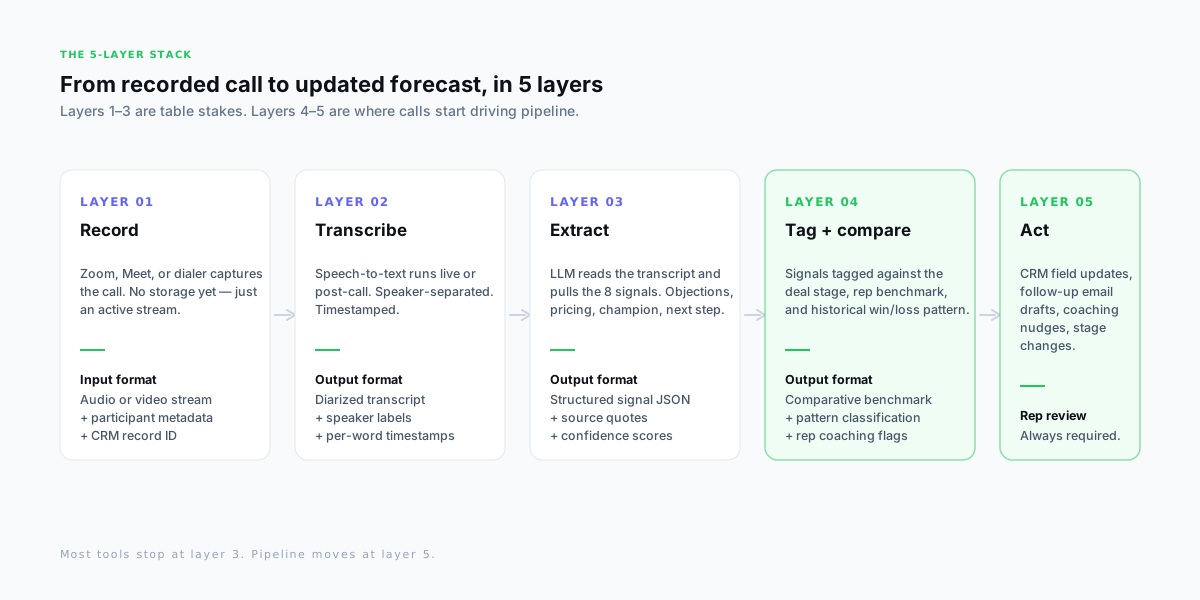
Every AI call analysis tool runs some version of the same five layers. The difference between a useful tool and a vanity dashboard is where the stack stops. Most tools stop at layer 3 — extraction — and treat "the user will open the app to review" as a workflow. It is not. The last two layers are where signals cross into pipeline.
- 01
Record
Zoom, Google Meet, or a dialer captures the call. No persistent storage required — a live stream into the analysis pipeline is enough.
- 02
Transcribe
Speech-to-text runs live or post-call. Speaker-separated, timestamped, with per-word timing. The raw substrate every downstream signal is built from.
- 03
Extract
A language model reads the transcript and pulls the 8 signals into structured JSON — with source quotes and confidence scores so the rep can audit every extraction.
- 04
Tag + compare
Signals get compared against the deal stage, the rep's own benchmark, and the historical win/loss pattern. Pattern-matching against reality is where the signal earns its keep.
- 05
Act
The signal drives a workflow step: a CRM field updates, a follow-up email drafts itself, a coaching nudge surfaces, a stage advances. The rep reviews. Nothing syncs without the click.
70%
Calls never reviewed
Industry estimate of B2B calls recorded but never analyzed.
43%
Top rep talk ratio
Gong Labs · 519k calls. Average reps talk 65%.
+32%
Risk-reversal win lift
Opt-outs, guarantees, SLAs — win rate impact.
8
Signals per call
The ceiling on useful extractions.
What Gong Labs pulled from 519,000 calls — and how AI reads it
Gong Labs sits on one of the largest sales conversation datasets in B2B — 519,000 calls analyzed across multiple research releases — and their findings are the clearest evidence that AI can measure things coaches have argued about for decades. Three of their patterns shape how a serious call analysis tool should extract signals.
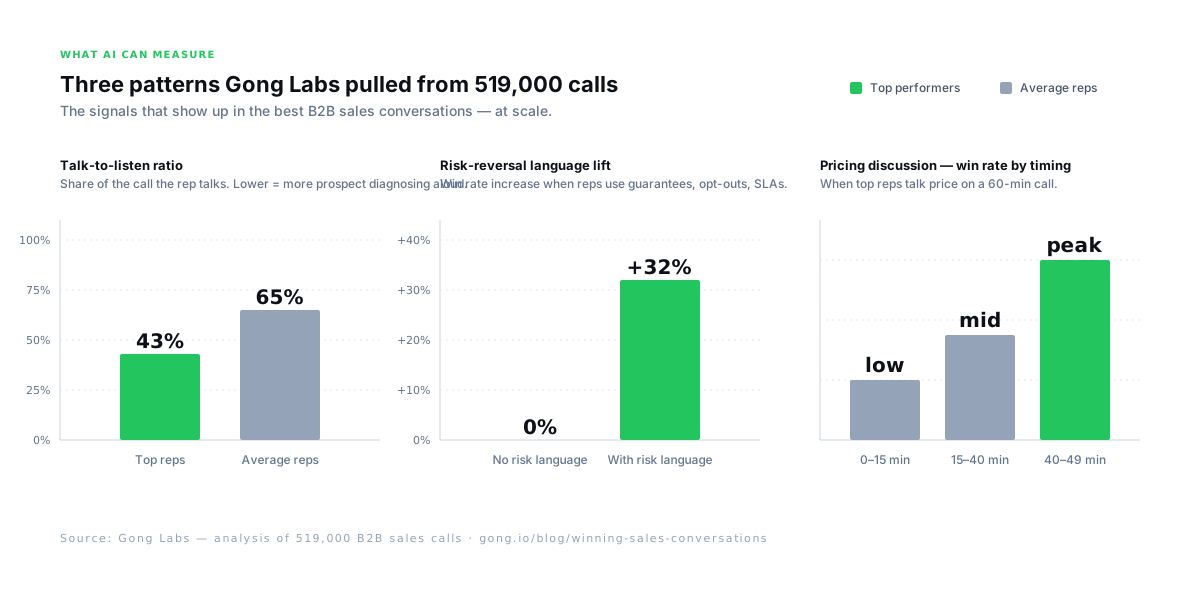
1. Talk-to-listen ratio. The highest-performing B2B conversations land at a 43:57 talk-to-listen ratio — the rep speaks 43% of the call, the prospect 57%. Average reps run 65:35 (Gong Labs, 2023 · analysis of 519,000 calls). Every point past 46 costs the prospect a chance to diagnose their own problem aloud, which is where a real pain statement comes from. AI measures this per-call and flags the drift before the rep has to ask.
2. Pricing timing. Top reps talk price in the 40 to 49 minute window of a 60-minute call, and 3–4 pricing mentions by the buyer correlate with the highest win rates (Gong Labs). Rep-initiated pricing before minute 30 is a red flag — the room has not been diagnosed, and the anchor lands before the value does. An AI tagger flags early pricing the moment it happens. The coach does not have to listen back.
3. Risk-reversal language. Reps who use language around guarantees, opt-outs, and SLAs win deals 32% more often on average than reps who do not (Gong Labs). AI extracts this as a linguistic feature — the rep\'s use of specific phrases across a month of calls — and turns it into a coaching input. "You used a risk-reversal phrase in 3 of 12 demos this month. Top reps hit 9 of 12." That is the sentence that changes behaviour.
None of this is science fiction. It is pattern-matching against outcome data, and it is the clearest case AI makes for being worth the budget line. The trap is stopping here — with a dashboard that shows the manager three numbers once a week. A real implementation pushes the pattern into the next call prep brief, not a QBR slide.
The 6 failure modes of AI call analysis tools
The AI call analysis category has a tools problem. Six failure modes show up in almost every vendor evaluation. They are workflow failures, not model failures — which is why swapping to a bigger language model does not fix them.
- 1
Transcription without extraction
A searchable transcript is not analysis. Call recorders like Otter or Fathom stop at layer 2. The deal record still runs on the rep's memory.
- 2
Extraction without comparison
Pulling the 8 signals is step one. Comparing them against the rep's baseline, the stage, and what wins look like is what turns signals into coaching. A dashboard without a benchmark is decoration.
- 3
Auto-updating the CRM without rep review
Hallucinated next steps sync to the opportunity. The forecast drifts. The fix is mandatory rep review before every write — the rep is the last line of defence against bad data.
- 4
Signal overload
Tools that surface 40 signals per call cost more attention than they save. Eight signals — the ones tied to a deal-shape outcome — is the ceiling. Everything else is noise in a coaching tab.
- 5
No feedback loop to outreach
The call surfaces the objection pattern. The objection pattern never reaches the outreach writer. The same bad opener keeps shipping. Analysis that doesn't change upstream behaviour is a vanity project.
- 6
Manager-only dashboards
Call intelligence built for the sales leader's dashboard, invisible to the rep. The rep is the one running the next call — the signal has to land on their screen, in their flow, not in a weekly QBR.
The meta-failure under all six: the tool is built for the sales leader, not the rep running the next call. Pipeline is made by the rep. Tools that make the manager\'s dashboard prettier without changing the rep\'s afternoon do not move pipeline. They move meetings.
How Gangly turns call signals into rep workflow
Gangly runs the 5-layer stack as part of the full rep workflow — signal detection, outreach, call prep, live coaching, post-call notes, and CRM hygiene in one connected sequence. Call analysis is not a separate app with its own dashboard. It is the layer the other five stages build on.
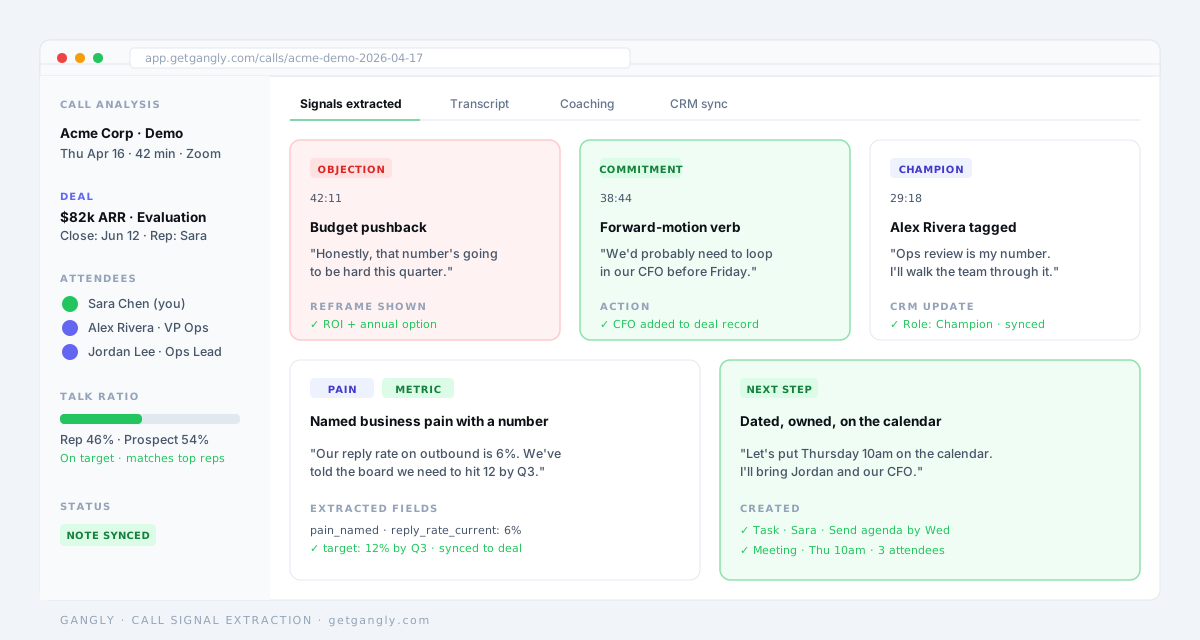
- Live Call Coach — listens to Zoom or Google Meet, detects objection keywords, and surfaces the reframe in under two seconds. The 40–49 minute pricing window and the talk-ratio drift are tracked live, not on a next-day email.
- Post-Call Notes — extracts the 8 signals the moment the call ends, drafts the CRM-ready note, and infers the stage, next activity, and tasks. The rep reviews for 30 seconds. One click syncs to HubSpot, Salesforce, or Pipedrive.
- CRM Hygiene Engine — turns the named pain, the metric, the champion role, and the next-step date into opportunity fields without the rep typing them. The forecast starts reflecting what was said on the call, not what the rep remembered at 5pm.
- Workflow Sequencer — the call signal becomes the input to the next outreach. If the buyer objected on pricing, the follow-up addresses the anchor, not the number. The loop closes inside the rep\'s workflow.
The rep still drives every call and approves every CRM write. Gangly handles the extraction, the inference, and the sync — the three layers where most call analysis tools stop short. The CRM record reflects the call before the rep is on the next one.
Related reading: post-call note automation covers the downstream write-up in more detail, the 4-step objection handling framework shows how the objection signal plugs into the next call, and AI tools for sales reps puts call analysis in context against the other 17 categories worth an install.