
- A close feels pushy when the rep is selling the product. It feels confident when the rep is advancing a mutual decision — same words, different frame.
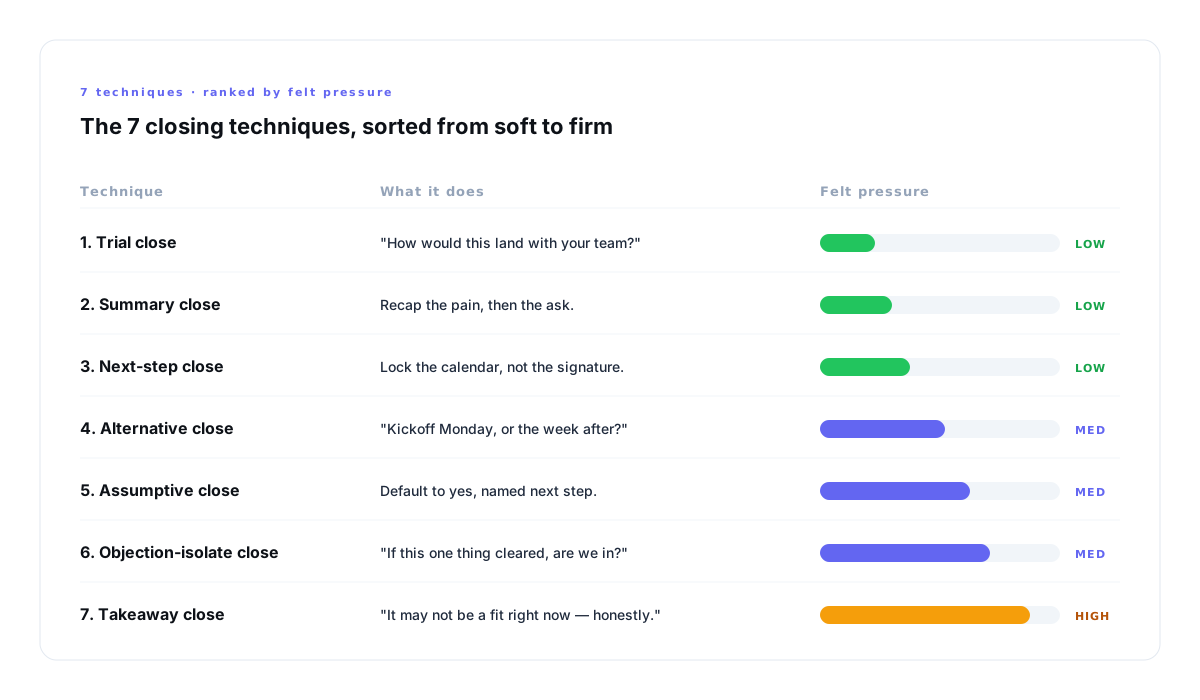
- Seven closing techniques actually work in B2B: trial, summary, next-step, alternative, assumptive, objection-isolate, and takeaway — ranked soft to firm.
- Timing matters more than technique. Close only when pain is confirmed, a forcing event is named, and the economic buyer is mapped. Two out of three doesn't count.
- Buyers now make ~80% of a B2B decision before talking to a rep (Gartner, 2023). That means the rep's leverage is in how the close is asked, not whether it's asked.
- Real-time close cues beat post-call reflection. Gangly's Live Call Coach surfaces the right trial-close question in the last 60 seconds of the call — before the rep freezes.
What makes a B2B close feel pushy — and what makes it feel confident
The first thing to get out of the way: "pushy" is not a personality trait. It's a room signal. The same sentence from the same rep can land as assertive on a Tuesday demo and as pressure on a Thursday one. Nothing about the rep changed. What changed is what the buyer had already decided — and the rep's willingness to read it.
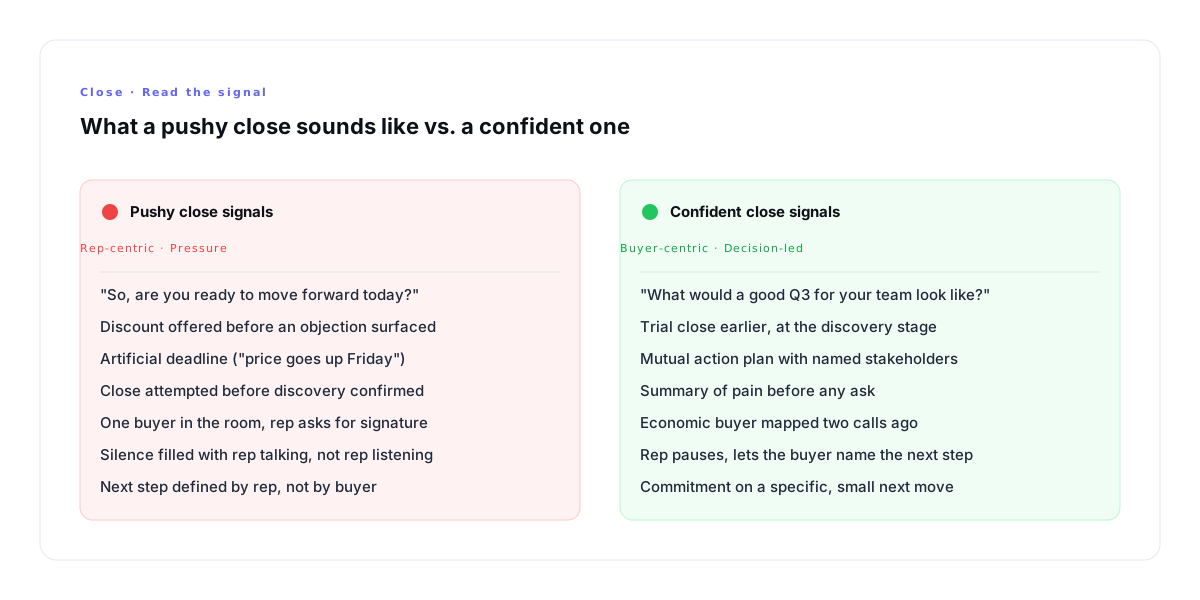
A close feels pushy when the rep is selling the product. It feels confident when the rep is advancing a mutual decision. Every technique in this post is a variant of the second. Every bad use of them is a variant of the first.
Buyers in 2026 do roughly 80% of their decision process before they talk to a rep (Gartner, 2023). That changed closing forever. The rep's leverage has moved — it used to be in price and information, and now it's in how the final decision is framed. Reps who treat that shift as bad news keep running 1980s closes on 2026 buyers. Reps who treat it as good news run softer techniques, earlier, and close more.
The 7 closing techniques that actually work in B2B
The list below is short on purpose. Legacy "25 closing techniques" roundups are mostly rebranding of the same four moves. These seven are the ones that survive in a buyer-led cycle — sorted from soft to firm, so you know which one to reach for when.
1. Trial close — the temperature check
A trial close is a low-pressure question that tests buyer readiness without asking for the deal. "If this were in place next month, how would that land with your team?" "Based on what you've seen, what would stop this from moving forward?" Run one on every discovery call and one in the middle of every demo. Trial closes aren't closes — they're instrumentation. If none of them land before the end of the cycle, a firm close will almost certainly fail.
2. Summary close — pain first, ask second
Recap the buyer's pain in the buyer's own words, then ask for the next step. "So what I'm hearing is — your AEs lose 7 hours a week to manual CRM updates, your QBR flagged it last Thursday, and hitting number this quarter depends on fixing it. Does a Monday kickoff make sense?" Summary closes work because they shift authorship — the pain is now the buyer's, not the rep's. Almost nothing sounds less pushy than a rep quoting the buyer back to themselves.
3. Next-step close — the calendar, not the contract
Ask for the next action on the deal, not the deal itself. Procurement intro on Thursday. Technical review with the VP on the 18th. Champion shares the one-pager with their CFO by Friday. Next-step closes are the workhorse of B2B — they keep the deal moving, respect that most purchases need three to seven people, and don't force the buyer to cut corners on their process. Most deals need five of these before a firm close makes sense.
4. Alternative close — choose-A-or-B, no default
Offer two acceptable paths and let the buyer pick: "Would a Monday kickoff or the week after work better for your team?" This is medium pressure because both options advance the deal. It works when the buyer has signaled yes but hasn't committed. It fails when the rep uses it to skip over an unresolved objection ("Would you rather start with HubSpot or Salesforce integration?" is meaningless if the real objection is that IT hasn't approved either). Use it to remove friction, not to bury it.
5. Assumptive close — speak as if decided
The rep proposes the next logical post-decision step without asking for the decision. "I'll send the MSA over for your legal team to review by Friday." Assumptive closes are taught as low-pressure but they're medium — the technique leans hard on the rep having correctly read the buyer's commitment. Get it right and it feels natural; get it wrong and it feels presumptuous. The rule: never assume a yes the buyer hasn't given verbally in some form.
6. Objection-isolate close — "if this cleared, are we in?"
When a specific blocker is live — budget approval, procurement, a stakeholder who hasn't seen the demo — isolate it: "If we got your CFO comfortable on the ROI model, is there anything else stopping us from starting Q3?" The technique forces the buyer to either confirm it's the only blocker (which you can now solve) or surface the real one. Use it sparingly. Twice in a cycle is enough; three times starts feeling like negotiation pressure. See the sales objection handling framework for how to surface the right blocker in the first place.
7. Takeaway close — name the reason it might not work
The firmest of the seven, and the most misused. The rep names a reason the deal might not be a fit and steps back — "Honestly, if your CRO isn't behind this, rolling it out to just three reps isn't going to show you the lift you need. It might be better to revisit in Q4." The takeaway works because it inverts the usual power dynamic: the rep is no longer asking, they're qualifying out. When it's genuine, it pulls committed buyers forward. When it's theatrical, buyers see the manipulation in about four seconds. Use it at most once per deal, only when you mean it.
The one principle underneath every non-pushy close
Strip the seven techniques down and the same principle sits underneath all of them: the close is the buyer's decision, articulated by the rep. Not the rep's decision, imposed on the buyer.
That sounds like semantics. It isn't. When a rep closes on their own decision, they're selling forward motion — the commit-or-lose-the-deal frame that buyers now flinch from. When a rep closes on the buyer's decision, they're removing friction from a motion the buyer already wants. The first is pressure. The second is service. Same technique, same words, opposite effect.
Mechanically, that means three things. First, the pain has to be in the buyer's language, not the rep's — quoting a buyer's exact phrase ("losing Q2 to admin work") beats paraphrasing it every time. Second, the next step has to be sized to the buyer's authority — don't ask for a signature from someone who needs CFO sign-off. Third, the forcing event has to be real and the buyer's own — a QBR, a contract expiry, a team reorg — not a rep-invented deadline. Discounting that expires on Friday is the oldest pushy tell in the book.
When to ask for the close — the timing rule most reps miss
Timing is the single biggest reason closes feel pushy. Reps close late in the cycle on a deal where discovery never actually finished — because the rep hopes the close will paper over the gap. It never does. It just makes the gap louder.
Three conditions have to be true before a firm close:
- Pain is confirmed in the buyer's own words. Not your inference — their sentence. If you can't quote the buyer on the specific cost of the status quo, you're guessing.
- A forcing event has been named. Fiscal year end, team reorg, contract renewal, product launch, QBR commitment. Without one, "now" is arbitrary and the buyer knows it.
- The economic buyer is mapped. Either in the room, or with a committed path to them — a calendar hold for the intro, a champion's name and the internal pitch they're going to make.
If any of the three is missing, no technique will make the close land. Trial-close instead. Discover more. Lock a smaller next step. The close was never the problem — the cycle was. For a full treatment of the 5-minute prep that surfaces all three before you dial, see how to win more sales calls.
What to say in the last 60 seconds of the call
Frameworks survive in training. Live calls don't. The last 60 seconds of a B2B demo is where most reps freeze, so here's what the call actually sounds like when a confident close runs on a real deal.
Rep"Sarah, before we wrap — based on what you've walked me through today, the gap is that your team is losing about 7 hours a week to manual CRM updates, your QBR last Thursday flagged it as a Q3 priority, and hitting number this quarter depends on closing some of that back."
Buyer"Yeah, that's about right."
Rep"What would a good Q3 look like for your team if this were in place by the first week of next month?"
Buyer"Honestly, if we could get two of those seven hours back per rep, we'd be ahead of plan."
Rep"Okay. On our side, a two-week rollout with your top 3 AEs is the standard path. What would need to happen on your end between now and next Monday to get that started?"
Notice what the rep did and didn't do. Did: summarized in the buyer's words, trial-closed with "what would a good Q3 look like," asked the buyer to name the next step on their side. Didn't: ask for a signature, offer a discount, name a price. No close sentence from the 1980s trivia book. The deal moved anyway.
5 mistakes that turn any close into pressure
- Closing before discovery finished. If you can't quote the buyer on their pain, you can't close them on the fix. Trial-close or discover more.
- Introducing price before value is anchored. The moment price is on the table, the buyer's job becomes comparing numbers. Anchor the cost of the status quo first, then the price is a subtraction problem, not an addition.
- Discounting to close. Discounts train buyers to push. They also tell the buyer the original price was a number you made up — which makes the new one a number you made up too.
- Artificial deadlines. "Prices go up Friday" sounds like Friday in 1998. Today's buyer already assumes it's fake and the deal loses credibility. Real forcing events only.
- Closing on the wrong person. Asking for a signature from someone who has to get their CFO's approval doesn't advance the deal — it burns your champion's credibility. Size the ask to the buyer in the room.
How Gangly supports the close without pushing
Closing is a rep skill, not a software feature. But closing well runs on three things reps consistently get wrong in a busy week: prep, real-time pattern recognition, and post-call pattern capture. That's the part of the workflow Gangly handles.
Call Prep Engine pulls the pain already logged in the CRM, the forcing events mentioned in past emails, and the stakeholder map — so the rep walks in knowing whether the three conditions for a close are present. If they aren't, prep flags that the call is a discovery or trial-close session, not a close session. That single change kills most pushy closes before they happen.
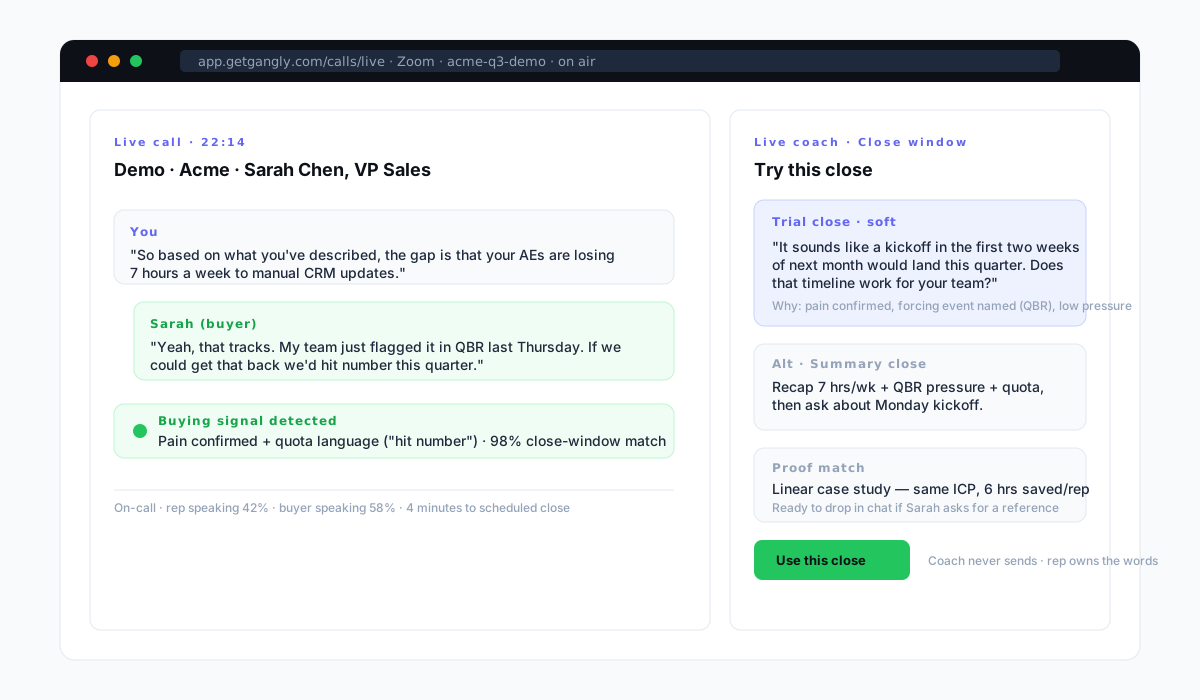
Live Call Coach listens on Zoom or Google Meet. When the buyer drops a readiness signal — pain confirmed in their own words, quota language, a named forcing event — the coach surfaces the right trial-close or summary close on screen. The rep still owns the words and the moment. The coach just stops the freeze.
Post-Call Notes captures the close attempt, the technique used, and the outcome, and syncs it to the CRM with one click. After 30 calls, a pattern is visible: which techniques close which ICPs, and which ones the rep should retire. Closing stops being gut feel and starts being a measurable skill. For the broader call workflow, see how top reps save 10+ hours a week.
Close without the freeze
Live Call Coach surfaces the right trial-close question in the last 60 seconds — so the rep never freezes at the close again. 25-min live walkthrough. See the workflow on your real pipeline.
Key takeaways
- A close feels pushy when it's the rep's decision imposed on the buyer, confident when it's the buyer's decision articulated by the rep.
- Seven techniques are worth knowing: trial, summary, next-step, alternative, assumptive, objection-isolate, takeaway — soft to firm, used in that order across the cycle.
- Three conditions must be true before a firm close: pain confirmed in the buyer's words, a real forcing event named, economic buyer mapped.
- Buyers make ~80% of the decision before the rep enters (Gartner, 2023). Leverage is in how the close is framed, not how hard it's pushed.
- Pattern capture beats technique trivia. Log every close attempt and outcome; retire the techniques that don't close your ICP.
- Live Call Coach surfaces the right close prompt when the buyer signals readiness — so reps don't freeze in the last 60 seconds.
Frequently asked questions
The best closing techniques in B2B sales are trial close, summary close, next-step close, alternative close, assumptive close, objection-isolate close, and takeaway close — in that rough order of felt pressure. The best technique for a given call depends on where the buyer is in their own decision, not on the rep's pipeline stage. Top AEs run one low-pressure technique per call and reserve firmer closes for specific, named stall patterns.
A B2B close feels pushy when the rep is selling the product and feels confident when the rep is advancing a mutual decision. The fix is earlier, not harder — map the economic buyer in discovery, summarize pain before any ask, trial-close at the first major commitment, and let the buyer name the next step. Pressure techniques (artificial deadlines, early discounting) train buyers to push back on the next call.
The assumptive close is a technique where the rep speaks as if the deal is already decided and proposes a specific next step — kickoff date, contract review, provisioning — without asking yes-or-no. It works when discovery is strong and the buyer has already given verbal commitment. It fails when the rep uses it to skip over an unresolved objection. Assumptive is a medium-pressure technique, not a low-pressure one, despite how AEs are often taught it.
A trial close is a low-pressure question that tests buyer temperature without asking for the deal. Examples: "If this were in place next month, how would that land with your team?" or "Based on what you've seen, what would stop this from moving forward?" Trial closes should start in discovery, not at the end of the demo. Every firm close at the end should be preceded by at least one successful trial close earlier in the cycle.
Ask for the close when three conditions are true: pain is confirmed in the buyer's own words, a forcing event has been named, and the economic buyer is either in the room or mapped with a committed path to them. If any of the three is missing, a close attempt will feel pushy regardless of the technique. Timing is the single biggest reason reps sound desperate — they close late in the cycle on a deal where discovery never finished.
A soft close advances the decision by one step (trial close, summary close, next-step close) and invites the buyer to pull forward. A hard close asks for the full commitment (assumptive close, takeaway close, objection-isolate close) and puts the rep's confidence on the table. Top AEs run soft closes through discovery and the demo, then use one firm close at the end — not the other way around. Reps who hard-close too early train buyers to stall.
Top AEs treat closing as the outcome of a well-run discovery call, not a separate event. They summarize pain in the buyer's language, propose a specific next step sized to the buyer's authority, and log every close attempt and outcome in the CRM so they can spot which technique works on which ICP. Tools like Gangly's Live Call Coach surface the right close prompt when the buyer signals readiness, so reps don't freeze in the last 60 seconds of the call.