
 By Siddharth Gangal
What a discovery call checklist is (and the 4 artifacts it produces)
A discovery call checklist is not a script. It is not a questionnaire. It is a compact, phase-mapped list of questions that forces a specific set of outputs out of every first meeting. Four outputs, to be specific — an account picture, a funded business pain, a CFO-ready metric, a named champion with a named economic buyer, and a dated next step on a calendar.
The difference between a checklist and a script is load-bearing. A script tells the rep what words to say. A checklist tells the rep what outputs the call has to leave with — the words flex to the buyer's tempo, the outputs don't. A rep running a script freezes the minute the buyer answers off-pattern. A rep running a checklist just loops back to whichever phase didn't land its output yet.
Think of it like a preflight checklist. Pilots don't wing takeoff from memory — they run 30 items because forgetting one is fatal. A discovery rep doesn't wing a first meeting either. Forget the metric question, the deal dies in procurement six weeks later when the CFO asks "what number does this move?" and your champion can't answer. Forget the process question, you're ghosted when legal shows up and no one told you legal was in the loop. The checklist exists because the cost of a forgotten output is recoverable only by another full cycle.
The rep who runs this checklist on every first call — not from memory, not from the last manager's 30-question spreadsheet, but from the same 15 lines every time — is the rep whose deals advance. Same rep, different question set, different pipeline math.
Why 65% of discovery calls don't advance to a second meeting
Gong's 2023 analysis of 519,000 sales calls found that roughly 65% of first meetings fail to advance to a qualified second call. That's not a marketing-funnel leak — that's reps running discovery and still watching the deal die. The gap isn't the rep's raw skill. It's the absence of a checklist.
Five failure patterns show up on every recorded call review:
- No metric named. The call ends without a single KPI the buyer will cite internally. Every follow-up asks "what does this move?" and the champion shrugs.
- No champion identified. The loudest complainer is not the champion. Without asking Q10 + Q12 explicitly, the rep invents a champion after the call. Deal dies when that person stops replying.
- Vague next step. "Let me send some times" is the modal discovery ending. It translates to 7 days of calendar chasing and a 40% drop-off between call one and call two.
- Early feature pivot. The rep demos something in the first 10 minutes. The buyer now has a product opinion before they've described their problem — every future objection is anchored to features, not outcomes.
- Rep talks 60%+. The 46% rep-talk benchmark exists because it is the ratio at which buyers self-diagnose out loud. Past 60% and the rep is performing, not discovering.
Each of those five failures corresponds to a missing checklist output. Fix the output gap, the failure mode disappears. The rest of this post is how to do that.
The 15-question discovery call checklist at a glance
The full checklist. Copy it into your call-notes tab before every first meeting. Work the phase shape — Context → Pain → Impact → Process → Next step — and track which outputs you've collected as you go.
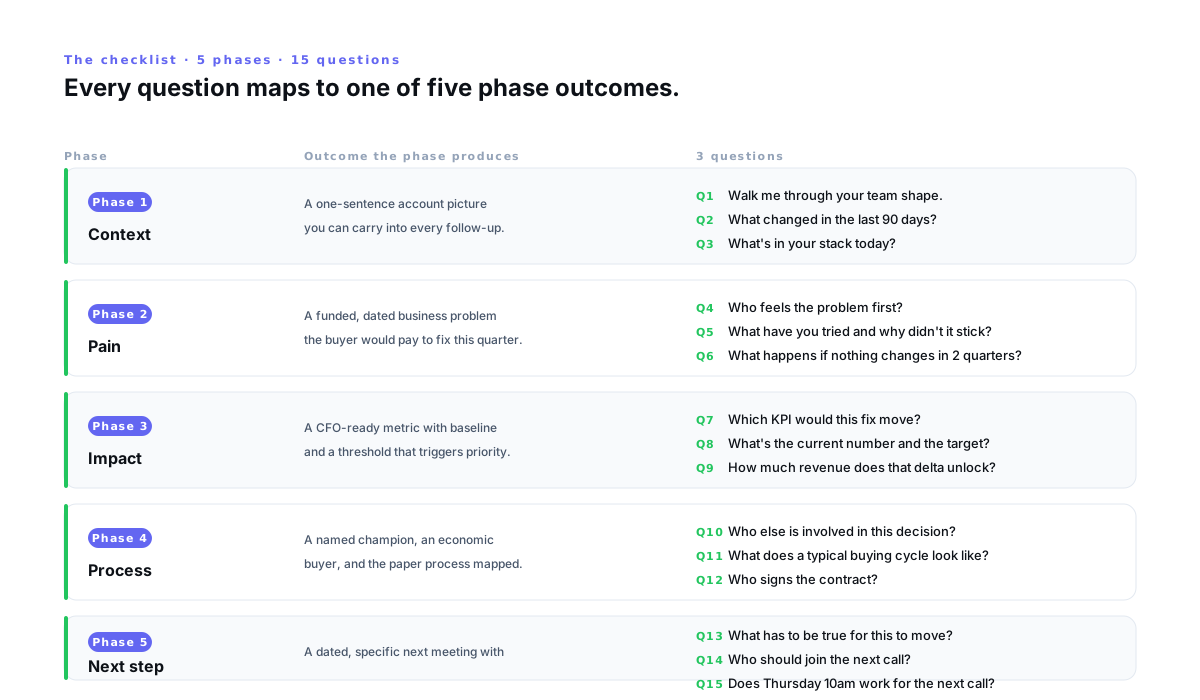
The 15 questions are organized into five phases because buyers do not answer questions at random. They answer in order when the order is coherent. Asking about budget before you know what they're trying to solve produces "it depends" because it genuinely depends. Asking about decision process before you've named the pain produces a polite runaround because the buyer does not want to reveal their committee to a rep who hasn't earned it yet.
The phase order is the same order the buyer's brain processes the deal. Context calibrates the world. Pain gives the deal a reason to exist. Impact gives it a number. Process gives it a path. Next step gives it a date. Reverse the order and the checklist breaks the call — follow the order and the buyer volunteers half the answers before you ask.
Every H2 below takes one phase, shows the three questions, and gives the rep a "what good looks like" line so they know when to move on versus when to probe deeper. If a question does not produce its phase output, do not move on — loop back with a follow-up.
Phase 1 — Context: 3 questions that map the account
Context sets the stage for every answer that follows. Without it, a pain statement floats — "we have a pipeline problem" means nothing until you know they're a Series B marketplace with a 40-person sales org that just lost their VP Sales. With the right context in five minutes, every subsequent answer anchors.
The output Phase 1 produces is a one-sentence account picture you can carry into every follow-up email, every internal pipeline review, and every multi-threading touch for the next 90 days. If you can't write that sentence after Q1–Q3, you haven't earned the right to ask Pain questions yet.
"Walk me through how your team is structured today — who owns what?"
What good looks like: The buyer names 3–5 roles and who fills them. You learn who got mentioned first (likely the champion) and who got hedged around (likely the economic buyer).
"What's changed in the last 90 days that made you open this conversation?"
What good looks like: A specific trigger event. A new hire, a missed quarter, a board mandate, a lost competitor deal. No trigger = no urgency = long cycle or no cycle.
"What's in your stack for this workflow right now, and where does it break?"
What good looks like: A named incumbent (or "we don't have anything yet"). A named breakage point. This question does the work of the "C" in MEDDPICC — it surfaces the competitive landscape and the integration surface in one go.
Phase 2 — Pain: 3 questions that find the funded problem
Pain is the deal's reason to exist. If Phase 2 does not produce a funded, dated problem, the deal isn't real yet — it's early education. Most reps skip this phase because buyers rarely volunteer their pain on a first call. They describe "inefficiency," "manual processes," or "challenges." None of those buy software.
The output Phase 2 produces is a specific, dated business problem in the buyer's own words — the kind they would put in a VP-level quarterly review slide. If the pain statement doesn't include someone who feels it and a dollar number or headcount, it's not pain yet.
"When this problem shows up, who feels it first and what does it cost them?"
What good looks like: A named owner and a cost measured in time, money, or deals lost. "Our BDR team spends 6 hours a week on list building when they should be sending emails" — that's real.
"What have you tried to fix this before, and why didn't it stick?"
What good looks like: Named failed projects, specific vendors, sometimes scar tissue with specific people. This is the question that reveals whether you're walking into a fresh buyer or the fifth rep who's pitched them this year.
"If nothing changes in the next two quarters, what does that look like?"
What good looks like: A real consequence. "We miss number," "we lose the headcount," "the board pushes back on the plan." If the answer is "we're fine" — this isn't a funded deal yet, re-qualify or drop.
Anti-pattern to watch for: the buyer says "our biggest problem is X" in the first 30 seconds. Don't take it. That's the easy answer. The real pain surfaces after Q4 + Q5 together — a problem someone named will have to own, not a generic org-wide complaint.
Phase 3 — Impact: 3 questions that turn pain into a CFO metric
Impact is the phase most reps skip, and it is the phase that determines whether procurement approves or kills the deal. A pain with no metric attached gets scored as "nice to have" when finance reviews the quarter. A pain with a specific baseline, a specific target, and a revenue delta attached becomes a line item.
The output Phase 3 produces is a CFO-ready KPI with baseline and target in the buyer's language. Reply rate, pipeline created, ramp time, churn, gross margin, cycle time. "Better outreach" is not a KPI. "A 12-point reply-rate lift from a 7% baseline" is.
"What's the KPI on your dashboard that this fix would move?"
What good looks like: A metric already on their weekly dashboard. If they have to invent one, the problem isn't being tracked — and what doesn't get tracked doesn't get funded.
"What's the current number, and what delta would make this a priority for your CFO?"
What good looks like: Two numbers. "We're at 7% reply rate, 15% would make the case." "Ramp is at 9 months, we need 6." This answer survives procurement on its own.
"How much revenue does that delta unlock?"
What good looks like: A dollar figure — ideally from the buyer, not from you. "Closing the reply-rate gap is worth about $2.4M in additional pipeline per quarter for our team." That number becomes the ROI anchor you reference in every follow-up.
Phase 4 — Process: 3 questions that expose the buying committee
Every B2B deal over $30K has a committee. Six to nine buyers in 2025, up from five a year earlier (Gartner 2024). A rep who thinks they're selling to one person is the rep whose deal dies when procurement, legal, security, or a skip-level VP enters the conversation uninvited. Phase 4 maps the committee before it ambushes you.
The output Phase 4 produces is a named champion, a named economic buyer, and a rough picture of the paper process — procurement, legal, InfoSec, whoever signs the check. Skipping this phase is why 40% of late-stage B2B deals slip a quarter because "we're still in legal" — which really means nobody asked about legal until week six.
"Who else is involved when you evaluate something like this?"
What good looks like: Three to five names and roles, with a hint of who is pro and who is skeptical. Multi-thread against those names before the call ends — a LinkedIn connection request during the call is normal in 2026, and a signal of seriousness, not weirdness.
"What does a typical buying cycle look like for a decision this size?"
What good looks like: A sequence — "we usually pilot with 3 users, then run it past InfoSec, then legal, then the CFO signs." Every stage is a point where the deal can stall. You need all of them on the timeline, not just the ones your champion volunteers.
"Who signs the final contract?"
What good looks like: A name and a title. Not a department ("finance will review it"). Not "it goes through our process." A person. That person is the economic buyer; everyone above them in the org is at risk of killing the deal late-stage, and you need to know their name today.
Phase 5 — Next step: 3 questions that lock the calendar
A discovery call without a calendared next step is not a won discovery call, regardless of how warm the conversation felt. The output Phase 5 produces is a dated, specific meeting on a calendar — ideally with a named additional attendee from the buying committee. Not "let's stay in touch." Not "I'll send some times." A meeting.
Lock it during the call. Pull up your calendar, propose two slots, get the invite sent before anyone drops off Zoom. The 40% drop-off between call one and call two almost entirely lives in the gap between "I'll send some times" and the first time-slot being sent.
"Based on what we've covered, what has to be true for this to move forward on your end?"
What good looks like: The buyer names the internal conditions — a stakeholder sign-off, a budget window, a timeline alignment. You write them down verbatim. These become the follow-up anchors.
"Who from your team would ideally join the next conversation?"
What good looks like: A named person and their role — ideally one level senior to your current contact. If the buyer hedges ("let me think about who would add value"), propose one yourself based on Q10: "Would [VP Sales] joining make sense for the commercial side?"
"Does Thursday 10am or Friday 2pm work for a 30-minute follow-up with [name from Q14]?"
What good looks like: A yes. You send the invite on Zoom before either of you closes the call window. The invite body restates the three Q13 conditions so the buyer sees you were listening.
Six mistakes that break discovery calls
Six predictable mistakes show up across every under-performing discovery call. None of them are about likeability or rapport. All six are about phase outputs the rep failed to collect.
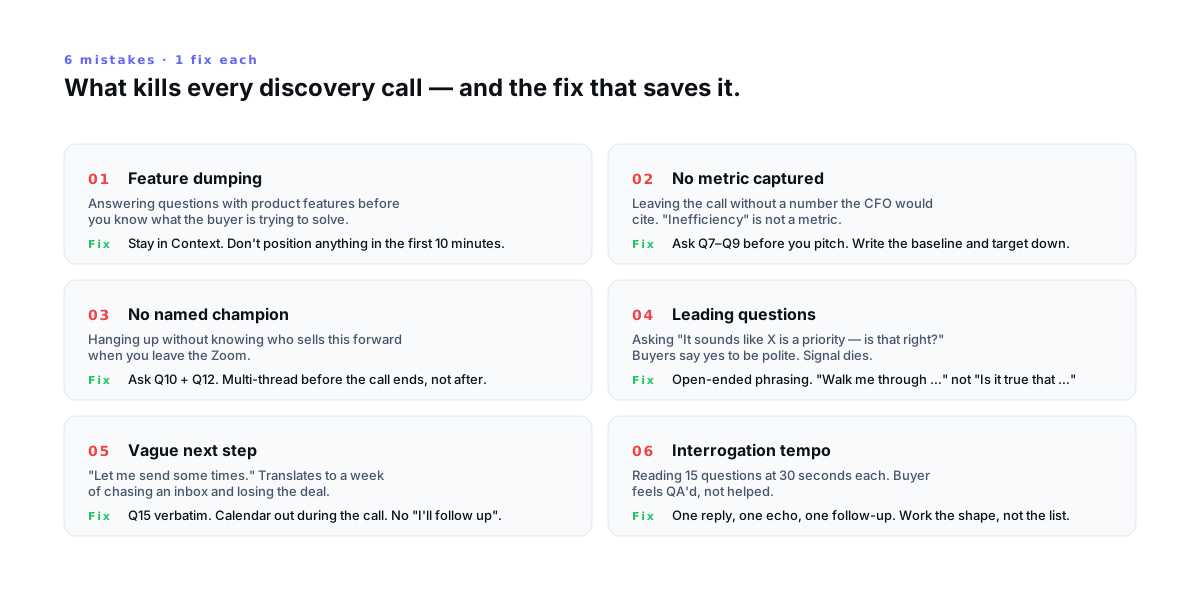
- 1. Feature dumping. Answering a context question with a product answer. The buyer asks "how does this work?" in minute 4 and the rep runs a 5-minute demo. Fix: stay in Context for 5 full minutes before positioning anything.
- 2. No metric captured. The rep asks about pain but never lands the baseline and target. Fix: run Q7 → Q8 → Q9 as a three-part sequence, not as optional questions.
- 3. No named champion. The rep assumes the loudest voice on the call is the champion. Fix: ask Q10 + Q12 explicitly; champion is whose performance review ties to the metric from Q7.
- 4. Leading questions. "It sounds like efficiency is a priority, is that right?" Buyers say yes to be polite. Fix: open-ended phrasing — "walk me through …," "tell me about the last time …," "what would you change if …"
- 5. Vague next step. "I'll send some times" = 40% drop-off. Fix: Q15 verbatim with two specific slots; send the invite on-call.
- 6. Interrogation tempo. Reading 15 questions at 30 seconds each. The buyer feels QA'd, not helped. Fix: for every answer, echo back one sentence of what they said before asking the next question.
How to use the checklist live without sounding scripted
The checklist works when the rep runs it in their head, not on screen. The buyer should not see a rep reading from a list — they should feel a coherent conversation that happens to arrive at five specific outputs. That's a craft move, and it breaks down into four rules.
- Keep the checklist in a side window. A second monitor, a sticky note, the Gangly call-prep brief tab. Never the main call window. Eye contact with the camera > eye contact with a spreadsheet.
- Work the shape, not the script. Know which phase you're in. Know which phase output hasn't landed yet. The exact wording of the next question flexes to the buyer's tempo — the phase does not.
- Echo before you ask the next question. "So you're saying the 6 hours of list building lands on the BDRs on Monday mornings — how does that cascade into the AE's week?" The echo does two things: proves you were listening, and buys you 3 seconds to pick the next question.
- Rapid-fire Context, open-ended Pain and Impact. Context questions take 30 seconds each. Pain questions take 2–3 minutes and often produce 3 follow-ups before moving on. Vary the tempo — it signals to the buyer which phase matters most.
How Gangly runs the discovery workflow
A rep can run this checklist from a printed card and land every deal. A rep running it inside a sales workflow system lands the same deals with half the post-call admin. Gangly wires the checklist into three places that make it automatic.
- Call Prep Engine — generates the brief before the call with the 15 questions pre-populated and Context filled in from CRM + LinkedIn signals. You walk in with Q1–Q3 half-answered already.
- Live Call Coach — surfaces phase reminders during the call on Zoom or Google Meet. If you're 18 minutes into discovery and haven't asked an Impact question, it nudges. Rep stays on-mic, Gangly stays on screen-side.
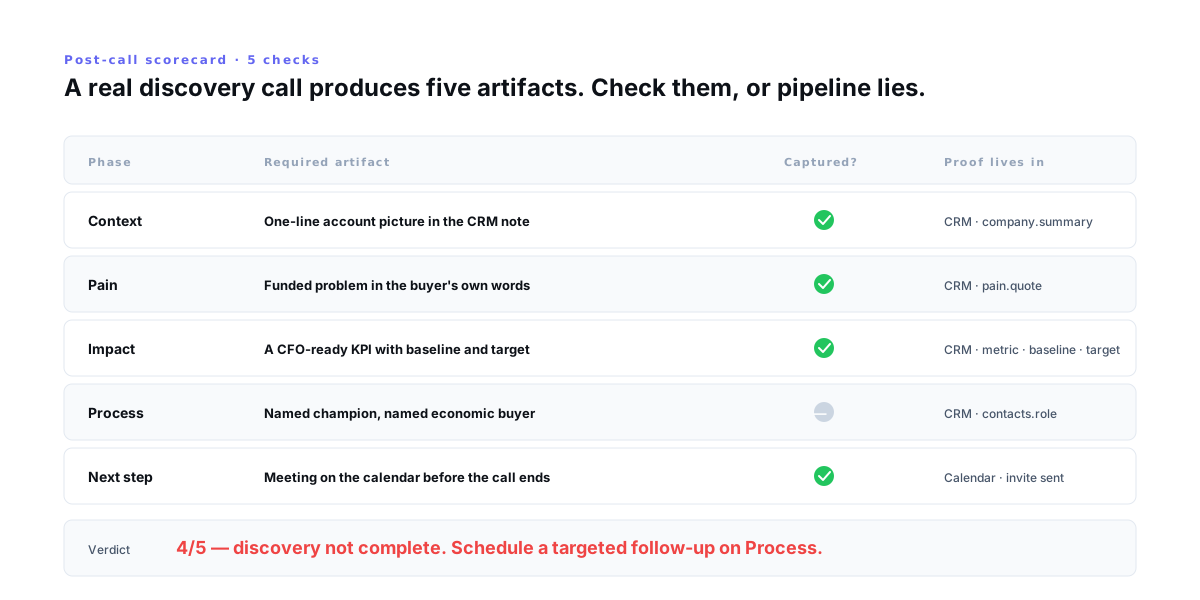
- Post-Call Notes — writes the five-phase CRM note for you. Pain quote, metric with baseline and target, named champion, next step with calendar invite. You review for 30 seconds and sync.
- CRM Hygiene Engine — flags discovery calls that didn't land all five phase outputs so you can schedule the targeted follow-up before the deal stalls.
Talk ratio benchmark
46%
Rep talk ratio on top-performing discovery calls (Gong, 2023).
Prep time
5 min
Gangly's Call Prep Engine generates a full discovery brief in under 5 minutes.
Post-call admin
80%
Reduction in post-discovery CRM note time when notes are auto-drafted.
For the conceptual frame underneath the checklist, see the 5-part discovery call framework. For the prep work before the call, see the 5-minute sales call prep workflow. For handling the price objection when it surfaces, see how to handle the price objection in B2B sales.
Key takeaways — what to do before your next discovery call
- Print the one-page checklist and keep it in a side window before every first call.
- Work the phase order: Context → Pain → Impact → Process → Next step. Never out of order.
- Run the post-call scorecard on every discovery call. 5/5 = advance. 4/5 = schedule a targeted follow-up on the missing phase.
- Hold yourself to 46% talk ratio. Record a call this week and check the number yourself.
- Never leave without a dated next step with a named additional attendee on the calendar.