
- A LinkedIn content strategy for sales reps runs on 5 pillars: sharp POV, teardown, customer story, behind-the-desk, and ICP advice. Every post comes from the sales week you already ran.
- Three formats consistently outperform: short text posts (120-180 words), carousel/document posts (8-12 slides), and single-image posts with annotated screenshots.
- 3 posts per week is the sweet spot. Batch on Friday — 45 minutes total. Post Monday, Wednesday, Friday during peak ICP hours.
- Reps with high LinkedIn Social Selling Index scores generate 45% more opportunities than low-SSI reps (LinkedIn Sales Solutions, 2023). The mechanism is warm inbound from buyers who were reading you before you ever cold-emailed them.
- Stop reposting company marketing. 80% of your posts should be your voice, your deals, your teardowns. Buyers follow reps, not brands.
Why reps who post on LinkedIn close more pipeline
The rep who posts on LinkedIn isn't winning because of the algorithm. They're winning because the next prospect they cold-email has already seen their name four times. The connection request gets accepted. The reply rate goes up. The discovery call opens with "I've been reading your stuff."
LinkedIn's own social selling data backs this up. Reps with high Social Selling Index scores generate 45% more opportunities than low-SSI reps (LinkedIn Sales Solutions, 2023). The mechanism is warm inbound: buyers who were reading you for 6 weeks book a demo without ever receiving a cold email. Attribution is messy, but the pipeline is real.
The problem isn't whether LinkedIn works. It's that most reps don't post because nobody gave them a system. "Be authentic" isn't a strategy. "Post 3 times a week from these 5 pillars, sourced from the calls you already ran" is.
The 5 content pillars every sales rep should run
Every post you write falls into one of five categories. The categories keep you from staring at a blank screen. The mix keeps your feed from turning into a monotone.
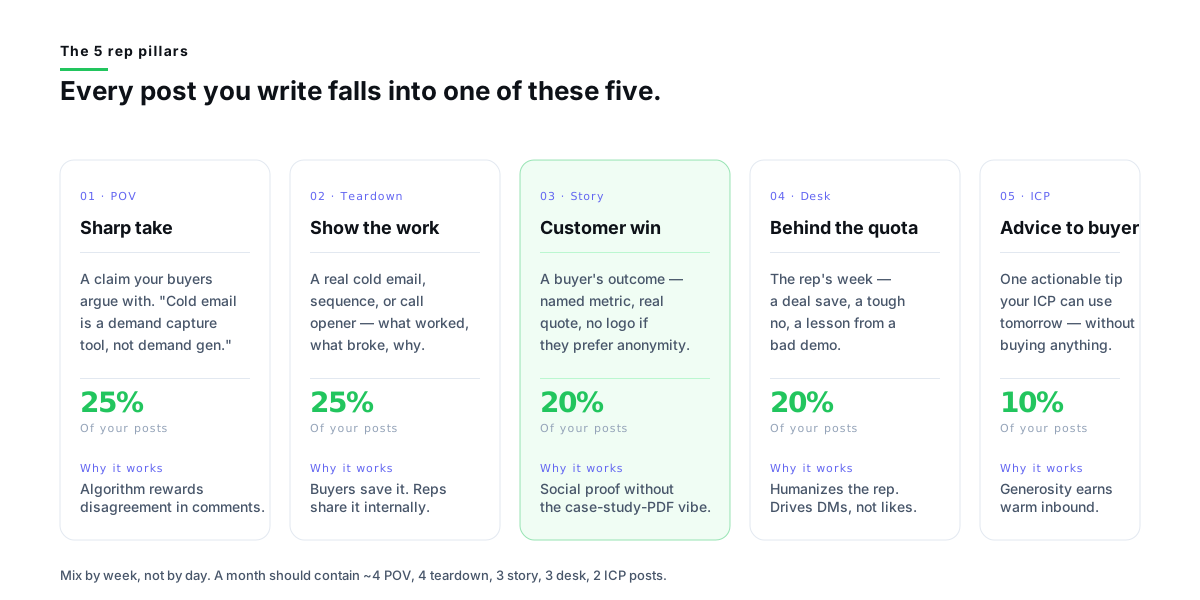
1. Sharp POV (25% of posts). A claim your buyers argue with. "Cold email is a demand capture tool, not demand gen." "The best demo is 25 minutes, not 60." The algorithm rewards disagreement in comments. Your ICP sees the take, disagrees, and opens your profile. That's the goal.
2. Teardown (25%). A real cold email, sequence, or call opener. Show what you sent, what happened, and why it worked or broke. Buyers save these. Other reps share them internally. Teardowns build credibility faster than any other pillar because they prove you do the work.
3. Customer story (20%). A buyer's outcome with a named metric and a real quote. Not a case-study PDF. A 120-word post that says "We helped Sarah's team at Acme cut call prep from 45 minutes to 5. She said [quote]. Here's how." Social proof without the corporate sheen.
4. Behind-the-desk (20%). The rep's week. A deal save. A tough no. A lesson from a demo that went sideways. This pillar humanizes you. It drives DMs, not likes, because buyers think "I've been there" and reach out privately. That's the highest-converting engagement pattern on LinkedIn.
5. ICP advice (10%). One actionable tip your buyer can use tomorrow without buying anything from you. "Three things to check before your next QBR." "How to read a Salesforce pipeline report in 2 minutes." Generosity earns warm inbound.
The 3 post formats that consistently outperform
Not every format works for reps. Long-form articles underperform. Polls train the wrong audience. Selfies with a conference badge get likes from other reps, not from buyers. Three formats carry 80% of the weight.
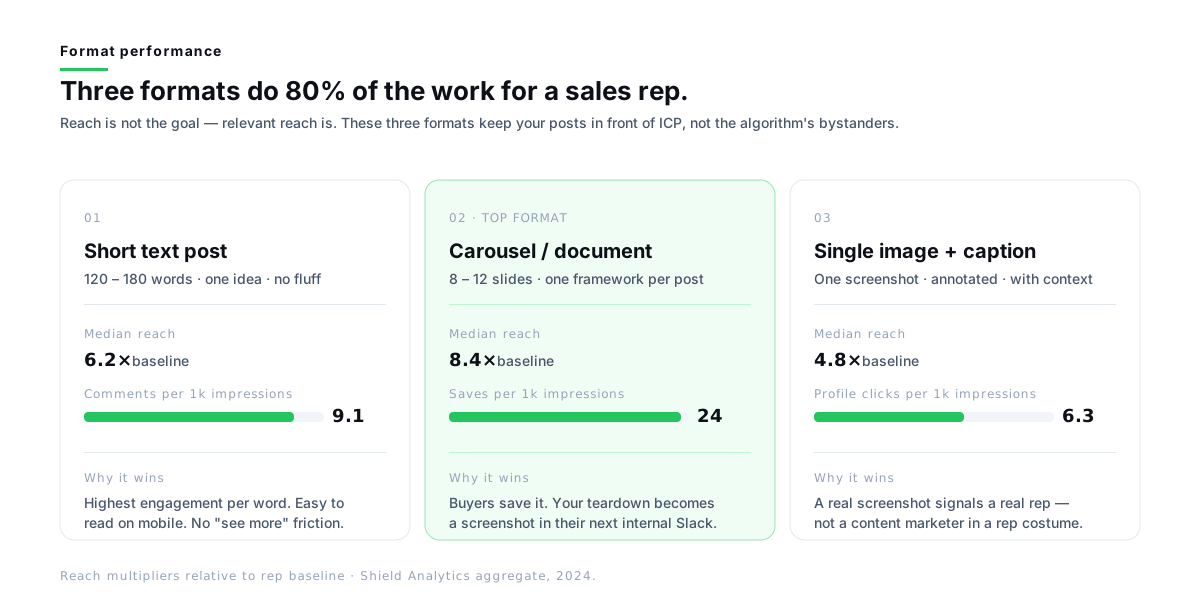
Short text post (120-180 words). One idea. No preamble. Hook in line 1 (a claim or a number), 3-4 short paragraphs, close with a question that invites disagreement. Highest engagement per word. Easy to read on mobile. No "see more" friction if you keep it tight.
Carousel / document post (8-12 slides). One framework per post. The teardown pillar lives here. Buyers save carousels and screenshot individual slides into Slack. If a buyer shares your slide with their VP, you just got a warm intro you didn't ask for.
Single image + caption. A real screenshot of a cold email, a CRM view, or an annotated sequence. The screenshot signals a real rep, not a content marketer in a rep costume. Keep the caption to 80-120 words. The image does the work.
How often to post, and when
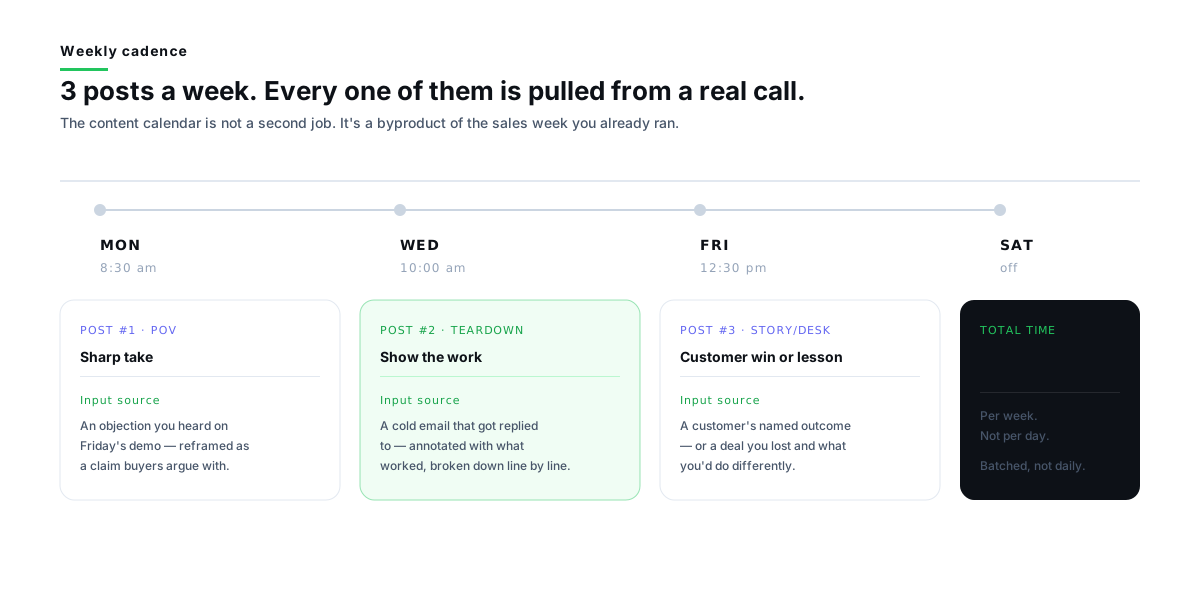
Three posts per week. Monday, Wednesday, Friday. Post between 8:30-10:30 am in your ICP's time zone. That cadence keeps you in the feed without eating into your selling time. Two posts a week produces measurable pipeline lift within 8-12 weeks. Daily posting only makes sense if you have a ghostwriter or a production system.
Batch on Friday. End of the week, you have a full deck of inputs: the objection from Tuesday's call, the cold email that got a reply on Wednesday, the deal you lost on Thursday. Capture three post drafts in 45 minutes. Schedule them. Done until next Friday.
What NOT to post as a rep
Some content actively hurts your pipeline. Cut these and you'll see better engagement in the first week.
- Reposted company marketing. Your company's product announcement, reshared with "Excited to share!" Buyers scroll past. Your manager appreciates it. Nobody else does. If you want to talk about a product release, reframe it through your own experience: "I ran my first 5 calls using [feature]. Here's what happened."
- Generic motivation. "Success is a mindset." "Hard work beats talent." These posts get likes from other reps, not from buyers. Zero pipeline value. Your ICP is a VP of Sales, not a LinkedIn engagement pod.
- Selfies at the conference. One is fine. Three is a personal brand problem. Your buyer doesn't care about your lanyard.
- Feature-list pitches. "Our tool does X, Y, and Z. Book a demo." That's an ad. Run it through LinkedIn Ads with budget and targeting. It doesn't belong in your organic feed.
- 700-word LinkedIn articles. The article format on LinkedIn (the one with the custom header image) gets fraction of feed impressions compared to native text posts. Long-form belongs on your company blog, not your profile.
The rule of thumb: if a content marketer could have written it, don't post it. The advantage of being a rep is that you talk to buyers every day. Use what they tell you.
Build the content into your workflow, not into your Sunday night
The biggest reason reps don't post is time. Not creativity. Not fear. Time. The fix is structural: stop treating LinkedIn as a separate job and start treating it as a capture layer on top of the work you already do.
Every call generates a post. The objection a prospect raised on Tuesday is Monday's POV post. The cold email that got a reply is Wednesday's teardown. The deal you closed on Thursday is Friday's story. You're not creating content. You're packaging signal you already generated.
The top-rep productivity playbook breaks down where rep hours actually go. The reps who post consistently didn't find extra time. They redirected 45 minutes of the existing week into a channel that generates warm inbound for the next 12 months. For a broader take on workflow-led outreach, see the objection handling framework and how to win more sales calls.
How Gangly's workflow feeds your LinkedIn strategy
Gangly's sales workflow generates the inputs your content strategy needs. Signal Detection surfaces warm accounts and buying triggers. Outreach Writer drafts messages trained on your voice. Live Call Coach captures objections and responses in real time. Post-Call Notes logs the call's key moments to the CRM.
Each of those outputs is a LinkedIn post waiting to happen. The objection the coach flagged on Tuesday is Monday's POV. The signal that triggered a warm email is Wednesday's teardown. The call note that captured a customer quote is Friday's story. The Workflow Sequencer keeps the whole sequence connected so nothing falls through the cracks.
Gangly's Personal Brand Writer is coming soon, purpose-built to package these workflow outputs into rep-voiced LinkedIn posts. Until then, the workflow already does the hard part: capturing the input. The 45-minute Friday batch turns it into the post.
Turn your sales week into LinkedIn content
Gangly captures the signals, calls, and objections that become your best posts. 25-min live walkthrough. See the workflow on your real pipeline.
Key takeaways
- Run 5 content pillars: sharp POV, teardown, customer story, behind-the-desk, ICP advice. Every post's input comes from your real sales week.
- Three formats carry 80% of the weight: short text posts, carousel/document posts, and single-image posts with annotated screenshots.
- Post 3 times a week (Mon/Wed/Fri). Batch on Friday in 45 minutes. Two posts per week produces measurable pipeline lift within 8-12 weeks.
- High-SSI reps generate 45% more opportunities than low-SSI reps (LinkedIn Sales Solutions, 2023). The mechanism is warm inbound.
- Stop reposting company marketing. 80% of your posts should be your voice, your deals, your teardowns. Buyers follow reps, not brands.
- Gangly's workflow generates the inputs: signals, objection logs, call notes, outreach drafts. The content calendar is a byproduct, not a second job.
Frequently asked questions
Sales reps should post across five pillars: a sharp POV your buyers argue with, a teardown of a real email or call opener, a customer story with a named outcome, a behind-the-desk note from your actual sales week, and occasional advice tailored to your ICP. Avoid reposting company marketing, generic motivational content, or product announcements. The input for every post should come from a call, deal, or objection you handled that week.
Three times a week is the sweet spot for most AEs and BDRs. Post Monday, Wednesday, and Friday during peak ICP activity hours (8:30-10:30 am buyer local time). Two posts a week produces noticeable pipeline lift within 8-12 weeks. Daily posting is only worth it if you have a ghostwriter or a post-packaging workflow.
Yes. LinkedIn's social selling research shows reps with high Social Selling Index scores generate 45% more opportunities than low-SSI reps (LinkedIn Sales Solutions, 2023). The mechanism is warm inbound: buyers you never cold-emailed book demos because they've been reading your posts for 6 weeks. Attribution is messy, but the pipeline is real.
Three formats consistently outperform: short text posts (120-180 words, one idea), carousel/document posts (8-12 slides on one framework, highest save rate), and single-image posts with annotated screenshots. The format matters less than the input. Posts pulled from a real call beat posts brainstormed from a content calendar every time.
Mostly themselves. Buyers follow reps, not brands. 80% of your posts should be your POV, your teardowns, your customer stories — the stuff a content marketer can't replicate. 20% can involve your company but reframed through your experience. Reposting marketing content signals you're a megaphone, not a practitioner.
120-180 words for text posts. Lead with the hook in line one (a claim or a number), expand in 3-4 short paragraphs, close with a question that invites disagreement. Avoid the 700-word essay. For carousels, aim for 8-12 slides with one sentence per slide. If a buyer on mobile can't read the whole thing in one tap, cut it.
Batch it. Spend 45 minutes on Friday capturing three post ideas from the week's calls, objections, and deal movements. Draft them in one sitting, schedule them for Mon/Wed/Fri. The content calendar is a byproduct of the sales week, not a second job.