
- Reps with a consistent LinkedIn presence hit quota 51% more often (LinkedIn State of Sales, 2024). Posting isn't optional for top AEs — it's a reply-rate lever.
- The mechanism is five steps: name recognition, credibility, reply-rate lift, inbound DM surface, and signal detection. Every post feeds at least one of them.
- Minimum viable cadence: 3 posts a week + 10 comments a day + 3-5 warm DMs. About 30 minutes a day once it's a habit.
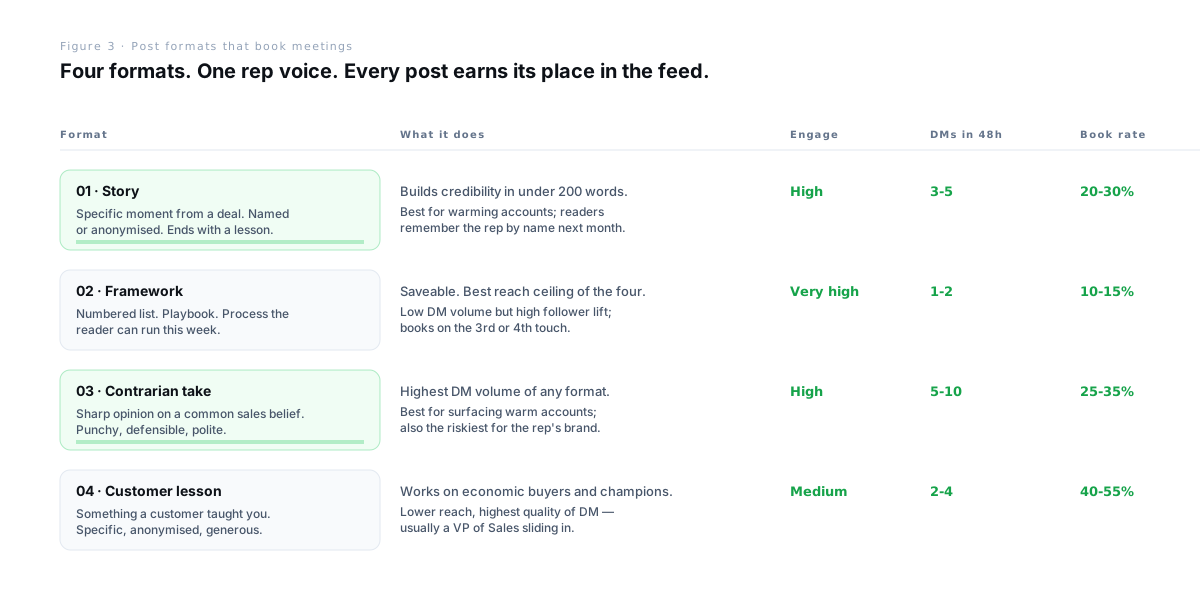
- Four post formats do most of the work: stories, frameworks, contrarian takes, customer lessons. Ghostwritten content doesn't work because reps have voices a consultant can't fake.
- Expect 8-12 weeks before inbound kicks in. Reply-rate lift on outbound usually shows in week 3. Reps who quit at week 6 quit one month before it starts working.
The data: reps who post outperform reps who don't
Your last cold email got ignored. The one before that too. Here's the part most reps don't want to hear: the email wasn't the problem. The problem is the prospect had never heard of you.
LinkedIn's State of Sales 2024 research shows reps who rate themselves as active social sellers hit quota about 51% more often than reps who don't. Pavilion's 2023 benchmarking put the reply-rate difference between reps with an engaged following and cold-only reps at 3 to 5× on first-touch email. The gap is not subtle.
This is the pillar of the Gangly social selling cluster for a reason — everything downstream depends on getting this one habit installed. Content, cadence, metrics, DM motion — all of it flows from the decision to post.
What LinkedIn branding actually changes in the sales motion
"Personal branding" sounds like a vanity project. It isn't. For a quota-carrying rep it's a set of five mechanisms, and each one compounds the next.
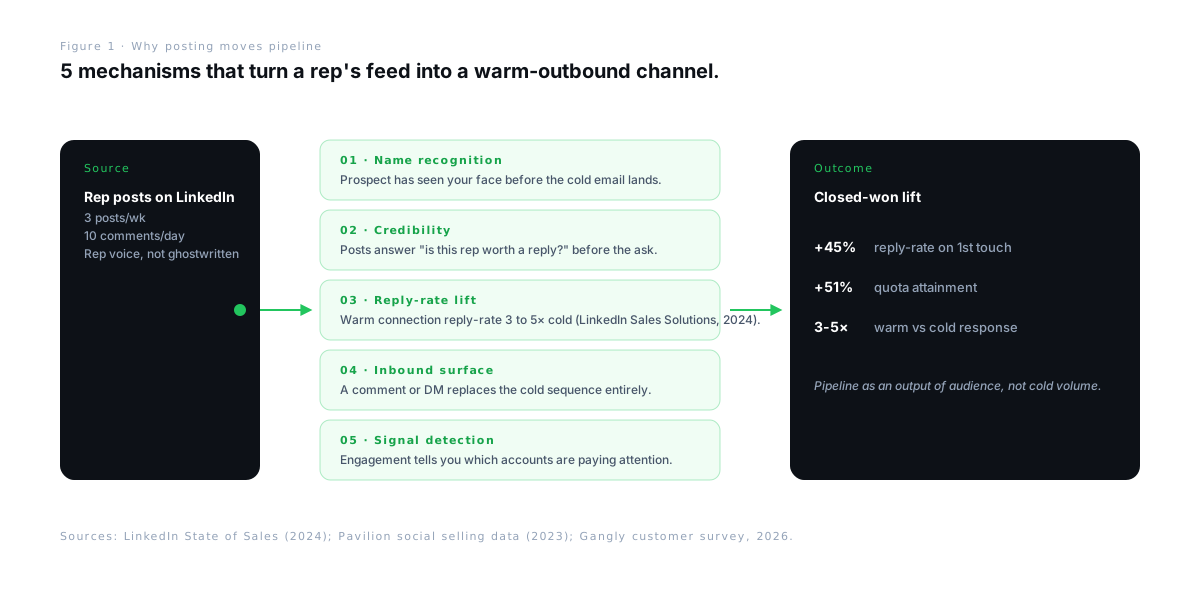
- Name recognition. The prospect has seen your face before the cold email lands. The email stops being cold. Every subject line is now "someone I've vaguely heard of."
- Credibility. Before replying, the prospect will check your profile. Three posts a month, ghostwritten platitudes, no comments — they close the tab. A real voice with real takes gets the reply.
- Reply-rate lift. Warm-to-stranger reply rate runs 3-5× cold in most benchmarks. The same email, sent to someone who's seen your thinking, works meaningfully better.
- Inbound DM surface. Posts with specific pain or specific takes attract DMs from readers in that exact pain. The cold sequence is replaced entirely for the top 10-20% of your accounts.
- Signal detection. Every comment, every view, every save is an intent signal. You know which of your target accounts are reading your content before they reach out — and you can act on it. This is the same motion covered in buying signals in B2B sales.
None of the five requires becoming a LinkedIn influencer. They require showing up, three times a week, for a year. The hard part is the consistency — not the content.
The 4 post formats that actually book meetings
Reps overthink this. They think they need a content strategy, a "pillar framework," an editorial calendar. They don't. They need four formats, rotated across the week.
1. Story
A specific moment from a deal, anonymised where needed, ending in a lesson. 120-200 words. Stories beat every other format on credibility because only you could have written them. "A VP of Sales told me last Tuesday..." works; "Here are 5 tips on discovery..." doesn't.
2. Framework
A numbered list or playbook the reader can run this week. This format wins on reach and save count — the algorithm loves utility. Lower DM volume than a story, but the follower growth compounds. The cold email copywriting framework is a good example of the format translated into a post.
3. Contrarian take
A sharp opinion on a common sales belief. "Discovery calls aren't the problem. Agenda-less discovery calls are." Contrarian posts attract the most DMs of any format because readers self-identify in the comments and DMs. They also carry the most brand risk — a half-baked take makes you look sloppy, not sharp.
4. Customer lesson
Something a customer taught you. "Here's what the best VP of Sales I've ever sold to said about MEDDPICC..." These posts don't reach as wide, but the DMs are qualitatively different — usually a VP or director sliding in to say "I think the same way." The booked-meeting conversion rate is the highest of any format.
Rotate these four. Don't invent a fifth until the first four are automatic. Post #1 on Monday, post #2 on Wednesday, post #3 on Friday. That's the whole system.
The minimum viable cadence: 3 posts + 10 comments a day
Content without engagement is a broadcast. Engagement without content is a bot. The cadence is three posts a week and ten comments a day. Thirty minutes. Less than most reps already spend refreshing their pipeline.
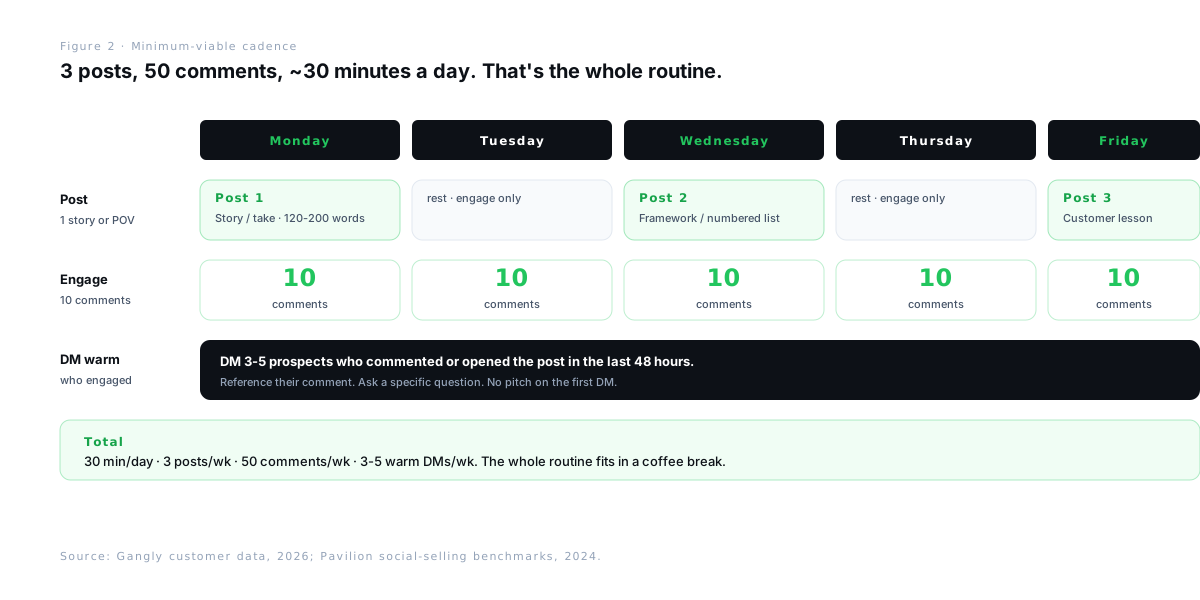
- Monday: Post a story. Ten comments on target accounts — your ICP, champions from closed-won deals, and category peers.
- Tuesday: No post. Ten comments. DM 3 people who engaged with Monday's post.
- Wednesday: Post a framework or contrarian take. Ten comments.
- Thursday: No post. Ten comments. DM 3-5 people who engaged with Wednesday's post.
- Friday: Post a customer lesson. Ten comments. Close the week.
The DMs are where the meetings come from. Not the post itself — the DM that references the post. "Saw you saved my post on discovery — curious which part hit. Happy to trade notes." That's a booked meeting 20-35% of the time.
The 4-week ramp: what to do if you're starting from zero
Most reps stall because they try to start with a perfect post. Don't. The goal of week one is to post, not to go viral. Here's the ramp that works for reps who start from zero followers.
Week 1 — Fix the profile
New headline (not "Account Executive at [company]"). Pick something that describes who you help and how: "Helping [ICP] do [outcome] with [category]." Banner image. About section written in first person. Three pinned posts — a story, a framework, a customer lesson. That's the profile. Don't touch it again for a month.
Week 2 — Engage before you post
Comment ten times a day on target-account and peer content. No posts yet. The comments train the algorithm and build the audience before you publish anything. Half your first posts' reach will come from comment readers.
Week 3 — Start posting
Three posts this week. Don't chase virality. Post something specific, something only you could write. A deal you lost this quarter. A question a customer asked. Keep commenting daily.
Week 4 — Start DMing
Follow up on everyone who engaged with week 3's posts. Reference what they said. Ask a specific question. Do not pitch. The meetings will start showing up between weeks 6 and 12.
The warm vs cold outreach breakdown covers how to layer this into an existing outbound cadence — the short version is that LinkedIn branding warms the first touch in a way cold sequences never will.
What to post when you don't know what to post
"I don't know what to write" is the universal blocker. It's always false. Here are seven places rep content already exists, ready to become a post.
- A question a prospect asked this week. If they asked, a hundred others are thinking it.
- A deal you lost. Anonymised. Every loss has a lesson; most reps bury them.
- A pattern from your last 10 discovery calls. Mine your call prep notes — the themes are the posts.
- A tool or tactic that's overhyped. Contrarian. Be specific. Back it with a concrete example.
- A customer quote that reframed how you sell. Ask permission or anonymise; either works.
- A playbook you stole from a peer. Credit them. Peer amplification is a real thing.
- A new thing you're trying this quarter. Post the hypothesis, post the result. The before-and-after format performs.
If none of these are giving you material, you're either too junior to post (unlikely — junior reps often post the best content because it's raw) or you're not paying attention to your own calls. Fix the second one.
The metrics that tell you it's working
Reach, likes, and followers are vanity metrics for a rep. The metrics that matter map directly to pipeline.
- Reply-rate lift. Compare first-touch reply rate on accounts that have engaged with your content versus cold. The gap should be 2-5× within 2 months.
- Inbound DMs per week. Any prospect DM that isn't in response to your outbound. Target: 2-5/week by month 3, 10+/week by month 6.
- Pipeline from LinkedIn. Meetings booked that originated from a post, a comment, or a DM. Tag them in the CRM. Most reps find this is 20-35% of pipeline by month 6.
- Sales-cycle length on LinkedIn-sourced deals. These close 20-30% faster in most cohorts because trust was pre-built.
Track these four, not likes. If they're not moving by week 12, the content is wrong — usually too corporate, too generic, or too pitchy. Fix that, not the cadence.
Common failure modes — and the fix
- Posting and ghosting. The rep posts, doesn't comment, doesn't reply to comments on their own post. The algorithm notices. Fix: treat comments as the post. Reply to every one for the first hour.
- Ghostwritten voice. Sounds like a HubSpot blog post in first person. Kills credibility instantly. Fix: write the way you talk on calls. If it doesn't sound like you, delete it.
- Pitching in posts. Every post ends with "DM me for a demo." Kills trust. Fix: post-level generosity, DM-level business. No links, no CTAs in posts for the first 90 days.
- Chasing virality. Rep writes listicles about hustle culture because that's what went viral last week. Lands zero pipeline. Fix: write for the 100 accounts in your territory, not the 100,000 scrolling.
- Quitting at week 6. Nothing's moving; rep stops. Fix: commit to 12 weeks of three-posts-a-week before evaluating. Anything less isn't a fair test.
How Gangly fits the LinkedIn signal loop
Gangly doesn't post for you — and wouldn't if it could. A rep's voice is the unfakeable asset. What Gangly does is close the loop between what's happening on LinkedIn and the rest of the outbound workflow.
Signal Detection watches engagement on your content — comments, views from target accounts, saves — and surfaces those as warm signals in the daily feed. When a VP of Sales at an ICP account comments on your framework post, that account moves to the top of the queue with the signal tagged. Outreach Writer drafts a DM or email that references the post and the comment — rep voice, not template. The rep reviews, edits, and sends.
The full motion is covered in the modern outbound sales playbook — LinkedIn branding slots in as the top-of-funnel warming layer that makes every downstream stage work better. See also LinkedIn outreach best practices and social selling on LinkedIn for the tactical layer below this pillar.
Turn your LinkedIn comments into booked meetings.
Gangly watches who's engaging with your content, scores warmth, and drafts the DM that references their exact comment — in your voice. Try it free for 14 days. No credit card required.
Frequently asked questions
Tags: LinkedIn personal branding · social selling · sales rep LinkedIn · personal brand for salespeople · LinkedIn content strategy · warm outbound