
- Social selling on LinkedIn is not posting more — it's a 30-minute daily routine that turns buying signals into warm conversations. Five blocks: signal scan, post, comment, DM, log.
- Rewrite the profile before you post. Headline names the buyer, about section follows problem → solution → proof → CTA, featured section holds something a buyer can actually consume.
- Post to the account you're chasing today — not to your whole network. Five formats work: rep-lesson, pattern-spot, hot-take, peer-story, template-share. Everything under 120 words.
- Warm DMs reference a specific signal (role change, funding, hiring, pricing visit) in the first line, offer one piece of value in the second, and close with one small ask. Under 75 words. No pitch deck.
- Track meetings booked from LinkedIn-sourced touches, warm DM reply rate (target 15–25%), and profile views from target accounts. SSI is a leading indicator, not the goal.
- Gangly's Signal Detection surfaces the warm accounts in a daily feed, and Outreach Writer drafts the LinkedIn DM in the rep's voice — rep reviews before sending. Social selling stops being a side hustle and becomes a workflow.
What social selling on LinkedIn actually is (and isn't)
Most social selling advice treats LinkedIn like a megaphone. Post more. Comment harder. Chase the Social Selling Index. The rep reads 14 tips, tries three of them on a Monday, sees no reply, and never opens the tab again.
That's not social selling. That's broadcasting into a void.
Social selling on LinkedIn is a 30-minute daily routine that turns buying signals into warm conversations. You're not posting to a general audience. You're posting to the specific 30 accounts you're chasing this quarter. You're commenting on the posts of the specific VPs you want a meeting with. You're DMing only when a trigger (role change, funding, hiring, pricing visit) justifies the message. Volume is not the goal. Relevance is.
What it isn't: posting three times a day, writing thought-leadership on topics your buyer doesn't care about, sending connection-request pitches, or automating DMs. LinkedIn's 2024 data shows that buyers who receive automated cold DMs are 54% less likely to engage with the sender's brand later (LinkedIn Sales Solutions, 2024). Spray and pray costs more than it earns.
Why social selling still beats cold outbound for most AEs
Cold email volume is getting harder every quarter. Reply rates in 2026 run around 1–3% for generic sequences (Outreach State of Sales Engagement, 2024). Reps who mix in a warm LinkedIn layer — comment first, DM after a trigger — see warm DM reply rates of 15–25% on their target list. Same list. Different motion. The warm touch compounds because the buyer has already seen the rep's name.
LinkedIn's own research on the Social Selling Index — a 0–100 score based on four activities — finds that reps with SSI above 70 generate 45% more pipeline than reps below 30 (LinkedIn Sales Solutions, 2023). SSI isn't the goal, but it's a useful leading indicator. If SSI is moving, the routine is running. If it's flat, the rep is doing social in name only.
The real reason social selling works: buyers check the rep's profile. On a typical B2B deal, the champion opens your LinkedIn profile at least twice — once after the first DM and once before forwarding your proposal internally. What they see in those 40 seconds decides whether they reply, whether they forward, and how you're framed to the economic buyer. That's why the profile comes first.
The AE profile audit — 7 fixes before you post anything
Before you write a single post, fix the profile. Posting from a resume profile is shouting from a locked room — your network sees the post but the buyer who clicks through doesn't find anything that keeps them reading.
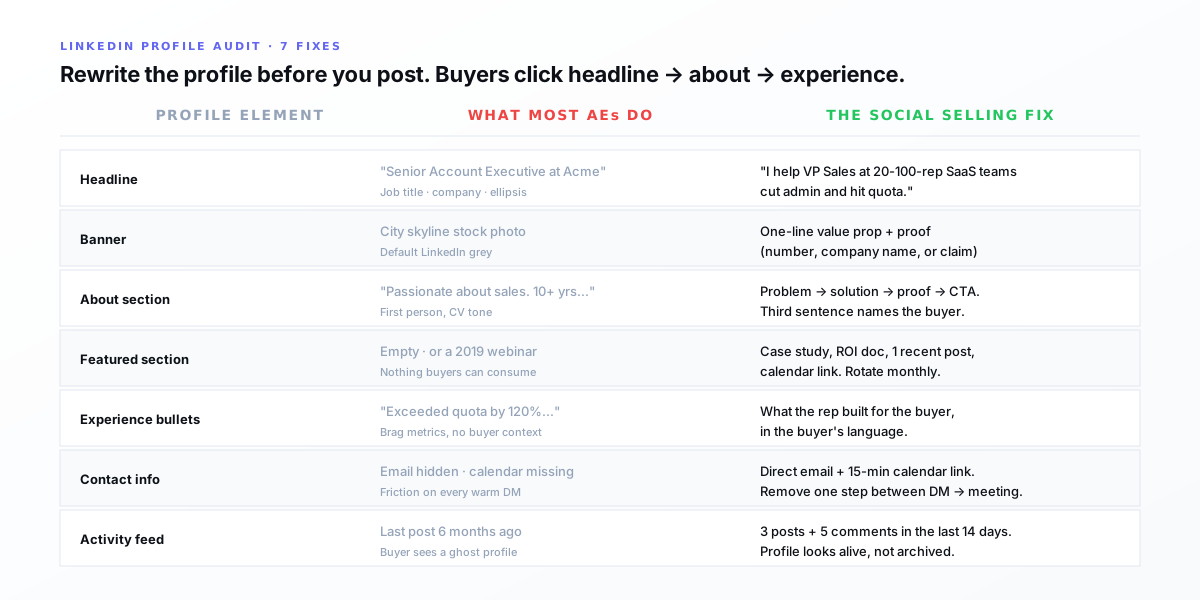
The seven moves that matter most:
- Headline names the buyer. Not "Senior AE at Acme." Try "I help VP Sales at 20–100-rep SaaS teams cut admin and hit quota." The buyer should see themselves in the headline inside three seconds.
- Banner carries one line of proof. A stat, a named customer, a category claim. Skip the stock city skyline.
- About section follows problem → solution → proof → CTA. Four short paragraphs. The third sentence names the buyer. The last line has a specific next step (calendar link, free tool, exact email).
- Featured section holds something consumable. Case study PDF, ROI calculator, one recent post, a 15-minute calendar link. Rotate monthly. An empty featured section is a broken shop window.
- Experience bullets describe what you built for the buyer, in the buyer's language. "Helped 80 HubSpot admins cut reporting time by half" beats "exceeded quota by 120%."
- Contact info works. Direct email visible, Calendly or Savvycal link in the About section. Remove one step between DM → meeting.
- Activity feed looks alive. Three posts and five comments in the last 14 days. If the last activity is six months old, the buyer concludes the profile is abandoned.
The 30-minute daily social selling workflow
Same time every day. Thirty minutes. Five time blocks. Every block has an output you can name.
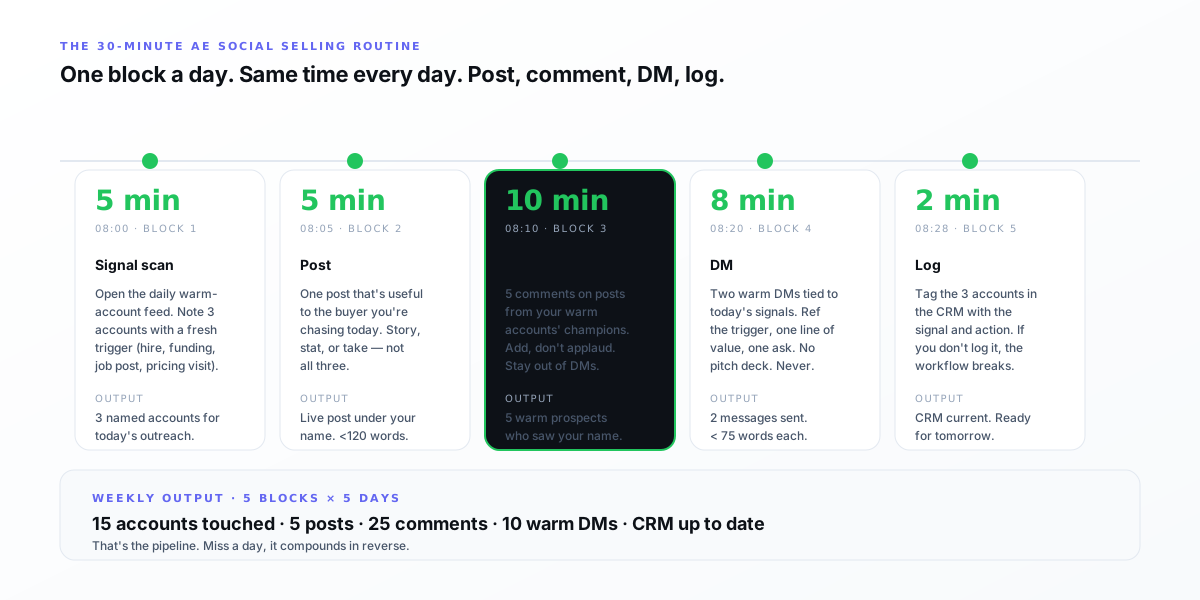
Block 1 — Signal scan (5 minutes)
Open your daily warm-account feed. Note three accounts with a fresh trigger — a new VP Sales, a Series A announcement, a job post matching your ICP tech stack, a pricing-page visit. These three become your outreach targets for today. Don't overthink; if nothing fresh landed, pull from the weekly intent feed instead.
Block 2 — Post (5 minutes)
Write one post. Under 120 words. Aimed at the buyer persona sitting inside today's three accounts. The rule: if the post would make sense to a rep outside your ICP, it's too generic. Post something only your target buyer would nod at.
Block 3 — Comment (10 minutes)
This is the compounding block. Five comments on posts from your warm accounts' champions. Add, don't applaud. "Great post" never got anyone a meeting. "We saw the same pattern in our pipeline last quarter — the fix ended up being X" gets you a DM reply because you added something. Comment where the VP Sales will see your name three times before you DM them.
Block 4 — Warm DMs (8 minutes)
Two warm DMs. Each tied to one of today's three signals. Under 75 words. Reference the trigger in the first line. Offer one piece of value (a doc, a benchmark, a tactic) in the second. Close with one specific, small ask. No pitch deck. No calendar link in the first message. The goal is a reply, not a meeting.
Block 5 — Log (2 minutes)
Tag the three accounts in the CRM with the signal you saw and the action you took. If you don't log it, the workflow breaks: tomorrow you'll re-find the same account, your SDR might double-touch them, or your manager won't see the pattern in the weekly pipeline review. Two minutes. Non-negotiable.
What to post — the 5 formats that earn replies (not just likes)
Most AE LinkedIn content is either brag-style ("hit 140% of quota!") or thought-leader cliché ("here's my hot take on outbound"). Neither books meetings. Five formats actually work for reps, because they all give the buyer something — a lesson, a pattern, a template — they can use without buying anything.
- Rep-lesson post. "I got the price objection three times this week. Here's what I tried, what worked, and what I'd do differently." Personal. Specific. Useful to another rep reading it. The buyer on your target list also reads it — and sees a rep who thinks for a living, not a rep who pitches for a living.
- Pattern-spot post. "Across 40 demos this quarter, 80% broke down at the same place." Pattern posts compound authority faster than any other format. The buyer trusts the rep who's counted.
- Hot-take post. One controversial opinion you can actually defend. "Most outbound sequences are four emails too long." Keep them rare — one every two weeks max. Hot-takes without specificity read as trolling.
- Peer-story post. "One of our customers — a 60-rep SaaS — did X and saw Y." Keeps the rep in narrator mode (not salesperson mode) and gives the buyer a reference point. Always name the outcome, not the product.
- Template post. Share the exact email, DM, or script. Template posts get saved and forwarded. Saves and forwards do more for LinkedIn distribution than likes — the algorithm prioritizes content that gets shared.
What to skip: motivational quote carousels, generic productivity advice, anything that starts with "Hot take." Also skip the word "leverage." The buyer can spot it from the feed and scrolls past.
The warm DM — moving from comment to conversation
Every LinkedIn DM you send should follow the same anatomy. Under 75 words. Four parts:
- Specific trigger — one sentence naming the signal you saw. "Saw you just stepped into VP Sales at Acme." Not "I came across your profile."
- Useful frame — one sentence connecting the trigger to a pattern your buyer cares about. "First 30 days usually go to the same question: where is rep time actually going?"
- Small offer — one sentence with a consumable piece of value. A one-page benchmark, a specific template, a short Loom. "We pulled a benchmark from 40 SaaS teams in your range."
- One ask — one sentence, one specific next step. "Happy to share — want me to send it over?" The smallest possible ask. Never a calendar link in the first message.
If the reply lands, the second message can open the calendar. If it doesn't, follow up once, seven days later, with a new angle — never with "just following up." The price-objection playbook shows the same no-pitch discipline applied to a live call: the smaller the ask, the higher the reply rate.
5 social selling mistakes AEs keep making
- Posting before fixing the profile. The buyer clicks through, sees a resume, and ghosts. Every post amplifies the profile you already have — good or bad.
- Commenting with "great post." It signals presence without adding value. Add, disagree, or stay out of the thread entirely.
- DM-ing without a trigger. "I came across your profile" DMs reply at roughly 2–3% (HubSpot, 2024). DMs that reference a specific signal run 15–25%. Same rep. Same list. Different first line.
- Attaching a pitch deck to the first DM. The fastest way to get archived. First DM is a reply-ask, never a meeting-ask.
- Running the routine four days on, three days off. The LinkedIn feed punishes gaps. Reps who post five times in one week and go dark for two see their next post buried. Consistency beats volume.
How Gangly makes social selling a workflow, not a side hustle
The reason most AEs can't sustain the 30-minute routine isn't motivation. It's context-switching. You open LinkedIn, you go to hunt for signals, you tab to Sales Nav, you tab back to write a post, you tab to Salesforce to log it, and the next thing you know it's 45 minutes and the routine consumed a whole morning. The minute social selling takes two hours, it gets cut.
Gangly collapses the routine into a single workflow. Signal Detection surfaces the warm accounts — role changes, funding events, pricing-page visits — in one daily feed, so Block 1 is five clicks, not a scavenger hunt across tools. Outreach Writer drafts the LinkedIn DM in the rep's voice (trained on approved messages, not a template library) so Block 4 is reviewing a draft, not staring at a blank message box. The Workflow Sequencer logs the signal, the post, and the DM against the account automatically — so Block 5 goes from two minutes to zero.
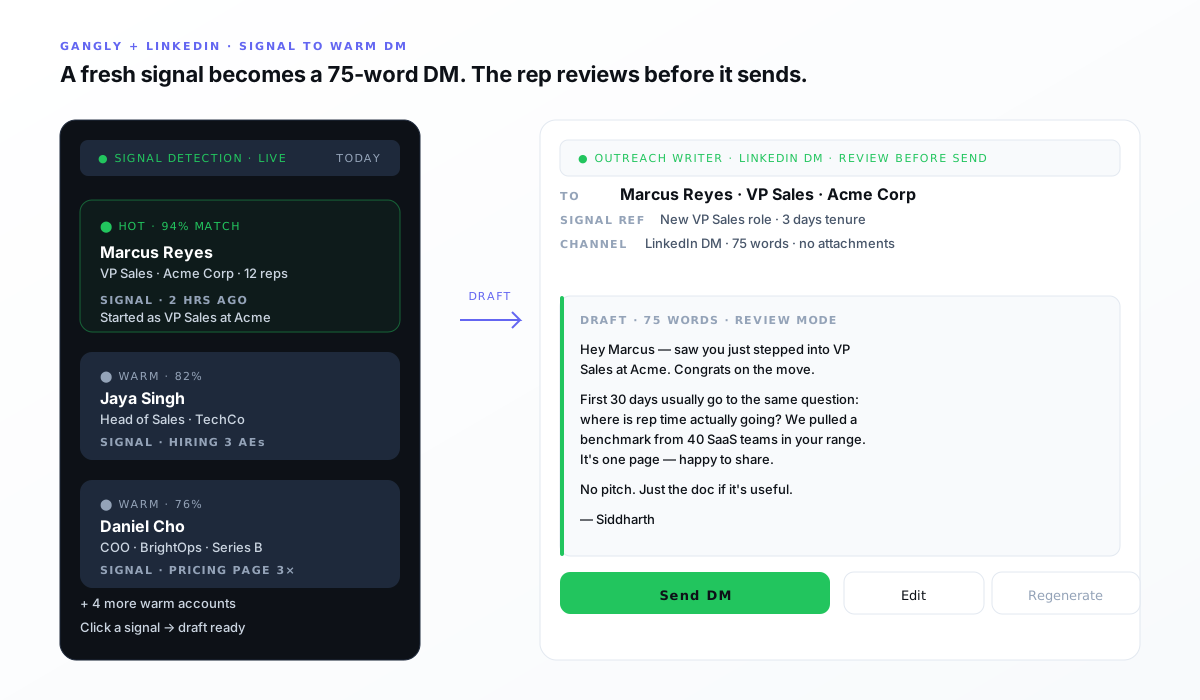
What the rep keeps: judgment, voice, approval. What Gangly removes: the tab-switching tax that makes the routine collapse after two weeks. The rep reviews every DM before it sends — Gangly never posts or DMs autonomously. It's a workflow tool, not an AI SDR.
For the broader routine behind the 30 minutes, see how top reps save 10+ hours a week and where your hours actually go. For the outbound motion that sits next to social selling, see the stack top AEs actually run. And if your LinkedIn DMs keep getting "send me pricing" replies, the deep dive is how to handle the price objection.
Run the 30-minute social selling routine with Gangly
Signal Detection surfaces the warm accounts. Outreach Writer drafts the DM in your voice. You review before send. 25-min live walkthrough. See the workflow on your real pipeline.
Key takeaways
- Social selling on LinkedIn is a signal-led daily routine — 30 minutes, five time blocks — not a branding project or a volume game.
- Rewrite the profile first. Headline names the buyer, about section follows problem → solution → proof → CTA, featured section holds something a buyer can consume in 60 seconds.
- The 5-block daily workflow: signal scan (5m), post (5m), comment (10m), warm DMs (8m), CRM log (2m). Same time every day. Gaps break the compounding.
- Five post formats earn replies: rep-lesson, pattern-spot, hot-take, peer-story, template-share. Everything under 120 words.
- Warm DM anatomy: trigger, frame, small offer, one specific ask. Under 75 words. No pitch deck. Target reply rate 15–25%.
- Track meetings booked from LinkedIn-sourced touches, warm DM reply rate, and profile views from target accounts. SSI is a leading indicator; pipeline is the goal.
- Signal Detection and Outreach Writer collapse the routine into one workflow so it survives the week the rep is buried in quota pressure.
Frequently asked questions
Social selling on LinkedIn is the practice of using the platform to build visibility with your ICP, spot buying signals, and open warm conversations that become pipeline. It is not posting more, networking harder, or chasing the Social Selling Index score. For an AE, social selling is a 30-minute daily routine: scan signals, publish one useful post, leave five thoughtful comments on accounts you're chasing, send two warm DMs tied to fresh triggers, and log the activity in the CRM. Done right, social selling replaces about half of cold outbound volume with warm inbound-adjacent conversations.
Thirty minutes a day, same time every day, is the cadence that compounds. Break it into five time blocks: five minutes on signal scan, five on posting, ten on commenting, eight on warm DMs, and two on CRM logging. AEs who put three hours into social selling on Friday afternoon and nothing else the rest of the week see almost no return. The LinkedIn algorithm and the buyer's attention both reward consistency, not volume.
Yes, when it's signal-led. LinkedIn's own research on social selling finds that sellers with a Social Selling Index above 70 create 45% more pipeline than those below 30. But SSI is a proxy, not the goal. What actually works is the routine: post to the buyer you're chasing, comment on their posts before you DM, reference a specific trigger when you open the conversation, and keep the ask small. Reps who run this routine consistently book 3-5 meetings a week from LinkedIn alone, on top of their cold volume.
Post about the category your accounts are trying to solve for, in the buyer's language. Five formats earn replies: the rep-lesson post (what I learned on a call this week), the pattern-spot post (I noticed 80% of demos break down here), the hot-take post (the one thing most AEs do wrong about X), the peer-story post (one of our customers did Y and got Z), and the template post (share the exact email or script). Skip motivational quotes, generic productivity tips, and anything that starts with "Hot take." Post fewer than 120 words.
Keep it under 75 words, reference a specific trigger in the first line, offer one piece of value in the second, and close with one small ask. "Hey Marcus, saw you just stepped into VP Sales at Acme. First 30 days usually go to rep time allocation. Pulled a benchmark from 40 SaaS teams your size, happy to share. One page, no pitch." Skip the pitch deck, skip the calendar link, skip "hope this finds you well." The goal is one reply, not one meeting.
The Social Selling Index is a 0-100 score LinkedIn calculates from four activities: personal brand strength, finding the right people, engaging with insights, and relationship building. Reps with SSI above 70 create 45% more pipeline than those below 30, per LinkedIn research. SSI is useful as a leading indicator. If it's moving, your behavior is compounding. It's not the goal. The goal is meetings booked off LinkedIn; SSI just tells you whether the routine is running.
Track three metrics, weekly. First: meetings booked with a LinkedIn-sourced touch in the first three steps. Second: warm DM reply rate (target 15-25% — anything under 8% means the signal or the copy is off). Third: profile views from target accounts (rising means your comments and posts are landing in the right feed). Vanity metrics (likes, follower count, SSI trend) are secondary. If meetings are not moving after six weeks of consistent routine, the issue is usually the target list, not the posts.