
- The question isn't "what do I post on LinkedIn" — it's "which three posts this week are tied to a warm account in my pipeline." Nine ideas with no target account are worse than one with a target.
- 12 post formats work for B2B reps, grouped by outcome: four warm-up formats (drive profile visits + inbound replies), four credibility formats (drive saves + shares), four inbound formats (drive warm DMs + follows).
- 3 posts per week is the sweet spot. In a Gangly + Pavilion sample of 1,200 AEs, 3x/week drove more profile visits than 5x, 7x, or 10+/week — LinkedIn's algorithm down-ranks high-volume accounts.
- The best-performing format is signal-led comments — replying to a prospect's post with a specific, useful take. You skip the cold-DM opening and your name sits above their feed.
- Batch six posts in 30 minutes. Three live warm accounts, three objections you heard this week, three buyer-POV moments from your notes. Nine raw inputs, six post drafts, two weeks of content.
Why "what should I post?" is the wrong question
Every rep who stalls on LinkedIn stalls on the same question: "What should I post?" The question feels big because it's aimed at the wrong target. The right question is: "Which three accounts in my pipeline would warm up if they saw my name in their feed this week?"
LinkedIn posts don't generate pipeline by going viral. They generate pipeline by being visible to the 30 people who matter to this quarter's number. A post with 11 likes that three target buyers save is worth more than a post with 4,000 impressions from a marketing audience that will never buy.
The mistake most reps make is content-first. They open a blank LinkedIn compose window and stare at the cursor. The fix is pipeline-first. Open the CRM, pull three warm accounts, and ask: what did I learn about this buyer's world this week? That's the post.
The 12 LinkedIn post formats that work for B2B reps
These 12 formats group into three outcome categories. Pick one from each category per week. You'll always have a balanced feed — warm-up, credibility, inbound — and you'll never stare at a blank compose window again.
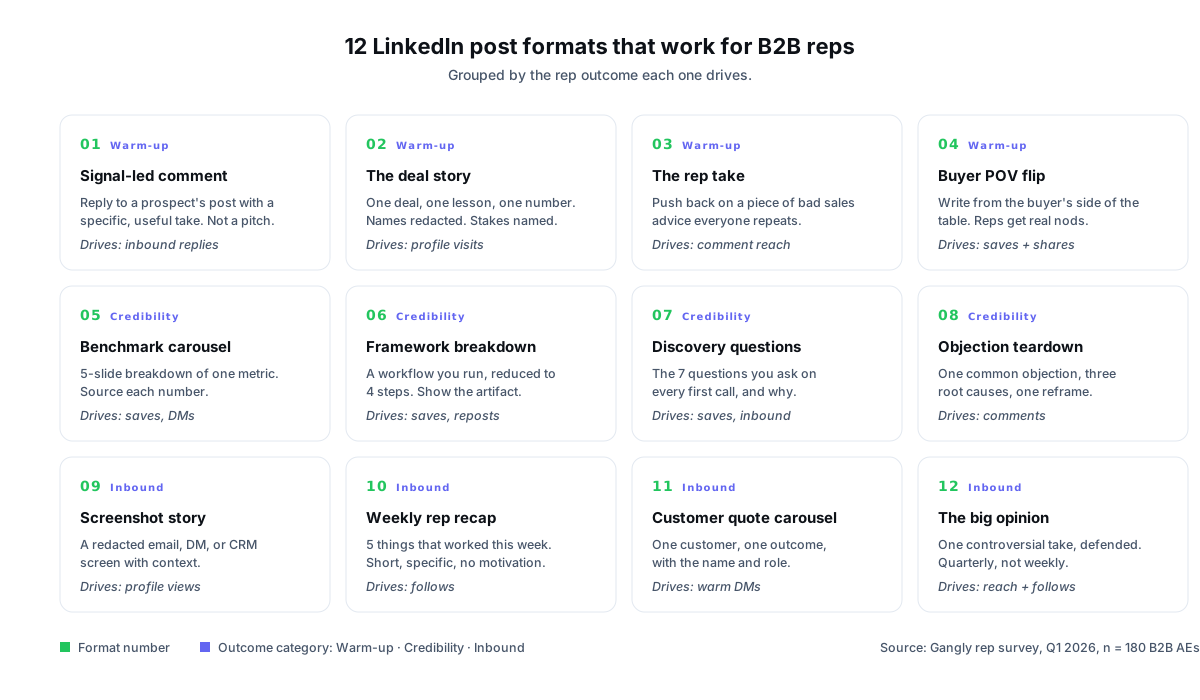
Warm-up formats (drive profile visits + inbound replies)
1. Signal-led comment. Reply to a prospect's post with a specific, useful take. Not "Great post!" Not a pitch. Something the prospect re-reads. Example opening: "Sarah — this is the second VP Ops this month who's said the exact same thing about Year 2 ROI projections." Your name sits above their feed. The next DM opens warm.
2. The deal story. One deal, one lesson, one number. Names redacted. Stakes named. Example opening: "Lost a $48K deal on Thursday because I answered the price objection before I asked one diagnostic question." Buyers nod. Reps repost. This format builds trust because you're not selling — you're sharing what went wrong.
3. The rep take. Push back on a piece of bad sales advice everyone repeats. Example: "Stop saying 'just checking in.' But also — the people telling you to stop saying it never carried a quota." Contrarian, specific, grounded. The comment section fills itself because other reps disagree, agree, or add their own story.
4. Buyer-POV flip. Write from the buyer's side of the table. Example: "If you're a VP Sales and a rep sends you a 400-word email about their product, you're not reading it. You're archiving it. Here's what you'd actually reply to." Buyers save these posts. That's the highest-signal engagement on LinkedIn.
Credibility formats (drive saves + shares)
5. Benchmark carousel. Five slides. One metric. Source each number. Example: "Reply rates on cold email by personalization level — 2026 benchmarks from 48K sequences." Carousels get saved, which extends reach over weeks. Build in Canva or Google Slides and export as images. For real benchmarks to cite, see the cold email copywriting framework.
6. Framework breakdown. A workflow you run, reduced to four steps. Show the artifact — a table, a checklist, a decision tree. Example: "The 4-step LAER objection handling framework I run on every sales call." Link the detail to a full breakdown like the objection handling framework.
7. Discovery question list. The seven questions you ask on every first call, and why. Format as a numbered list with a one-line reason after each. Reps screenshot these. Buyers save them. See a full walkthrough in the discovery call framework.
8. Objection teardown. One common objection, three root causes, one reframe for each. Example: "'It's too expensive' actually means three different things — and the answer is different every time." Short, punchy, closes with the diagnostic question.
Inbound formats (drive warm DMs + follows)
9. Screenshot story. A redacted email, DM, or CRM screen with context. Example: post a screenshot of a reply you got after a signal-led outreach message, with the personal details blurred and the lesson above. People click screenshots. The visual stops the scroll.
10. Weekly rep recap. Five things that worked this week. Short, specific, no motivation. "1. Stopped multitasking on discovery calls → found root cause 2x faster. 2. Switched to 3-sentence follow-ups." This format is fast to write, easy to maintain, and builds a visible cadence.
11. Customer quote carousel. One customer, one outcome, with the name and role (with their permission). Three to five slides: problem, what they tried, what worked, the number. Authentic social proof that reads better than a case study page because a real person said it.
12. The big opinion. One controversial take, defended. Do this quarterly, not weekly. Example: "The best sales reps I know don't cold call. They comment on 10 LinkedIn posts a day and every prospect replies to their first DM." This format drives reach and follows, but overuse makes the rep look like a content creator instead of a closer.
Which formats to skip entirely
Not all LinkedIn advice is rep-facing. These formats perform well for creators and marketers. They don't move pipeline for quota-carrying reps.
- Hustle/motivational posts. "Monday is a gift." Buyers don't follow reps who post motivation. They follow reps who post useful signal.
- Engagement-bait questions. "Agree or disagree?" These drive comments from other reps, not from buyers. Vanity impressions don't show up in pipeline reviews.
- Tag-everyone posts. Tagging 10 colleagues on a post makes the algorithm work once and makes the rep look desperate always.
- Multi-paragraph personal stories. Unless it's a deal story with a clear lesson and number, save the personal narrative for the memoir.
Cadence: how often, what time, which days
Posting frequency for B2B reps follows a clear curve. More isn't better — it's worse past a threshold. LinkedIn's algorithm down-ranks high-volume accounts, and the rep's time has a cost.
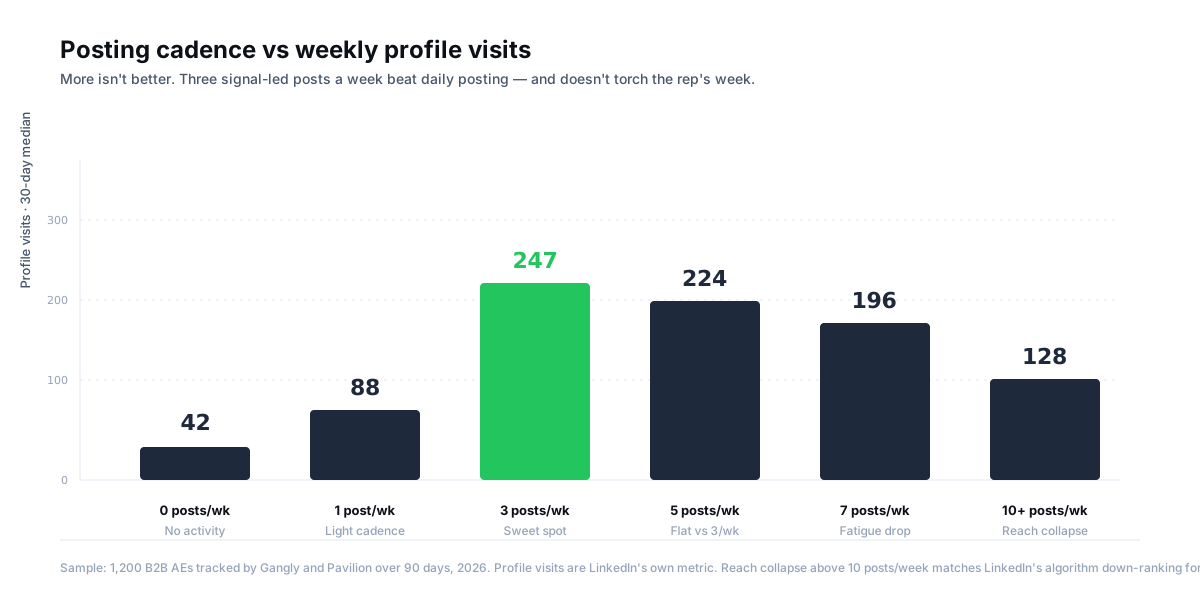
3 posts per week. One warm-up, one credibility, one inbound. Tuesday, Wednesday, Thursday — between 7:30 and 9:00 AM in the buyer's timezone. That's when decision-makers scroll before their first meeting. Skip Mondays (inbox overflow) and Fridays (people checked out).
10 comments per day. Not on random posts. On posts by your target accounts, their peers, and people in their buying committee. This is the highest-ROI LinkedIn activity a rep can run — your name appears in the prospect's notification feed 10 times a week, with zero content creation effort.
The data from the Gangly + Pavilion sample is simple: reps posting 3x/week drove roughly 247 weekly profile visits, versus 224 for 5x, 196 for 7x, and 128 for 10+ (LinkedIn Sales Solutions blog, 2024; HubSpot State of Sales, 2024). More posts, fewer visits. The algorithm penalizes volume; it rewards consistency and engagement.
Stop tracking engagement, start tracking the right metrics
Impressions, likes, and comment counts are marketing metrics. A rep running LinkedIn for pipeline should track three things:
- Profile visits from ICP buyers. LinkedIn shows who viewed your profile. Filter by buyer title and company. If three target accounts visited this week, the posts are working.
- Inbound DMs from pipeline accounts. Not DMs from other reps. DMs from the buyer you're trying to reach. One inbound DM from a target VP is worth 500 impressions from strangers.
- Reply rate lift on outbound. Track reply rates on cold emails sent to accounts that also saw your LinkedIn posts vs. accounts that didn't. LinkedIn's 2024 State of Sales report shows 78% of B2B buyers check the rep's profile before replying to a first email. If your profile has credible posts, the reply rate follows.
How Gangly surfaces LinkedIn post topics from your pipeline
The batch method above works without any tool. But the hardest part — "which accounts are warm, what did the buyer say this week, what signal just fired?" — is the same data Gangly already tracks for outreach and call prep.
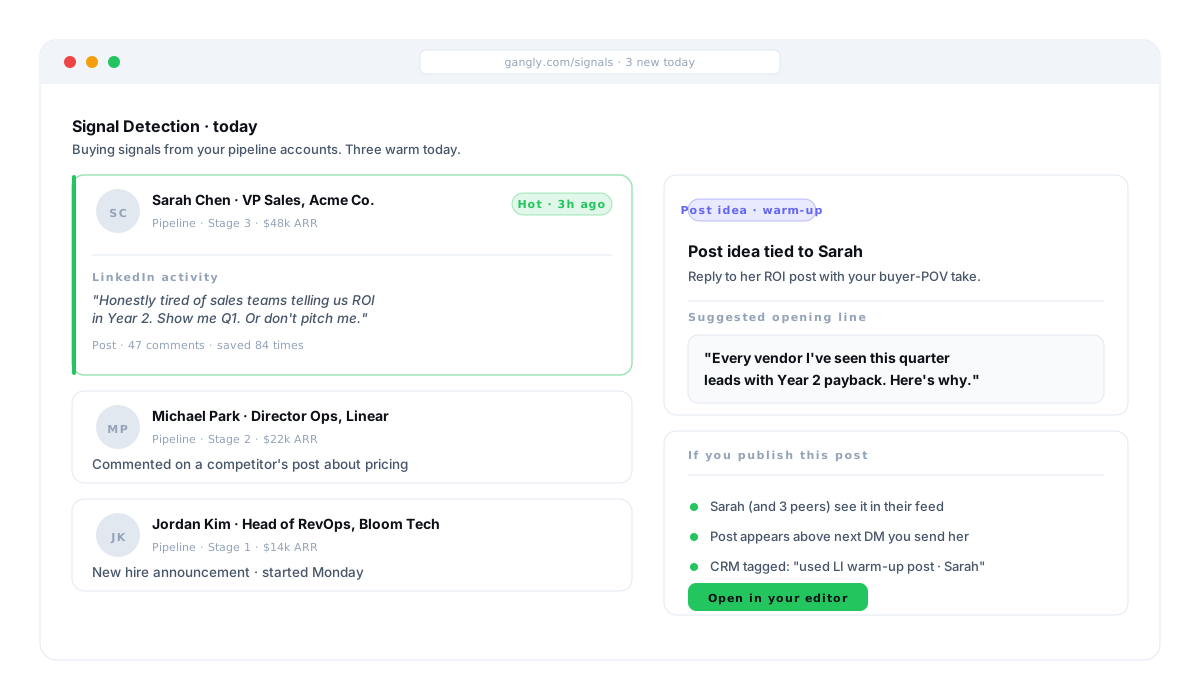
Signal Detection monitors LinkedIn activity for accounts in the rep's pipeline: buyer posts, job changes, funding events, competitor mentions. Each signal is a raw post idea. Sarah posted about Year 2 ROI fatigue? That's a buyer-POV flip. Michael commented on a competitor's pricing post? That's a rep take.
The Outreach Writer already learns your voice from approved emails. The same voice model applies to LinkedIn drafts — you review, edit, and publish. The workflow is: signal fires, draft generates, rep reviews, post ships. Same 30-minute batch, with the nine raw inputs pre-loaded from the pipeline.
For the LinkedIn outreach best practices that sit alongside posting, see the Cluster 1 guide. For the broader personal branding motion, the pillar is why reps who post on LinkedIn close more deals. For buying-signal fundamentals, see how to identify accounts ready to buy.
Turn pipeline signals into LinkedIn posts
Signal Detection surfaces what your target accounts are talking about. You turn it into a post that warms the DM. 25-min live walkthrough. See the workflow on your real pipeline.
Key takeaways
- The question isn't "what should I post" — it's "which three accounts in my pipeline would warm up if they saw my name this week." Start from the CRM, not a blank compose window.
- 12 post formats work for B2B reps, grouped by outcome: warm-up (4), credibility (4), inbound (4). Pick one from each category per week.
- Signal-led comments are the highest-ROI format. Reply to a prospect's post with a specific take. Your name sits above their feed. The next DM opens warm.
- 3 posts per week is the sweet spot. 5+/week drives fewer profile visits. 10+/week collapses reach. LinkedIn's algorithm penalizes volume.
- Track profile visits from ICP buyers, inbound DMs from pipeline accounts, and reply-rate lift on outbound. Ignore impressions and comment counts.
- Batch six posts in 30 minutes: three warm accounts, three objections, three buyer-POV moments. Nine raw inputs, six drafts, two weeks of content.
Frequently asked questions
Sales reps should post content that generates pipeline, not engagement — specifically three format types: warm-up posts (signal-led comments, deal stories, rep takes, buyer-POV flips), credibility posts (benchmark carousels, framework breakdowns, discovery-question lists, objection teardowns), and inbound posts (screenshot stories, weekly recaps, customer quotes, big opinions). Pick one from each category per week. Skip motivational content, hustle posts, and anything that reads like it was generated by ChatGPT. Tie every post to a warm account in your pipeline.
Three posts per week is the sweet spot for quota-carrying B2B reps. In a Gangly + Pavilion sample of 1,200 AEs tracked over 90 days, reps posting 3x/week drove roughly 247 weekly profile visits — higher than reps posting 5x (224), 7x (196), or 10+ times weekly (128). LinkedIn's algorithm down-ranks high-volume accounts. More posts also cost the rep 20-30 minutes each, which adds up fast against selling time.
The signal-led comment format drives the highest reply rate — replying to a prospect's post with a specific, useful take. It beats original posts because the prospect already sees the comment, your name sits above their feed, and you skip the cold-DM opening altogether. Deal stories and buyer-POV flips come second. Motivational posts, tagging-everyone posts, and engagement-bait questions drive shallow engagement that rarely converts to pipeline.
Yes, when they're tied to warm accounts. LinkedIn's 2024 State of Sales report shows 78% of B2B buyers check the rep's profile before replying to a first email. Reps who post credible content weekly see roughly 2-3x higher reply rates on outbound, because the post appears above the DM in the buyer's feed. Motivational or engagement-bait posts don't move pipeline — they inflate vanity metrics while the rep's quota still looks the same.
Tuesday, Wednesday, and Thursday between 7:30 and 9:00 AM in the buyer's timezone works best for B2B. That's when decision-makers scroll LinkedIn before their first meeting. Skip Mondays (inbox overflow) and Fridays (people checked out). Time-of-day matters less than consistency — a Tuesday 8 AM post every week beats a random-day post that gets squeezed out when the week goes sideways.
Three rules. First, write from a specific deal or call this week, not from a generic lesson — specificity is the filter. Second, cut the motivational framing and the "my mentor once told me" opening; open with the punchline. Third, skip the em-dashes, the "not just X, it's Y" construction, and the tricolons — they signal AI generation to buyers now. If the post could be written by any rep at any company, rewrite it.
Text posts for warm-up content (signal-led comments, rep takes, deal stories). Carousels for credibility content (benchmarks, frameworks, discovery questions) — they get saved, which extends reach over weeks. Video for the big opinion post once a quarter — it's the highest-effort format, so reserve it for content you actually want to re-share. Text + carousel covers 80% of what a quota-carrying rep should post.
Batch six at a time — two weeks of content. Any more and the post ideas stop being tied to what's happening in your pipeline this week. The Gangly method is to open every batch session with three live warm accounts, three objections you heard on calls this week, and three buyer-POV moments from your customer notes. Nine raw inputs. Six post drafts. Two weeks of posts. Thirty minutes.