
- Social selling has 12 metrics worth tracking, sorted into three tiers: vanity (impressions, likes), leading (profile views from ICP, DM reply rate), and lagging (pipeline sourced, closed-won with LinkedIn signal).
- Most reps report vanity metrics to a VP who only cares about lagging ones. That gap is why "is LinkedIn working?" never gets answered.
- LinkedIn's Social Selling Index (SSI) is a useful self-diagnostic above 70 but should never appear in a pipeline review. It measures activity, not revenue.
- The 3-tag attribution method (source, influence, close signal) connects LinkedIn activity to closed deals with 5 seconds of CRM work per opportunity.
- Social selling takes 30-60 days to produce a first meeting. Reps who quit at week 3 never reach the lagging phase where ROI is provable.
What counts as a social selling metric
A social selling metric is any number that connects a rep's LinkedIn activity to a pipeline outcome. That's it. Impressions on a post about quota attainment are a content metric. A DM reply from the VP Ops who read that post and booked a call is a social selling metric. The border between the two is attribution: can you trace the activity back to a deal?
The reason most reps can't answer "is LinkedIn working?" isn't that LinkedIn isn't working. It's that nobody bothered to tag which deals had a LinkedIn touchpoint. Without that tag, you can show 50,000 impressions in a month and still not prove a single closed deal came from it.
The 3 tiers of social selling metrics
Every social selling metric sits in one of three tiers. The tiers matter because they determine who you report the metric to — and what action follows.
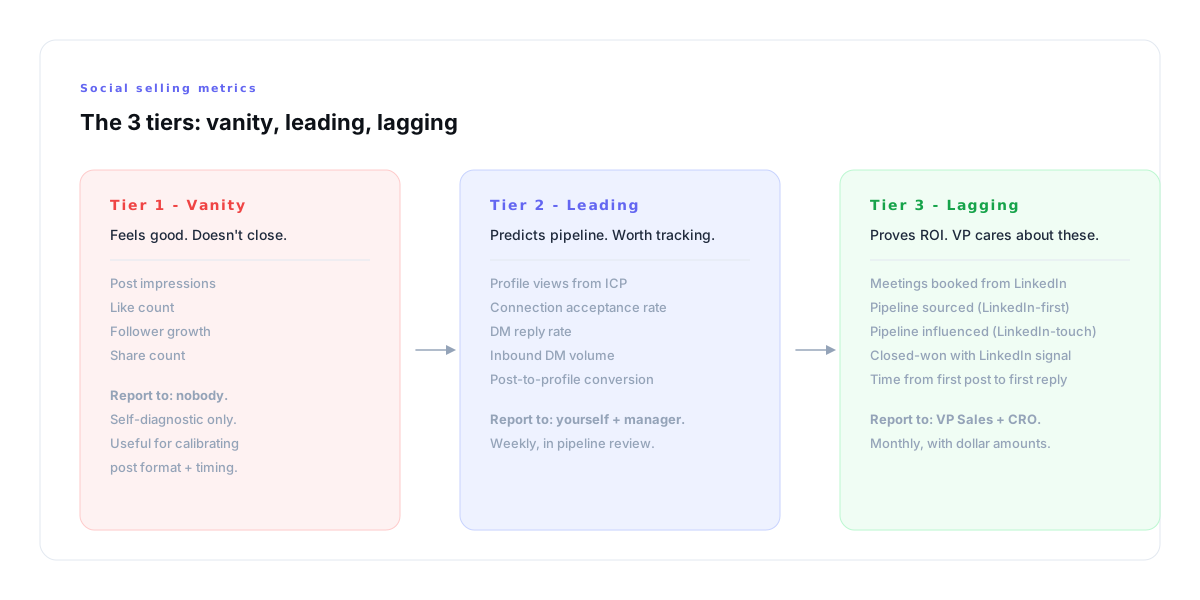
Tier 1 — Vanity. Post impressions, like count, share count, follower growth. These tell you whether content resonates with the algorithm. They have almost zero correlation with pipeline. Use them to calibrate post format and timing — a post with 2% engagement is underperforming vs. 5% — but never show them to your VP in a pipeline review. They answer "did people see this?" and nothing else.
Tier 2 — Leading. Profile views from ICP titles, connection acceptance rate, DM reply rate, inbound DM volume, post-to-profile conversion. These predict pipeline creation. If ICP-title profile views are climbing weekly, warm outbound will convert better — because the buyer already knows your name. Track these in a weekly pipeline review with your manager. They're the early-warning system.
Tier 3 — Lagging. Meetings booked from LinkedIn, pipeline sourced (LinkedIn-first touch), pipeline influenced (any deal with a LinkedIn touchpoint), closed-won with a LinkedIn signal. These prove ROI. Report them monthly to your VP Sales with dollar amounts attached. If tier-3 numbers are strong, nobody asks about impressions.
LinkedIn's Social Selling Index (SSI) — what it measures, what it misses
LinkedIn assigns every user a Social Selling Index scored 0 to 100 across four dimensions: establishing your professional brand, finding the right people, engaging with insights, and building relationships. LinkedIn's own research says top SSI sellers create 45% more opportunities and are 51% more likely to hit quota (LinkedIn Sales Solutions).
That correlation is real but loose. SSI rewards consistent activity on the platform — posting, viewing profiles, sending connection requests, using Sales Navigator. It does not measure whether that activity produced a reply, a meeting, or a dollar of pipeline. A score of 80 means you're active on LinkedIn. It does not mean you're closing from LinkedIn.
Treat SSI as a tier-2 leading indicator. If your SSI is below 50, you're probably not posting or engaging enough for the algorithm to surface you to buyers. Above 70, you're active enough that leading metrics (profile views, DM replies) should start climbing. Above 80, diminishing returns — time spent chasing the last 20 points is better spent on attribution. Never put SSI in a pipeline slide. Your VP doesn't want to see a score out of 100 that doesn't have a dollar sign in front of it.
The 12 social selling metrics that actually matter
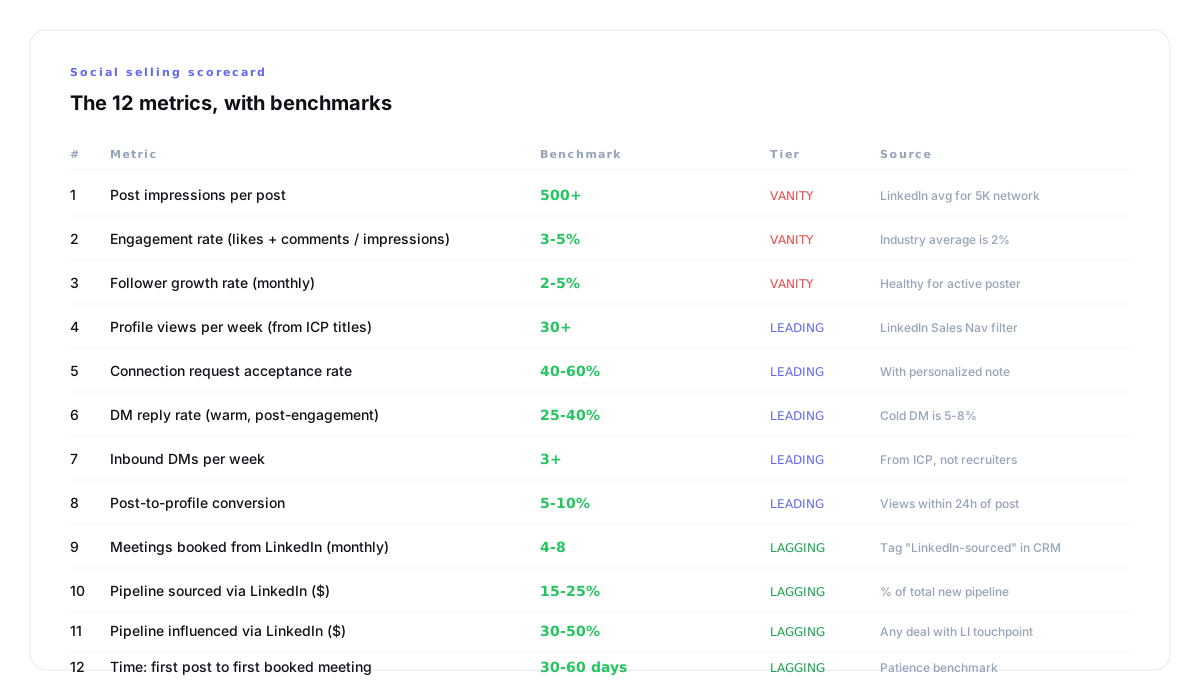
Here's the full scorecard. Use it as a weekly self-audit (tiers 1-2) and a monthly VP report (tier 3). Benchmarks are calibrated for a B2B SaaS rep with a 5,000+ network, posting 3 times per week, and actively running warm outbound. Adjust down for a smaller network or earlier stage.
Quick callouts on the ones most reps misread:
- DM reply rate (warm, post-engagement): The 25-40% benchmark applies when you DM someone who already engaged with your content — commented, liked, viewed your profile. Cold DMs sit at 5-8%. The gap is the compound interest of consistent posting.
- Pipeline influenced vs. sourced: Sourced = LinkedIn was the first touchpoint. Influenced = the deal came from somewhere else, but the buyer engaged on LinkedIn at some point before replying. Both matter. Influenced is usually 2-3x larger than sourced and tells a more honest story about the multiplier effect.
- Time to first meeting (30-60 days): This is the patience metric. Reps who post for 3 weeks, see low impressions, and quit never reach the point where the lagging metrics prove it was working. Set the expectation with your manager before you start, not after you stop.
How to attribute a deal to LinkedIn — the 3-tag method
Attribution is the bridge between "I post on LinkedIn" and "LinkedIn produced $47K in pipeline this quarter." Without it, social selling is content marketing with a personal brand label. The 3-tag method takes 5 seconds per deal and gives you a clean dataset after 30 closed opportunities.
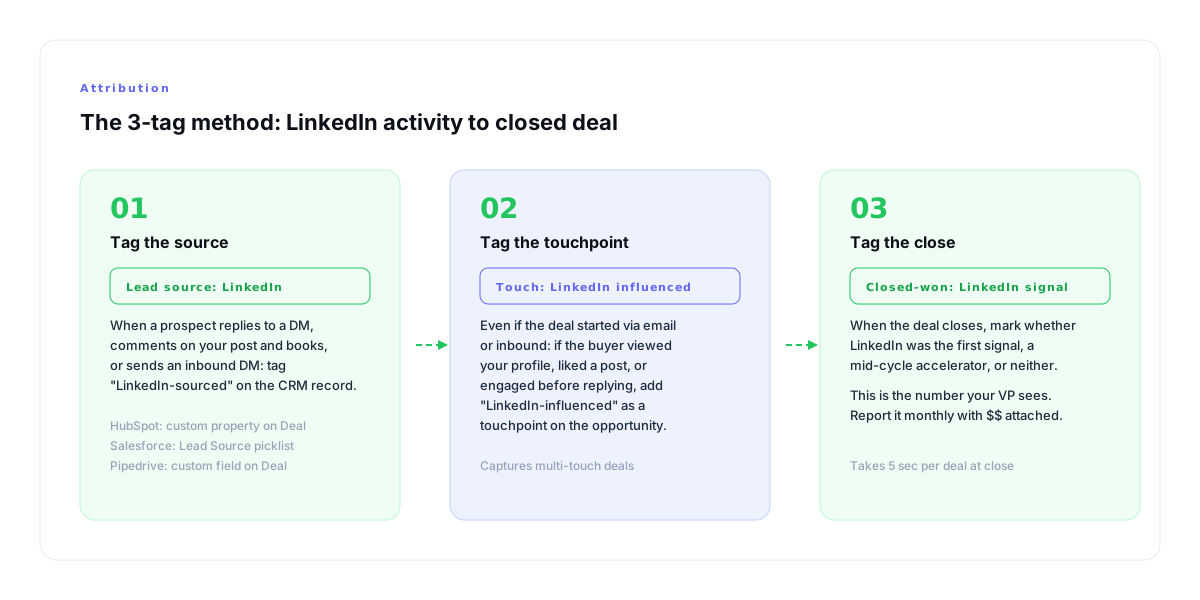
Tag 1 — Source. When a deal originates from LinkedIn — a prospect replies to your DM, sends an inbound message, or comments on a post and books — mark "LinkedIn-sourced" on the CRM opportunity record. In HubSpot, this is a custom deal property. In Salesforce, it's the Lead Source picklist. In Pipedrive, a custom field.
Tag 2 — Influence. Even if the deal came from an inbound form or a cold email, check whether the buyer engaged on LinkedIn before replying — viewed your profile, liked a post, commented. If they did, add "LinkedIn-influenced" as a touchpoint. This captures the deals LinkedIn warmed without being the first touch.
Tag 3 — Close signal. At closed-won, mark whether a LinkedIn interaction was part of the final sequence. Some deals close because the champion shared your post with their CFO the week before sign-off. That signal matters. Tag it.
After one quarter you'll have three numbers your VP can put in a board slide: pipeline sourced (dollar amount), pipeline influenced (percentage of total), and closed-won with LinkedIn signal (dollar amount). None of those require impressions.
What to report up to your VP — and what to keep for yourself
The single biggest attribution mistake isn't tagging — it's audience. Reps put impressions in the VP's pipeline review and DM reply rate in a content calendar. Both are in the wrong room.
| Audience | Metrics to report | Frequency |
|---|---|---|
| You (self-audit) | Impressions, engagement rate, follower growth, SSI | Weekly |
| Manager (pipeline review) | Profile views from ICP, DM reply rate, connection acceptance, meetings booked | Weekly |
| VP Sales / CRO | Pipeline sourced ($), pipeline influenced (%), closed-won with LI signal ($) | Monthly |
If the VP only sees dollar-denominated lagging metrics, the question "is LinkedIn working?" gets replaced by "LinkedIn produced $X this quarter, which is Y% of total sourced pipeline." That's a conversation that ends in budget, not skepticism. For broader productivity context, see how top reps save 10+ hours a week — social selling fits inside the rep workflow, not outside it.
How Gangly connects social signals to pipeline
Gangly doesn't manage your LinkedIn content. It does something reps actually need: it turns LinkedIn activity into pipeline-ready workflow without a 3-tool analytics stack.
Signal Detection pulls LinkedIn signals — job changes, post engagement, profile views from known accounts — into the same daily warm-account feed the rep uses for outbound. When a prospect from your pipeline views your profile after your Tuesday post, Gangly flags it as a buying signal and ranks the account. No manual checking. No "I think they viewed me last week."
Outreach Writer takes that signal and drafts a message that references it — "Saw you checked out my post on quota planning — we've been talking about similar things in your team's space. Worth a 15-minute look?" Rep reviews, edits, sends. The message feels warm because it is warm — it's attached to a real signal, not a cold sequence.
And when the deal closes, Post-Call Notes captures the touchpoints that led to it — including which LinkedIn signals triggered the first outreach. That's the attribution step. It lands in the CRM with one click, and the 3-tag method runs itself. For more on how the LinkedIn integration works with the full workflow, see the integration page.
Turn LinkedIn signals into pipeline you can prove
Signal Detection surfaces LinkedIn activity that predicts reply. Outreach Writer drafts the warm message. Post-Call Notes tags the deal. 25-min live walkthrough. See the workflow on your real pipeline.
5 mistakes that make social selling metrics meaningless
- Reporting impressions to a VP. Impressions are your calibration tool, not the VP's. Bring dollar-denominated lagging metrics or bring nothing.
- Treating SSI as a target. SSI is a self-diagnostic. Optimizing for SSI means optimizing for LinkedIn activity, not for pipeline. The two overlap but they're not the same thing.
- Skipping attribution. If you don't tag which deals had a LinkedIn touchpoint, every metric above becomes unprovable. The 3-tag method takes 5 seconds per deal. There is no excuse.
- Quitting before lagging metrics appear. Vanity metrics show up in week 1. Leading metrics in week 2-3. Lagging metrics (meetings, pipeline) in month 2-3. Reps who stop at week 3 exit during the dead zone between leading and lagging. Set the patience benchmark before you start.
- Confusing "influenced" with "caused." Pipeline influenced means a deal had a LinkedIn touchpoint somewhere in the cycle. It doesn't mean LinkedIn caused it. Report both sourced and influenced with clear definitions, or you'll over-attribute and lose credibility the first time someone checks.
Key takeaways
- 12 social selling metrics, sorted into 3 tiers: vanity (attention), leading (intent), and lagging (pipeline).
- Report vanity to nobody (self-audit only), leading to your manager weekly, and lagging to your VP monthly with dollar amounts.
- LinkedIn SSI is a useful self-calibration tool above 70. It's not a revenue metric and should never appear in a pipeline review.
- The 3-tag attribution method (source, influence, close signal) connects LinkedIn activity to closed-won deals in 5 seconds per opportunity.
- Social selling produces lagging metrics (meetings, pipeline) in 30-60 days. Quitting at week 3 means exiting before ROI is provable.
- Signal Detection turns LinkedIn engagement into flagged warm accounts. The attribution tags follow automatically through the Gangly workflow.
Frequently asked questions
Measure social selling across three tiers. Vanity metrics (impressions, likes, follower count) tell you whether content resonates but have no pipeline correlation. Leading metrics (profile views from ICP titles, connection acceptance rate, DM reply rate, inbound DMs) predict pipeline creation. Lagging metrics (meetings booked from LinkedIn, pipeline sourced, pipeline influenced, closed-won with a LinkedIn signal) prove ROI. Track all three, but only report lagging to your VP.
LinkedIn's Social Selling Index (SSI) is scored 0-100 across four dimensions: establishing your brand, finding the right people, engaging with insights, and building relationships. A score above 70 puts you in the top 25% of your industry. Above 80 is rare. SSI correlates loosely with opportunity creation — LinkedIn says top SSI sellers create 45% more opportunities — but the score is a leading indicator, not a revenue metric. Don't report SSI to your VP. Use it for self-calibration.
Vanity metrics are numbers that feel good but don't correlate to pipeline: post impressions, like count, share count, and follower growth. They're useful for calibrating post format and timing (a post with 2% engagement rate is underperforming vs. 5%), but they're not worth reporting up. The trap is treating high impressions as proof that social selling is working. Impressions measure attention. Pipeline measures conversion.
Use the 3-tag attribution method. Tag 1: when a deal originates from LinkedIn (DM reply, inbound message, post comment that converts), mark "LinkedIn-sourced" on the CRM record. Tag 2: when a deal that came from another channel had LinkedIn engagement before the reply, mark "LinkedIn-influenced." Tag 3: when the deal closes, mark whether LinkedIn was first signal, mid-cycle accelerator, or neither. Report tags 1 and 3 with dollar amounts monthly.
Expect 30-60 days between starting consistent posting (3 per week) and booking the first meeting that originated from LinkedIn. Leading metrics (profile views, connection acceptance) move within 2 weeks. Lagging metrics (pipeline sourced, closed-won) take 60-120 days because the deal cycle still has to run after the meeting books. Reps who quit at week 3 because impressions are low never reach the lagging phase where ROI is provable.
Content metrics measure whether people saw and engaged with a post (impressions, engagement rate, dwell time). Social selling KPIs measure whether that engagement moved a pipeline (DM reply rate, meetings booked, deals influenced). The gap between the two is attribution. Without tagging which deals had a LinkedIn touchpoint, content metrics and selling KPIs are disconnected, and neither answers the question your VP is actually asking: did this produce revenue?
At the deal level, tag three things in the CRM: source (was LinkedIn the first touchpoint?), influence (did the buyer engage on LinkedIn at any point before replying?), and close signal (was a LinkedIn interaction part of the final sequence?). This takes 5 seconds per deal. After 30 closed deals, you have a clean dataset. Report sourced pipeline as a dollar amount and influenced pipeline as a percentage of total. Both matter — sourced proves direct ROI, influenced proves the multiplier.