
 By Siddharth Gangal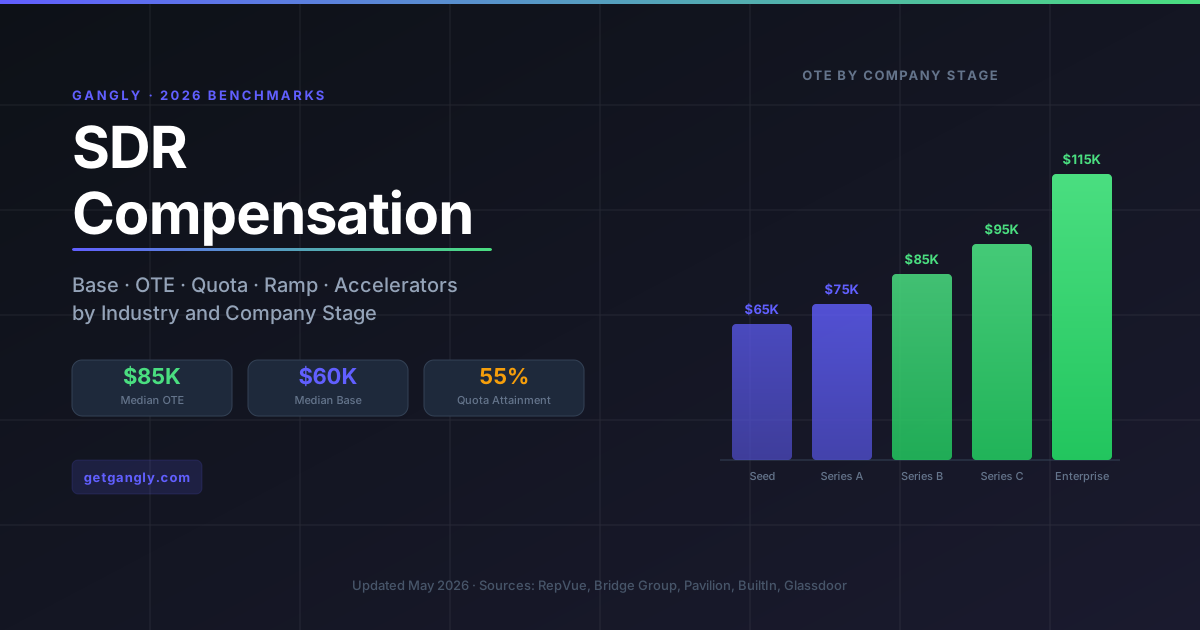
TL;DR
- 2026 US median SDR compensation: $60K base, $85K OTE on a 70/30 pay mix (RepVue, May 2026 · BuiltIn 2026).
- Pay varies by company stage — Seed SDRs start at $65–80K OTE; Series C+ SDRs reach $88–115K at senior tier.
- Four commission structures dominate: per-meeting, per-SQL, pipeline %, and closed-won revenue share — each with different ceilings and attainment profiles.
- Median quota attainment is 53% in 2026 — roughly 47% of SDRs earn below OTE in any given quarter (Bridge Group 2025 · Skipcall.io 2026).
- Five questions decide whether an SDR offer is signable: quota metric definition, team attainment history, written ramp, accelerator threshold, and AE-to-SDR ratio.
Direct answer
SDR compensation is the total pay a sales development representative earns — base salary plus variable pay tied to pipeline-creation activities such as meetings booked, SQLs accepted, or revenue sourced. In 2026 the US median is $60,000 base and $85,000 OTE on a 70/30 pay mix. Pay varies 2× across company stages, 1.5× across industries, and 1.8× across experience tiers. The headline OTE is not the number most SDRs bank — median quota attainment is 53%, making environment and quota design more important than the offer letter number.
What SDR compensation is — and what the 2026 numbers actually mean
SDR compensation is the full pay package a sales development representative receives for generating pipeline. Two components make up the total: a fixed base salary and a variable pay layer tied to activity-based or pipeline-based outcomes. The 2026 US national median is $60,000 base and $85,000 on-target earnings — a 70/30 split confirmed by RepVue's May 2026 data and BuiltIn's 2026 national average of $83,110.
That median hides four kinds of variance. Stage variance is the largest — a Seed company SDR earns $65–80K OTE while a Series C+ Senior SDR earns $88–115K. Industry variance adds a cybersecurity or cloud-infra premium of 15–25% over traditional manufacturing or financial services. Experience variance scales pay roughly 1.8× from SDR I to Senior SDR. Attainment variance is the quietest — median attainment in 2026 is 53% (Bridge Group 2025, Skipcall.io 2026), so the median rep earns approximately $72,000 against an $85,000 OTE.
SDR compensation also differs structurally from AE compensation in one important way: the variable pay does not depend on closed revenue. An SDR earns for pipeline created — meetings booked, opportunities sourced, SQLs accepted. This makes SDR pay plans more predictable quarter to quarter but also more dependent on company-level systems. If the AE team has a slow response rate to SQL handoffs, the SDR earns less even when activity is perfect. That environment dependence is why the AE-to-SDR ratio and the SQL acceptance rate matter as much as the OTE headline.
This guide compiles 2026 benchmarks from RepVue (May 2026), Bridge Group 2025 SaaS SDR Compensation Report, BuiltIn (2026), Glassdoor (May 2026), Trellus.ai (April 2026), Skipcall.io (2026), and Salary.com (May 2026). Where sources disagree, the guide uses weighted averages tagged to segment and experience tier. Read the tables in order — stage first, then industry, then experience. Then commission structure and offer evaluation. By the end you will have an exact position for any current or prospective SDR seat on the 2026 market map.
For a deeper look at the trajectory beyond SDR — what the next role pays and how to get there — see the SDR-to-AE transition playbook. For AE-level benchmarks see the AE compensation guide.
SDR pay by company stage — Seed through Series C+
Company stage is the single largest driver of SDR pay variation in 2026. The reason is not budget alone — it is motion maturity. A Seed company does not have a proven ICP, a reliable sequence library, or an AE team that follows up leads within 24 hours. Those gaps destroy SDR attainment and compress realized earnings even when the OTE looks attractive. A Series C company has a playbook, territory carves, and inbound support. Same OTE number, substantially different realized cash.
| Stage | Base range | OTE range | Quota (SQLs/mo) | Ramp | What this stage looks like |
|---|---|---|---|---|---|
| Seed (pre-Series A) | $45–58K | $65–80K | 8–12 SQLs/mo | 2–3 mo | Pay skews low; equity risk premium. Motion is still being found. Expect unwritten ramp, shifting quota criteria, and direct founder coaching. |
| Series A | $50–62K | $72–90K | 10–15 SQLs/mo | 2–3 mo | First real SDR playbook. Quota often set to stretch. Attainment can drop below 50% in first 6 months as the ICP is still tested. |
| Series B | $55–68K | $78–98K | 12–18 SQLs/mo | 3 mo | Playbook is proven. Comp plan is more structured. Accelerators appear at 110–120% attainment. Written ramp standard at most Series B+ companies. |
| Series C | $58–72K | $82–105K | 15–20 SQLs/mo | 3 mo | Highest SDR density. Inbound support supplemented by outbound. Quota pressure higher because headcount scales faster than pipeline systems. |
| Series D+ / Pre-IPO | $62–78K | $88–115K | 15–22 SQLs/mo | 3–4 mo | Closest to enterprise structure. Formal enablement, territory carves, and documented accelerator tiers. Most comp plan language is contractual. |
| Public / Large company | $60–80K | $85–120K | 12–18 SQLs/mo | 3–4 mo | Most stable base. RSU grants $5–20K/yr. Quota set conservatively relative to earlier stages. Median attainment 55–65%. Slowest path to AE. |
Sources: RepVue (May 2026), Bridge Group 2025 SaaS SDR Compensation Report, BuiltIn (2026), Glassdoor (May 2026), Pavilion Pulse 2025.
Three patterns jump out of this table. First, OTE scales by only $15–25K across the full stage range — the bigger spread is in realized earnings, because attainment rates differ sharply by stage. Series B+ companies pay out closer to the full OTE; Seed companies frequently pay 40–60% of OTE because the systems are not in place yet.
Second, quota type changes by stage. Seed and Series A SDRs typically carry meeting-based quotas (easier to hit, dependent on show rate). Series B+ companies shift to SQL-based or pipeline-based quotas — harder to hit but more predictive of actual revenue contribution. The quota type matters because it determines how the variable pays out and how quickly the rep can get into accelerators.
Third, stage determines the speed of the AE promotion path. Public and Series D+ companies have formal tenure requirements for AE promotion — typically 18–24 months in seat. Series A and B companies promote their top SDRs in 9–14 months because headcount pressure forces it. If AE promotion speed matters to your career plan, earlier-stage companies move faster.
$60K
Median SDR base salary in 2026
RepVue (US, May 2026). Median across all SDR experience levels, all segments.
$85K
Median SDR OTE in 2026
RepVue US May 2026 · BuiltIn 2026 consensus $83,110. Reflects 70/30 pay mix at median base.
53%
Median SDR quota attainment in 2026
Skipcall.io 2026 + Bridge Group 2025. About 47% of SDRs earn below OTE in a given quarter.
2–3×
Pay gap: entry SDR vs senior SDR
$65K OTE at SDR I vs $115K at Senior SDR. Experience tier is the fastest variable to move.
SDR pay by industry — the 2026 benchmark table
Industry is the second major driver of SDR compensation. The mechanism is ACV: average contract value determines how much pipeline each SQL is worth, which determines how much a company can pay per qualified meeting or opportunity. A cybersecurity SQL that converts into a $120K ACV deal is worth more per-meeting bonus than an industrial manufacturing SQL that converts into a $28K ACV deal.
| Industry | Base range | OTE range | Top-quartile OTE | Notes |
|---|---|---|---|---|
| B2B SaaS / Tech | $55–70K | $80–105K | $120–140K | Highest OTE ceiling. Trellus (Apr 2026) confirms $80–90K median OTE. Top-quartile SaaS SDRs at Series C+ clear $110K with accelerators. |
| Cybersecurity | $58–75K | $85–115K | $130–155K | Premium over horizontal SaaS. Deal sizes pull SQL value higher, lifting per-meeting bonuses to $250–400 at security vendors. |
| Cloud Infra / Data | $58–72K | $85–112K | $125–145K | Snowflake, Databricks, AWS partner channel SDRs sit near the top of the band. Ramp is longer due to technical complexity. |
| Fintech / Payments | $52–68K | $78–105K | $115–135K | Pay similar to mid-tier SaaS. Regulatory complexity adds 2–3 weeks to sales cycles, which compresses pipeline-based variable pay. |
| Healthcare / Healthtech | $50–65K | $72–98K | $105–125K | HIPAA cycles and physician-side buyers slow qualification speed. Per-opportunity comp ($300–500) more common than per-meeting. |
| Financial Services | $48–62K | $68–92K | $100–115K | Lower OTE relative to SaaS. Institutional buyers have complex procurement, reducing attainment variance but capping upside. |
| Industrial / Manufacturing | $42–58K | $58–82K | $85–100K | Lowest OTE in the table. Field-assisted motions and channel-led pipelines mean SDR activities generate fewer direct SQLs. |
| Logistics / Supply Chain | $45–62K | $65–90K | $95–110K | Flexport, project44-tier SaaS SDRs sit near fintech bands; traditional 3PL SDRs sit at the lower bound of the range. |
Sources: RepVue (May 2026), BuiltIn (2026), Glassdoor (May 2026), Trellus.ai (April 2026), Bridge Group 2025.
Two patterns matter most when reading this table. First, the gap between top-quartile and median OTE is largest in cybersecurity and cloud infrastructure — roughly $45–50K separating the median from the 75th percentile. In manufacturing and logistics, that spread narrows to $20–25K. If your goal is maximizing ceiling rather than floor, tech-vertical SDR seats outperform.
Second, industry transitions are not always lateral. Moving from B2B SaaS to healthcare-tech for a $5K OTE bump often means slower qualification cycles, per-opportunity compensation instead of per-meeting, and a HIPAA compliance layer on every outreach sequence. The realized earnings difference can be negative even when the headline number is higher.
For a view on how the SDR seat fits into the broader sales org across different company types, see the sales careers guide, which covers SDR, BDR, AE, CSM, and SE compensation and career paths in one reference.
SDR pay by experience — SDR I, SDR II, Senior, Team Lead
Experience scales SDR pay roughly 1.8× from the entry seat to the senior tier. The progression is faster than in most non-sales roles because SDR performance is highly visible — activity metrics, SQL volumes, and pipeline contribution are tracked daily. A rep who hits 120%+ of quota for two consecutive quarters moves to SDR II or Senior SDR in 12–18 months, regardless of total experience.
| Level | Base | OTE | Quota | Ramp | What the seat looks like |
|---|---|---|---|---|---|
| SDR I (0–1 yr) | $48–58K | $65–80K | 8–12 SQLs/mo | 2–3 mo | Entry seat. Often promoted from inside sales or hired directly out of college. Tight ramp, supervised activity, inbound-supplemented. |
| SDR II (1–2 yr) | $55–68K | $78–95K | 12–18 SQLs/mo | 2 mo | Full outbound motion. Expected to operate with minimal coaching. Accelerators begin mattering. Pipeline contribution tracked weekly. |
| Senior SDR (2–3 yr) | $62–78K | $88–115K | 15–22 SQLs/mo | 1–2 mo | Highest SDR band. Often mentors SDR I/II. Expected to produce near-AE quality discovery before handoff. Top candidates for AE promotion. |
| SDR Team Lead (2–4 yr) | $70–90K | $95–130K | Team-level | Varies | Player-coach. Personal quota reduced; team attainment target added. Comp tied to team OTE achievement. Common bridge to SDR manager. |
| SDR Manager (3–5 yr) | $90–130K | $120–160K | Team pipeline | 3 mo | Manages 5–10 SDRs. MBO-based variable tied to headcount ramp, team quota attainment, and pipeline quality metrics. |
Sources: RepVue (May 2026), Bridge Group 2025, BuiltIn (2026), Glassdoor (May 2026).
Two tiers get under-weighted in most SDR career conversations. The Team Lead tier is a real comp step — $95–130K OTE — that most reps skip over while targeting AE promotion. If the AE path is 6+ months away, a Team Lead slot captures significantly more income without requiring a full role change. The SDR Manager tier at $120–160K OTE is a management path, not a sales path — it is worth targeting only if the rep genuinely prefers coaching over closing.
The fastest way to move across tiers is quota overperformance plus discovery quality. Companies promote SDRs to AE when the SDR demonstrates that their SQLs convert at a higher rate than the team average — not just when they book the most meetings. SDRs who treat discovery as a closing skill, not a scheduling function, earn both more variable pay and faster promotion. The BDR day-in-the-life breakdown covers how top performers structure the daily workflow that drives that quality signal.
Base vs variable — the four SDR pay-mix archetypes
Pay mix is the ratio of base to variable inside the OTE. A 70/30 plan on $85K OTE means $59.5K base and $25.5K variable at 100% attainment. The mix signals what the company believes about its pipeline-creation motion. Four archetypes cover 95% of SDR plans in 2026.
| Pay mix | Sample OTE | Split | Who runs this plan |
|---|---|---|---|
| 70/30 | $85K | $59.5K · variable $25.5K | Series B–C SaaS, mid-market motion. The 2026 SDR median per Bridge Group. Base-heavy because activity (not close) is the KPI. Predictable income, moderate upside. |
| 65/35 | $85K | $55.3K · variable $29.8K | High-velocity inbound SDR at growth-stage SaaS. Variable pays per meeting booked AND per accepted SQL. Dual-metric structure increases attainment rate. |
| 60/40 | $90K | $54K · variable $36K | Revenue-accountable SDR at Series C+. Variable tied to closed-won revenue (1–2%). Highest ceiling, highest variance. Not appropriate for reps under 12 months. |
| 75/25 | $80K | $60K · variable $20K | Enterprise SDR or complex-sale motion. Longer cycles mean fewer events to pay on. Base stability compensates for low-frequency conversion events. |
The Bridge Group 2025 median for SDRs is 70/30, slightly more base-heavy than the AE median of 53/47. The logic: SDRs do not close, so tying too much variable to outcomes they do not control creates unfair volatility. A 60/40 plan signals either a high-volume inbound role or a revenue-accountable motion where the SDR carries a pipeline target rather than a meeting target. A 75/25 plan signals long cycles and enterprise motions where the pipeline event frequency is low.
One underrated detail: the pay mix affects how much base you take home if you hit only 60% of quota. On a 70/30 $85K plan, 60% attainment produces $59.5K base plus $15.3K variable = $74.8K realized. On a 60/40 $90K plan, 60% attainment produces $54K base plus $21.6K variable = $75.6K realized — roughly the same. But if attainment stays low, the 70/30 plan provides more floor protection. Evaluate the pay mix in the context of your confidence in the quota — not just the headline OTE.
Commission structures — meetings, SQL, pipeline, closed-won
Commission structure determines how the variable half of the SDR pay plan converts into actual dollars. Four structures dominate the market in 2026. Each makes different assumptions about what the SDR role produces, who controls quality, and how quickly the comp cycle runs.
- 01
Per meeting booked
The most common SDR variable. Pay $75–200 per qualified meeting that shows up. Simple to track, easy to game. Companies add a "show rate" gate (usually 75%) to prevent low-quality volume. Best for high-volume, short-cycle motions.
- 02
Per accepted SQL
AE accepts the lead as sales-qualified. Pay $150–500 per SQL. Aligns SDR and AE incentives better than meeting-based plans. Requires clear SQL criteria in writing — vague criteria cause disputes. Preferred at Series B+ where ICP is locked.
- 03
Pipeline contribution
SDR earns a percentage (0.5–1.5%) of the pipeline ARR they source that enters an active opportunity. Longer payout lag but captures deal size signal. Used at enterprise-focused companies where $500K+ deals need SDR credit.
- 04
Closed-won revenue share
SDR earns 1–2% of ACV on deals they sourced that close. Highest ceiling, most motivating for ambitious reps. Payout lag of 3–6 months can feel disconnected from daily activity. Requires a clear attribution window in the comp plan.
Commission structure comparison
| Structure | Payout event | Typical amount | Payout lag | Best for |
|---|---|---|---|---|
| Per meeting | Meeting completes | $75–$200 | 1–7 days | High-volume, short-cycle, SMB/mid-market |
| Per SQL accepted | AE accepts lead | $150–$500 | 2–10 days | Proven ICP, AE-SDR alignment, Series B+ |
| Pipeline % | Opportunity created | 0.5–1.5% of ARR | 14–30 days | Enterprise motions, high-ACV deals |
| Closed-won % | Deal closes | 1–2% of ACV | 30–180 days | Revenue-accountable SDRs, high-ACV, Series C+ |
A common structure mistake: companies pay exclusively on meetings booked and then complain about lead quality. Meetings-only plans create an incentive to book anyone who picks up the phone, not the right people. The solution is a dual-metric plan — pay $75–100 per meeting AND $200–400 per SQL accepted by the AE. The meeting payment motivates volume; the SQL payment motivates quality. Both metrics are visible on the same weekly scorecard.
For the manager side of SDR compensation design — what the first SDR plan at a new company should look like — see the guide to onboarding the first SDR, which covers comp plan setup alongside the 30-60-90 day ramp structure.
Accelerators, ramp periods, and the quota-to-OTE ratio
Three mechanics determine how much an SDR actually earns above the base line: accelerators, ramp protection, and the quota-to-OTE design. Most reps focus on the OTE headline and overlook all three. That is a mistake.
Accelerators — the upside multiplier
An accelerator is an increased per-unit payout rate that kicks in once the rep clears a threshold — typically 100% or 110% of quota. A rep on a $75-per-meeting plan with a 1.5× accelerator at 100% earns $112.50 per meeting above quota. On a 20-meeting month, that gap adds $750. Over a year of 110–120% attainment, accelerators can add $8–15K to the base variable payout.
Evaluate accelerators on three dimensions before signing. First, where do they start — 100% is fair, 120% means the company is banking on most reps not reaching them. Second, are they capped — a cap at 125% attainment signals the company does not want to pay for overperformance. Third, how often does the team hit accelerator territory — ask the manager what percentage of the team cleared 100%+ last quarter. If the answer is under 30%, the accelerator is theoretical.
Ramp periods — the year-1 income protection
A ramp period is a reduction in quota for the first 2–3 months of employment, designed to protect SDR income while pipeline and outreach cadences are built. The standard 2026 ramp is: month 1 at 0% quota with draw pay equal to base; months 2–3 at 50–75% quota; month 4+ at 100%. Always push for the ramp in writing before accepting an offer. A ramp that exists verbally but not contractually does not exist — it will be removed if the manager changes or the comp plan resets.
SDRs without a written ramp miss year-1 OTE at significantly higher rates. The math is simple: outbound sequences take 4–6 weeks to produce the first SQLs at scale. A rep with no ramp is working against 100% quota during that build period and is marked as underperforming on paper even though pipeline has not had time to materialize. Push for ramp length equal to at least one full sequence cycle, which is typically 30–45 days.
The quota-to-OTE ratio — what it really measures
For SDRs, the equivalent of the AE quota-to-OTE ratio is the meeting-value ratio: how much the company pays per meeting relative to how many meetings it requires per month. A plan that pays $100 per meeting with a 15-meeting-per-month quota is asking the rep to earn $1,500 in variable per month to reach $85K OTE — which requires the base to cover the difference ($59.5K) plus another $5K annually from accelerators. If the meeting quota is 25 per month, the math only works at 100%+ attainment every month, which is unrealistic.
The calculation to run before signing: take the monthly variable target (OTE minus base, divided by 12) and divide it by the per-meeting payout. That tells you how many meetings per month you need to earn the full OTE. Compare that to the team's average monthly meeting production. If the required meeting count is 25% higher than the team average, the OTE is aspirational — not achievable at median performance.
For founders evaluating whether to hire an SDR or AE first, and how to structure pay for both, the first sales hire guide covers both roles' comp design from a hiring manager perspective.
The SDR Comp Scorecard — how to evaluate any offer in 5 minutes
Most SDR offer evaluation advice tells reps to "look at OTE." That advice produces bad decisions. OTE is the ceiling, not the floor. The five questions below separate a well-structured SDR offer from one that looks competitive on paper but pays out 60% of the headline because of structural problems in the comp plan.
Run every offer through all five. A clear fail on question 2 or question 5 is enough to pause the negotiation — those are company-level decisions that cannot be fixed by negotiating the base salary.
- 1
What is the quota metric — and how is it defined?
Meeting-based quotas are easier to hit but easier to game. SQL-based quotas align better with quality. Ask for the written SQL criteria before signing. If the criteria change quarterly, you own the variance — not the company.
- 2
What was last quarter's team attainment median?
This is the single most predictive number. A team where the median SDR cleared 65–70% of quota is a different environment from a team where the median cleared 35%. Ask directly. If the manager refuses, the answer is below 50%.
- 3
Is the ramp in writing — and what exactly does it protect?
A verbal ramp does not exist. Push for a written ramp that specifies month-by-month quota percentages and guarantees draw pay during ramp months. The standard: month 1 at 0%, months 2–3 at 50%, month 4+ at 100%.
- 4
Where do accelerators start — and are they capped?
Accelerators that kick in at 120% or higher are harder to reach. Best plans start accelerating at 100% (every SQL over quota earns a higher per-SQL rate). A cap below 150% signals a company that does not want to pay for outperformance.
- 5
What is the AE-to-SDR ratio and handoff SLA?
A 1:1 AE-to-SDR ratio is the SDR's best condition — one AE who follows up every lead fast. A 4:1 or 5:1 ratio means SDR-sourced leads sit unworked for days, destroying attainment. Ask the ratio and the AE response SLA before accepting the offer.
A quick scoring rule: pass four of five and the offer is worth signing. Fail question 2 (team attainment) or question 5 (AE-to-SDR ratio) and the structural conditions are not in place for the SDR to hit OTE — regardless of how hard they work.
One tactical note on question 2. Hiring managers almost always know the team attainment number — they track it weekly. When asked, most give a real answer. If a manager says "I do not track that" or deflects to individual top-performer stories, that is your answer. Teams where the median rep clears 65%+ of quota are teams where the systems are working: sequences, ICP, inbound support, AE response time. Teams where the median rep clears 35–40% are teams where the quota is set aspirationally and the systems are not ready.
The AE-to-SDR ratio (question 5) is the most overlooked predictor of SDR attainment. A 1:1 ratio means one dedicated AE who owns every SDR-sourced lead. A 5:1 ratio means every lead competes for attention across five AEs with their own pipelines. Leads that sit unworked for 48+ hours lose most of their conversion potential — and the SDR's variable pay goes with them.
How Gangly helps SDRs hit OTE consistently
SDR compensation pays for pipeline creation. But the daily workflow between buying signal, outreach, sequence, and qualified meeting is where most pipeline potential leaks. The average SDR spends 40–50% of their day on non-selling tasks — research, CRM updates, sequence management, and call prep. That time does not produce SQLs. It just produces activity.
Gangly is the sales workflow system that turns buying signals into qualified conversations. When a prospect triggers a signal — a job change, a funding round, a LinkedIn post about a pain point — Gangly detects it, enriches the account context, drafts signal-grounded outreach, and routes it into the right sequence. SDRs spend their time on personalization and conversation, not on research and copy assembly.
The economic impact is direct. An SDR on a $100-per-meeting plan with a 15-meeting monthly quota needs to close the gap between current production and quota through more conversations, better sequencing, or higher show rates. Gangly lifts the meeting rate ceiling by surfacing warm signals — accounts that are actively buying right now — before competitors identify the same window. Signal-based outreach consistently outperforms cold volume outreach on reply rate and meeting show rate because the relevance is real, not fabricated.
For SDRs in the signal-based selling motion, the workflow compress from 45 minutes of pre-outreach research to under 5 minutes per account — which means more accounts touched, higher relevance per touch, and more SQLs produced per week of work. That is the direct link between the workflow system and OTE attainment.
Start a 14-day free trial to see how Gangly maps to your current quota and motion, or book a demo for a walkthrough of the signal-to-SQL workflow. The product overview covers the full connected sequence — signal detection, outreach drafting, call prep, live coaching, notes, and CRM update — in one place.
SDR pay updates · quarterly
Get the next SDR compensation benchmark drop — free.
Quarterly data on SDR OTE, quota benchmarks, and comp-plan red flags. No spam.
Subscribe to the newsletterContinue reading
Workflows
AE Compensation: 2026 Benchmarks by Industry and Experience
2026 AE compensation benchmarks across 10 industries, 5 experience tiers, and 10 US regions — base, OTE, quota, and ramp math in one reference.
Workflows
First Sales Hire: AE or SDR? The Founder Decision Framework
Your first sales hire — AE or SDR — depends on ARR stage, motion, and pipeline shape. Cost math, decision matrix, and 30-60-90 ramp plans.
Workflows
SDR to AE: How to Make the Jump
The honest playbook for the SDR-to-AE promotion — what gets you the seat, a 12-skill checklist, and a 90-day plan to not fail the ramp.