
- Thought leadership for a sales rep isn't writing essays. It's a 15-minute daily system: Capture (2 min), Draft (5 min), Post (1 min), Engage (7 min). Run it between calls. Every weekday.
- Reps with a high Social Selling Index generate 45% more opportunities and are 51% more likely to hit quota (LinkedIn, 2025). 78% of reps doing social selling outsell peers who don't.
- 5 post formats that work for quota-carrying reps: hot take, lesson learned, before/after, framework, and question. Hot takes and lessons learned get the highest engagement because they carry the rep's actual voice.
- Most reps quit after 2 weeks because they treat posting like content marketing. It's not. It's pipeline warming. The DM that follows a post the buyer already read converts at 14.6% vs. 1.7% for cold (LinkedIn, 2025).
- Your pipeline is your content source. Gangly's Signal Detection surfaces the hooks (job changes, funding, objection patterns), your calls provide the take, and the post writes itself. Personal Brand Writer is coming Q3 to handle the draft step.
What thought leadership actually means for a sales rep
Stop thinking about "thought leadership." That phrase belongs to CMOs and keynote speakers. For a quota-carrying rep, the job is simpler: be visible to the 50-200 accounts you're about to call. That's it.
When you post on LinkedIn three times a week and comment on your target accounts' content daily, two things change. First, your connection request acceptance rate climbs because the buyer has seen your name. Second, your cold outreach stops being cold. The DM that follows a post the buyer already read converts at 14.6% vs. 1.7% for a pure cold email (LinkedIn Sales Solutions, 2025). The gap isn't about being a thought leader. It's about being recognized.
The Edelman-LinkedIn B2B Thought Leadership Impact Report (2025) found that 73% of decision-makers trust thought leadership content on LinkedIn more than traditional marketing materials. And 95% of hidden decision-makers say strong thought leadership from a seller makes them more receptive to outreach. The rep who posts doesn't have a bigger brand. They have warmer replies.
The 15-minute daily posting system
Four steps. Same time every day. Between calls 2 and 3 is ideal. Before the pipeline review, not after the QBR when you're too tired to care. Fifteen minutes total.
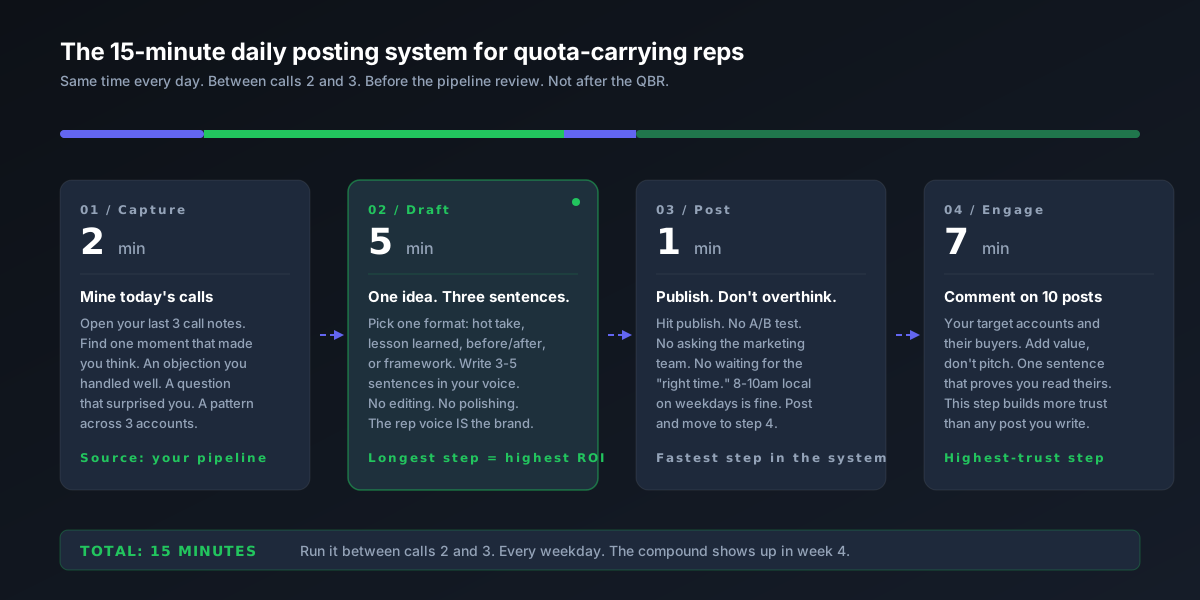
Capture (2 minutes)
Open your last three call notes. Find one moment that made you think. An objection you handled well. A question that surprised you. A pattern across three accounts. A stat the prospect quoted that you'd never heard. That moment is your post. You don't need to invent a topic. Your pipeline is the content source.
If you're using Post-Call Notes, the objection, the pain, and the outcome are already logged. Capture is just skimming the last three summaries for the one that made you nod.
Draft (5 minutes)
Pick one of the five formats (see the next section). Write three to five sentences. Do not edit. Do not polish. Do not ask marketing. The rep voice is the brand. If it reads like a company blog post, it will get zero engagement. If it reads like something you'd say to another AE at a bar after President's Club, it will land.
Three rules for the draft. One idea per post. No "5 takeaways from my week" listicles. Open with the most provocative sentence you wrote, not the context. And end with a question or a take, not a CTA. Nobody wants to be sold to in a LinkedIn post.
Post (1 minute)
Hit publish. No A/B testing. No scheduling tool. No waiting for the "optimal time" (8-10am local on weekdays is fine). Overthinking the timing is how five-minute posts turn into 45-minute projects. One tap and move to step 4.
Engage (7 minutes)
This step matters more than posting. Comment on 10 posts from your target accounts' buyers and champions. Not "great post." One sentence that proves you read what they wrote. Add a take, a stat, a question. This is how you become visible to people who don't follow you yet.
Seven minutes, 10 comments, 10 buyers who now have your name in their notification feed. That's 50 impressions a week on people you're about to call. When your DM lands next Tuesday, you're not a stranger. You're the person who left three sharp comments on their CFO's post about operational efficiency. That's the conversion event. Not the post. The comment.
The 5 post formats that work for quota-carrying reps
Not content marketing formats. Pipeline content formats. Each one is designed to carry a rep's voice, not a brand's. Pick one per post. Rotate across a two-week cycle.
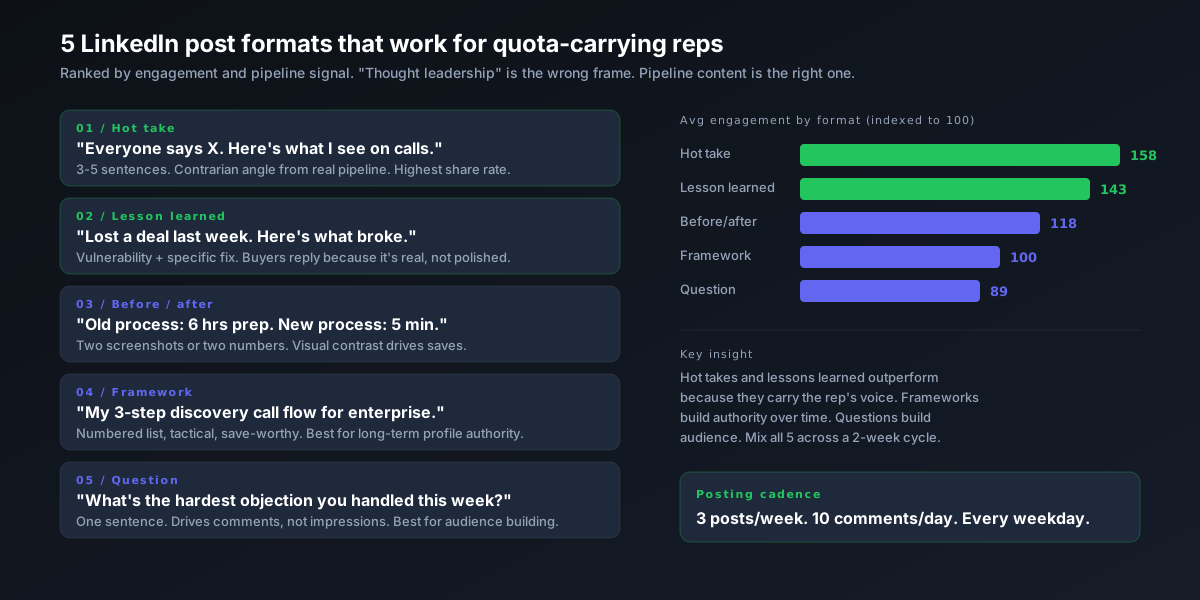
| Format | Template | Best for |
|---|---|---|
| Hot take | "Everyone says X. Here's what I see on calls." | Shares + DMs. Highest engagement. |
| Lesson learned | "Lost a deal. Here's what I missed." | Trust + replies. Vulnerability wins. |
| Before/after | "Old process: 6 hrs. New process: 5 min." | Saves + bookmarks. |
| Framework | "My 3-step discovery flow for enterprise." | Profile authority + follow. |
| Question | "Hardest objection you handled this week?" | Comments + new audience. |
One anti-pattern to avoid. Posts with recognizable AI writing patterns get 47% less organic reach on LinkedIn (LinkedIn algorithm data, 2025). If you use a drafting tool, edit the output to sound like you. Strip the tricolons, the em dashes, the "not just X, it's Y" constructions. LinkedIn's feed algorithm detects them and deprioritizes. For ideas, see 12 LinkedIn post ideas B2B reps actually publish.
Why most reps quit after 2 weeks
Every AE on every sales floor has tried posting on LinkedIn. Most stop after two weeks. The reason is always the same: they expected impressions and got crickets. That's because they treated posting like content marketing (write, post, measure reach) instead of pipeline warming (write, post, engage, measure replies on outbound).
The feedback loop is slower than outbound. You won't see pipeline impact in week 1. You'll start to see it in week 4-6 when your cold DMs start getting replies like "yeah, I've seen your posts." That sentence is the conversion event. And it compounds. Reps who post 3+ times per week for 90 days see 2x engagement and 7x faster follower growth compared to reps who post sporadically (LinkedIn, 2025).
The reps who stick with it share three traits. First, they time-box it. Fifteen minutes means fifteen minutes, not an hour of writing and rewriting. Second, they mine their pipeline, not the news. Their content is specific to deals they're running, which means it resonates with people running similar deals. Third, they measure replies on outbound, not likes on LinkedIn. The vanity metric is impressions. The real metric is "how many cold DMs got warmer this week." For the full measurement framework, see social selling metrics that predict pipeline.
How Gangly surfaces posting material automatically
The hardest part of the 15-minute system isn't drafting or posting. It's step 1: finding the idea. When the rep sits down between calls 2 and 3, they need a hook. Not a generic topic. A specific signal from today's pipeline that they can turn into three sentences.
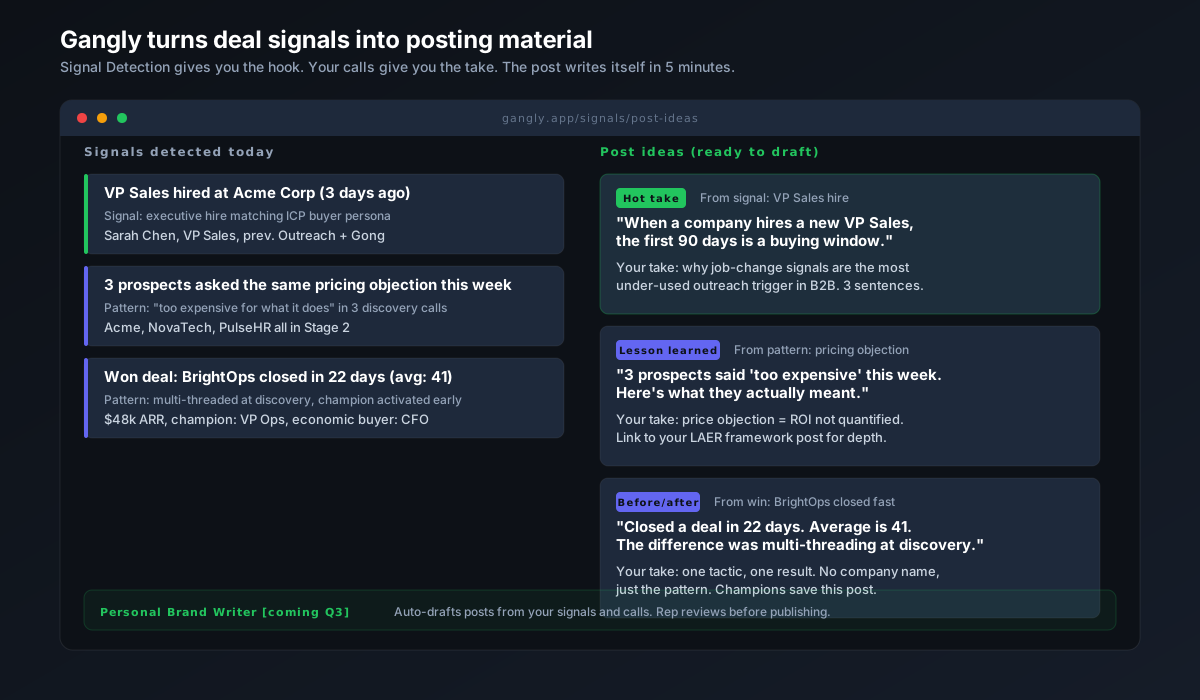
Signal Detection already monitors your connected sources for buying signals: job changes, funding events, competitor mentions, CRM activity. Each signal is a post hook. VP Sales hired at a target account? That's a hot take about why the first 90 days after a sales leadership change is a buying window. Three prospects raised the same pricing objection this week? That's a lesson learned about what "too expensive" actually means. A deal closed in half the average cycle time? That's a before/after about multi-threading at discovery.
The Outreach Writer already knows your voice. It's trained on your approved messages, your editing patterns, your preferred tone. That same voice calibration applies when you draft a post. Your post should read like your outreach reads: direct, specific, and unpolished.
Coming Q3: Personal Brand Writer. Gangly's upcoming Personal Brand Writer will handle the draft step directly. It takes the detected signal, pairs it with your voice profile, and generates a ready-to-review post. The rep edits, approves, and publishes. The 5-minute draft becomes a 1-minute review. The 15-minute system becomes 11. For now, the manual 4-step system is the playbook. For a deeper look at what to post, see the content strategy for quota-carrying reps and the broader LinkedIn personal branding pillar.
Your pipeline is your content source
Signal Detection surfaces the hooks. Your calls provide the take. Start warming accounts before outreach lands. 25-min live walkthrough. See the workflow on your real pipeline.
Key takeaways
- Thought leadership for reps is a 15-minute daily system: Capture (2 min), Draft (5 min), Post (1 min), Engage (7 min). Run it between calls. The compound shows up in week 4.
- Your pipeline is your content source. Call notes, objection patterns, deal wins, and signal data are the raw material. You don't need to invent topics.
- 5 formats that work: hot take, lesson learned, before/after, framework, question. Hot takes and lessons learned carry the most rep voice and get the highest engagement.
- Engage is the highest-trust step. Commenting on 10 target-account posts per day builds more pipeline trust than any post you write.
- Measure cold DM reply rate, not LinkedIn impressions. "I've seen your posts" is the conversion event.
- Signal Detection surfaces the hooks. Outreach Writer knows your voice. Personal Brand Writer (coming Q3) will handle the draft step.
Frequently asked questions
Thought leadership for a sales rep is a 15-minute daily posting and engagement system that warms target accounts before outreach lands. The rep mines today's calls for one idea, drafts 3-5 sentences in their own voice, posts on LinkedIn, and comments on 10 target-account posts. The goal is not reach or followers. The goal is that when your cold outreach lands, the buyer already recognizes your name and is more receptive to the meeting.
Fifteen minutes a day, time-boxed. Two minutes to capture an idea from today's calls, five minutes to draft three to five sentences, one minute to post, and seven minutes to comment on target-account posts. Run it between calls. If you're spending more than 15 minutes, you're editing too much or treating it like content marketing instead of pipeline warming.
Yes. LinkedIn's 2025 data shows reps with a high Social Selling Index generate 45% more opportunities and are 51% more likely to hit quota. Inbound leads from LinkedIn convert at 14.6% compared with 1.7% for cold email. The Edelman-LinkedIn B2B Thought Leadership Impact Report (2025) found 73% of decision-makers trust thought leadership content over traditional marketing. The conversion event is when your cold DM gets a reply that starts with "I've seen your posts."
Five formats work for quota-carrying reps: hot takes ("everyone says X, here's what I see on calls"), lessons learned ("lost a deal, here's what broke"), before/after ("old process: 6 hours, new process: 5 minutes"), frameworks ("my 3-step discovery flow"), and questions ("hardest objection you handled this week?"). All five draw from the rep's pipeline, not industry news. For a full list of post ideas, see LinkedIn post ideas for B2B sales professionals.
Three posts per week, minimum. LinkedIn's data shows that businesses and professionals posting 3-5 times per week see 2x engagement and 7x faster follower growth than sporadic posters. Combined with 10 comments per day on target-account posts, this cadence keeps the rep visible to the 50-200 accounts in their pipeline without becoming a full-time content job.
Expect to see the first "I've seen your posts" reply on cold outbound around week 4-6 of consistent posting (3 posts/week + daily commenting). The average time from first LinkedIn impression to closed revenue in B2B is 281 days (LinkedIn, 2025), which is why consistency matters more than virality. The reps who quit after two weeks measured impressions. The reps who stuck with it measured DM reply rate.
Carefully. Posts with recognizable AI writing patterns achieve 47% less organic reach because LinkedIn's algorithm deprioritizes them. If you use an AI tool to draft, edit aggressively to sound like you. Strip the tricolons, the em dashes, and the "not just X, it's Y" constructions. Gangly's upcoming Personal Brand Writer (Q3) is designed to match the rep's approved voice, not produce generic AI content. The rep always reviews and edits before publishing.