
 By Siddharth Gangal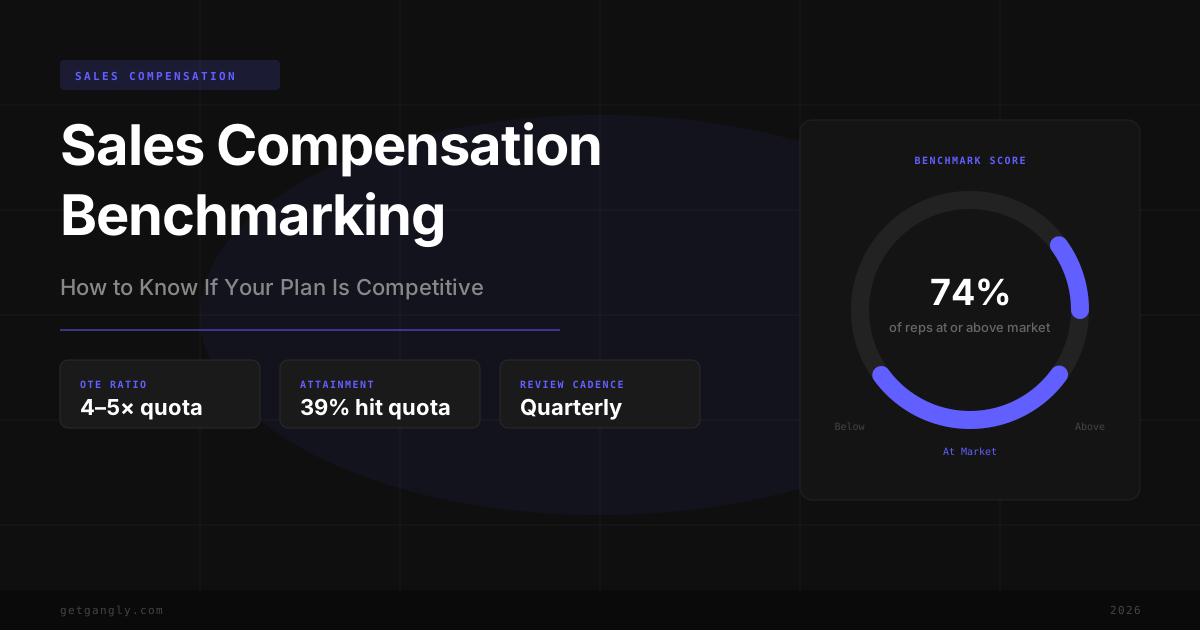
TL;DR
- Sales compensation benchmarking is the process of comparing your comp plan against market data across six metrics: OTE-to-market ratio, quota multiple, pay mix, commission rate, accelerator structure, and ramp period. Most plans fail on accelerators and ramp, not on base salary.
- The four data sources worth using in 2026: RepVue (rep-reported, named-company level), Bridge Group (SaaS-specific, ARR-stage calibrated), LinkedIn Salary (geographic base adjustments), and Everstage/CaptivateIQ reports (commission rates and accelerator benchmarks).
- Run a full benchmarking audit annually (Q3, for January implementation). Run a delta check quarterly — it takes two hours and catches drift before it triggers attrition. Only 39% of reps hit quota today (CaptivateIQ, 2026); a plan designed on different assumptions is already wrong.
- The AUDIT Framework — Anchor, Understand attainment, Delta each metric, Identify retention-impact gaps, Time adjustments to plan cycle — converts benchmark data into a structured decision with no guesswork.
Snippet answer
Sales compensation benchmarking is the process of comparing a company's comp plan against market data to determine whether pay is competitive for a given role, ARR stage, and geography. It covers six metrics: OTE-to-market ratio, quota multiple, pay mix, commission rate, accelerator structure, and ramp period. Plans that have not been benchmarked in 12+ months commonly pay below market on accelerators and ramp — the two mechanics most correlated with top-performer retention.
Get the quarterly comp benchmark drop
OTE updates, quota math, red-flag signals, and benchmarking templates — delivered quarterly. No spam, ever.
Subscribe freeWhat sales compensation benchmarking is — and why most plans skip it
Sales compensation benchmarking is the structured comparison of your comp plan against external market data — not just salaries, but the full mechanics of how reps earn money. That includes OTE, quota, pay mix, commission rate, accelerator multipliers, and ramp terms.
Most comp plans are designed once. A founder, VP of Sales, or Head of People builds the plan at hire — pulling from one data source, one set of assumptions about attainment, and one view of what the market pays. Then the plan runs for 12, 18, sometimes 36 months without a full audit. Markets move. Attainment norms shift. Competitors raise OTE. The plan stays the same.
The cost of not benchmarking is not visible until attrition hits. A top-performing AE does not put in their notice the day they discover the market pays 15% more. They start interviewing. They accept an offer 90 days later. The company then spends 90–120 days recruiting a replacement, 4–6 months ramping them, and 2–4 quarters re-establishing the pipeline the departing rep owned. The benchmarking gap that caused the attrition was $20–30K in annual OTE. The replacement cost was $80,000–$150,000.
The cost of a single mid-market AE departure (illustrative)
Recruiting cost
$20–50K
Agency fee or internal time
Ramp period
4–6 months
Below-quota contribution
Pipeline gap
$300–600K
ARR not closed during ramp
Total replacement cost
$80–150K
Conservative estimate
Estimate based on average AE quota of $800K–$1.2M ARR and recruiting fee norms. Actual costs vary by company stage and deal segment.
This post is not a data dump of what the market pays right now. The numbers for specific roles and ARR stages are covered in depth in three companion posts: AE compensation benchmarks, SDR compensation benchmarks, and SaaS sales compensation by ARR stage. This post covers the process — how to run the benchmarking audit, which data sources to use, which metrics to pull, and how to decide when and how to act on what you find.
The four data sources worth using in 2026
Every benchmarking audit starts with the same question: which data source do you trust? The answer depends on your role focus, company stage, and how current the data needs to be. Each source has structural biases. Use more than one for any decision that will affect multiple reps.
| Source | Type | Best for | Key limitation | Cost |
|---|---|---|---|---|
| RepVue | Rep-reported crowdsourced | Role-level benchmarks and real attainment rates at named companies | Self-reported; skews toward public complaints at low-attainment companies | Free (rep-level); paid tiers for team exports |
| Bridge Group | Survey-based research | ARR-stage calibration for early-to-growth-stage SaaS | Annual cadence means data is 6–18 months old by use; SaaS-heavy sample | Free download (gated) |
| LinkedIn Salary | Profile-aggregated | Geographic adjustments; validating base salary bands in specific metros | Variable pay severely underrepresented; title inflation skews data | Free with LinkedIn Premium |
| Everstage / CaptivateIQ reports | Vendor-published research | Accelerator design and commission rate benchmarks by role and industry | Published by comp software vendors — confirm methodology before citing | Free |
How to combine sources without creating false precision
Do not average benchmark values across sources in the same calculation. RepVue uses rep-reported data; Bridge Group uses company-reported survey data. They measure different things and produce different numbers for the same role. Use one source as the anchor — typically the one with the largest, most current, and most comparable sample — and use the second source as a validation check.
Practical rule: if two sources agree within 10% on a metric, use the anchor value. If they diverge by more than 15%, treat the metric as uncertain and add a note to the audit output. Do not present a false median as fact. Present the range and the sources behind it.
For geography adjustments, LinkedIn Salary is the most current source for base pay in specific metros. San Francisco and New York tend to run 10–20% above national medians. Austin, Chicago, and Denver run at or slightly below median. Remote roles converge toward national medians as companies standardize geo-based comp policies, though variance is wide in 2026 — always check both directions.
The six metrics every comp benchmarking audit must compare
A common benchmarking mistake is comparing only OTE to market median OTE. OTE is a stated number, not a guaranteed one. The six metrics below form a complete picture of whether a plan is actually competitive — including the mechanics that determine what reps actually earn, not just what the plan says they could earn at 100% quota.
OTE-to-market ratio
Formula: Your rep's OTE ÷ market median OTE for the same role, stage, and geography
Threshold: < 90% = below market. 90–110% = at market. > 110% = above market.
Total pay attractiveness. The first number a candidate checks.
Quota multiple
Formula: Annual quota ÷ OTE
Threshold: 4–5× = healthy for most stages. > 5.5× = structurally high. < 3× = underperformance signal.
Determines whether a rep at median attainment earns their OTE. High multiples mean most reps never reach target pay.
Pay mix (base/variable ratio)
Formula: Base salary ÷ OTE
Threshold: AE: 50/50. SDR: 65/35. CSM: 75/25–80/20. SE: 75/25.
Risk signal for candidates. A 40/60 AE plan with 39% average attainment means the median rep earns far below OTE.
Commission rate on ACV
Formula: Variable earned at 100% quota ÷ quota
Threshold: SaaS AE: 8–12% of ACV. Enterprise: 7–10%. SDR per-SQL: $150–$600.
The per-dollar return on every deal closed. Validates whether the variable component is real or cosmetic.
Accelerator structure
Formula: Multiplier above 100% quota (e.g., 1.25× at 125%, 1.5× at 150%, 2× above 150%)
Threshold: ~80% of plans offer accelerators. Median above-quota multiplier: 1.5–2×.
Top-quartile performers stay for accelerators. A plan capped at 120% loses the people who most need to stay.
Ramp period and ramp quota
Formula: Length of ramp (months) and quota schedule during ramp
Threshold: Market standard: 4–6 months full ramp. Month 1: 0–25% quota. Month 6: 100% quota.
A plan that puts reps at 100% quota on day 30 looks generous in writing but manufactures year-one failures.
Pull these six numbers for every role you are benchmarking. Record them in a simple spreadsheet with three columns: your plan value, the market benchmark, and the delta. A delta above +10% on any metric is an advantage worth communicating in recruiting. A delta below −10% on any metric is a gap worth addressing before the next plan cycle. A delta below −20% on OTE-to-market ratio or accelerator structure is urgent.
Only 39% of sales reps hit quota in 2026 (CaptivateIQ, 2026), down from 63% in 2019. A plan calibrated to 2019 attainment assumptions is overstating what reps actually earn by a meaningful margin. The OTE number in a comp plan is only meaningful next to the attainment distribution that determines how often reps reach it.
The quarterly benchmarking process — step by step
The full benchmarking process has two cadences: a quarterly delta check (two hours) and an annual full audit (two to three days). Most companies run neither until attrition forces the question. The quarterly check is the higher-impact habit — it catches drift before it compounds.
Quarterly delta check (two hours)
Quarterly comp delta check — step by step
Total: ~2 hours per quarter per role segment. Output: a one-page delta report with flagged gaps and recommended action tier (monitor / adjust at next cycle / urgent).
Annual full audit (two to three days)
The annual audit goes deeper than the delta check. It rebuilds the comp model from the ground up — not just comparing to market, but stress-testing internal assumptions about attainment, quota design, and plan mechanics.
Annual audit checklist
- Pull 12-month attainment distribution for each benchmarked role (not just the headline percentage — the full distribution from 0% to 200%+)
- Calculate effective OTE at median attainment (not stated OTE) and compare to market
- Benchmark all six metrics using the primary and secondary sources
- Review accelerator tables: what percentage of reps reached 110%+ last year? Are accelerators paying out?
- Audit ramp terms in offer letters versus actual ramp quotas assigned. Confirm they match.
- Interview three to five reps: "How do you feel about your comp plan versus what you see in the market?" Collect verbatim responses.
- Review voluntary attrition from the last 12 months: what percentage cited comp as a factor?
- Model proposed adjustments against payroll cost at projected attainment rates
- Draft the adjustment recommendation with: metric, current value, proposed value, effective date, cost impact, and rationale
Run the annual audit in Q3 — July through September — to allow time for finance modeling and board alignment before a January 1 effective date. A September audit with a Q4 decision window and a December communication gives reps 30 days to understand the new plan before Q1 starts.
Stay current on comp benchmarks
Get the quarterly benchmark drop — OTE updates, quota math, and the red-flag signals every sales leader needs to catch drift before attrition does.
Subscribe freeWhen to adjust — the decision matrix
Benchmark data produces a picture. The decision matrix converts that picture into action. Not every gap requires immediate adjustment. Some gaps are minor and can wait for the next plan cycle. Others require urgent correction before they manifest as attrition.
The matrix below maps each of the six metric gaps to an action and urgency level. Use it to triage findings from the benchmarking audit and communicate priorities to finance and leadership.
| Signal from benchmark | Recommended action | Urgency |
|---|---|---|
| OTE-to-market ratio < 90% for 2+ quarters | Adjust base or variable to close the gap. Do not wait for attrition to confirm the problem. | High |
| Quota attainment below 50% for the whole team | Audit quota first (it is likely the problem, not the reps). Then check if market OTE assumptions need recalibration. | High |
| Pay mix out of band for the role type | Rebalance base/variable toward market standard at next plan cycle. Communicate the change with 90 days' notice. | Medium |
| Commission rate 2+ points below market for same role and stage | Raise the rate at the next plan reset. Partial in-cycle adjustments rarely resolve the perception damage. | Medium |
| Accelerators capped below 150% attainment | Remove the cap or raise the ceiling. Top performers will identify this before you do. | High |
| No written ramp period | Formalize ramp in the offer letter and comp plan document. Verbal agreements do not exist in comp disputes. | Immediate |
| Plan has not been benchmarked in 12+ months | Run the full benchmarking audit this quarter using the AUDIT Framework below. | Medium |
The one rule that overrides all of the above: never change plan mechanics mid-year without a documented transition period. A comp plan change that improves pay is still a trust disruption if it arrives without notice or explanation. Communicate findings from the audit to the team even if no changes are happening this cycle. Reps who know their plan was benchmarked and reviewed — and that the company found it at market — are more likely to stay than reps who have no visibility into whether anyone is watching.
The AUDIT Framework: Gangly's proprietary comp benchmarking method
The AUDIT Framework is a five-step benchmarking method designed for sales leaders, RevOps teams, and founders who want a structured process that produces defensible decisions — not just a list of numbers.
The AUDIT Framework — Gangly's Comp Benchmarking Method
Step 01: Anchor to a single benchmark dataset first
Pick one primary data source based on your stage and role focus. Early-stage SaaS ($0–10M ARR): Bridge Group is the most comparable cohort. Mid-market and beyond: RepVue gives the most current named-company data. Do not average across sources in the first pass — different methodologies produce different numbers, and averaging creates false precision. Anchor to one source. Use others to validate outliers.
Step 02: Understand your actual attainment distribution — not the plan
Pull the last four quarters of quota attainment for every rep in the benchmarked role. Calculate: median attainment, percentage of reps above 100%, percentage of reps below 75%. The plan may say OTE is $180K, but if median attainment is 62%, the median rep earns $144K — which is 20% below the stated OTE and may already be below market base. The attainment distribution is the honest version of your plan.
Step 03: Delta each metric against market benchmarks
For each of the six metrics in Section 3, calculate the gap between your plan and the market benchmark. Record: the benchmark value, your plan's value, the delta (positive or negative), and whether the delta is outside the acceptable threshold. A delta table forces you to see the whole picture at once rather than defending each metric in isolation. Most plans are competitive on base but weak on accelerators — the delta table reveals this in one view.
Step 04: Identify the adjustments with the highest retention impact first
Not every delta requires immediate action. Prioritize by retention risk. An OTE below 90% of market triggers active candidate searches. An accelerator capped at 120% loses only the top-quartile performers — painful, but a smaller population. A ramp period that is not in writing creates legal and trust risk regardless of magnitude. Score each gap by: revenue impact if you lose the rep, probability of the rep discovering the gap, and time to recruit a replacement.
Step 05: Time the adjustments to the plan cycle — with advance notice
Plan changes mid-year without notice are a trust-destruction event, even when they are improvements. The market standard is 90 days' advance notice for any structural change. If a Q3 benchmarking audit reveals gaps, the correction should be ready to communicate in September for a January 1 effective date. Reps who know a correction is coming at plan cycle do not start interviewing. Reps who find out the day before Q1 do.
The AUDIT Framework takes two to three hours for a single role segment on the quarterly delta cadence and two to three days for the full annual audit covering all roles. The output of each step feeds the next — you cannot run Step D (Delta) without Step U (Understand attainment), because a delta against stated OTE without attainment context produces a misleading picture.
For teams using Gangly's sales workflow system, attainment data is surfaced automatically from the CRM update and pipeline visibility features — which means Step U takes 15 minutes instead of a day of pulling reports manually. The framework works without Gangly; it just takes longer.
Five benchmarking mistakes that produce bad decisions
Sales compensation benchmarking is not complicated — but it is easy to do in a way that produces false confidence or wrong conclusions. These are the five mistakes that appear most often when companies finally run a benchmarking audit after a year or more without one.
Benchmarking OTE without benchmarking attainment
A $200K OTE plan where 60% of reps never earn above $140K is not a $200K plan. Always benchmark stated OTE against actual attainment distributions. If your reps consistently hit 70% quota, the effective pay is 70% of OTE — which must be compared against market base salary, not market OTE.
Using a single data source for the full audit
Bridge Group surveys SaaS companies heavily. RepVue reflects rep sentiment. LinkedIn Salary misses variable pay. No single source is the full picture. Use the primary source for anchor values, then cross-check outliers against a second source before acting. Treat any single data point that is more than 15% from the field median as suspect until confirmed.
Benchmarking role titles without controlling for segment
An "Account Executive" at an SMB-focused company with a $500K quota and a 30-day cycle is a different role from an "Account Executive" at an enterprise company with a $1.5M quota and a 120-day cycle. Salary databases aggregate both under the same title. Filter by: deal size, sales cycle length, quota size, and company ARR stage before comparing.
Running the benchmark annually instead of quarterly
Compensation markets move faster than annual review cycles, especially in high-demand roles. An annual audit catches the problem after attrition has started. A quarterly snapshot takes two hours on a spreadsheet. Pull the six metrics from Section 3 against updated RepVue data every quarter. Full rebuild annually; delta check quarterly.
Treating the benchmark as the ceiling instead of the floor
Market benchmarks tell you what competitors pay at median. They do not tell you what to pay to win the candidates you actually want. The top 20% of candidates in any role have multiple offers above the median. If retention matters — and it does, given that replacing a mid-market AE costs $50,000–$150,000 in recruiting and ramp — price at the 60th–70th percentile for roles with the highest revenue impact.
Related reading
SDR Compensation: 2026 Benchmarks and Structures
2026 SDR compensation benchmarks by company stage (Seed–Series C+), industry, and experience tier — base, OTE, quota, ramp, commission structures.
SaaS Sales Compensation: Benchmarks and Structures
2026 SaaS sales compensation benchmarks for SDR, AE (SMB/MM/Enterprise), SE, and CSM — OTE, quota, commission structures, and pay mix by ARR stage from $1M to $100M+.
AE Compensation: 2026 Benchmarks by Industry and Experience
2026 AE compensation benchmarks across 10 industries, 5 experience tiers, and 10 US regions — base, OTE, quota, and ramp math in one reference.
Get the quarterly comp benchmark update
Know before your reps start interviewing
Quarterly OTE updates, quota math, and the benchmarking template — straight to your inbox. No spam, no upsell.
Subscribe freeSiddharth Gangal
Founder of Gangly. Builds the systems and writes the research. Focused on sales workflows, signal-based prospecting, and the real mechanics of rep productivity.